
Home Depot patio furniture reviews are genuinely useful, but only if you know what the patterns actually mean. If you are searching for homrest patio furniture reviews, use the same pattern-reading approach to separate hype from real durability signals Home Depot patio furniture reviews. A 4.2-star dining set can still rust through in two seasons if the complaints buried in the lower ratings mention "continued rust after rain" or "fasteners corroded first." The goal here is to help you read those reviews the way a contractor reads a spec sheet: with a clear filter for what matters and a checklist that keeps you from buying something you'll regret by August.
Home Depot Patio Furniture Reviews: What to Check Before Buying

Grant Hollis
22 Jun 2026
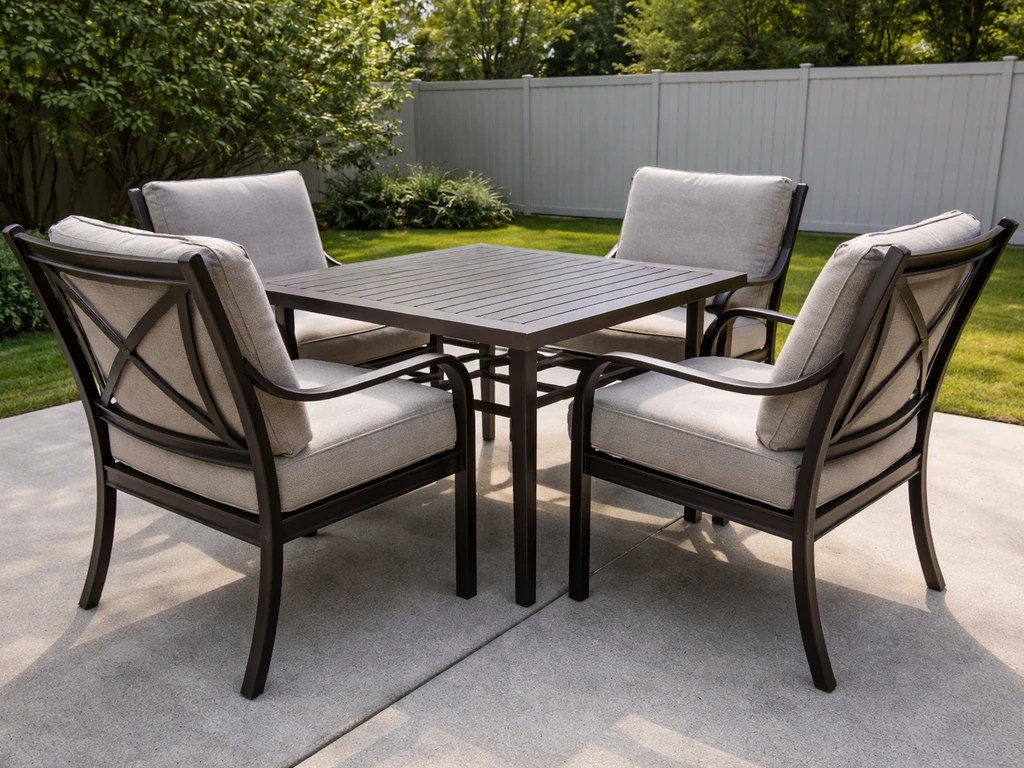
What good Home Depot patio furniture reviews actually tell you

A high overall star rating is a starting signal, not a final answer. Home Depot does surface "Highly Rated" and "Best Rated" filters in category pages (including wicker and outdoor lounge furniture), which is a useful first pass. But the real gold is in the review text itself, and you have to know what patterns to look for.
When reviews are genuinely positive, they tend to use specific language: "do not wobble," "assembly was straightforward," "cushions are thick enough to not feel the frame." Those phrases translate directly into stability, build quality, and comfort. When you see aluminum dining sets described as "sturdy" and "no wobble" across multiple reviewers, that's a reliable signal the frame tolerates repeated use and moderate wind without shifting.
Negative reviews follow their own reliable patterns too. Rust complaints on steel sets ("continued to rust," "rust drippings staining my deck") mean the powder coating is thin or the fasteners are uncoated steel. Assembly complaints like "instructions were sketchy" or "screws were too short" typically point to missing or undersized hardware in the box, which often leads to wobble or misalignment after a season of use. Cushion complaints about "yellowing" or "fading after a few months" almost always mean the fabric isn't UV-rated, or the warranty explicitly excludes fading from sun exposure (which Home Depot's own warranty PDFs confirm for many brands). None of these are dealbreakers if you know about them in advance, but they become expensive surprises if you don't.
The review signals worth filtering for immediately
- Stability language: "wobble," "tips in wind," "uneven on pavers" vs. "solid," "no movement," "feels planted"
- Assembly honesty: "took 3 hours," "instructions unclear," "holes didn't line up" vs. "assembled in 45 minutes," "hardware matched the diagram"
- Cushion performance: "faded by July," "zipper broke first season," "too thin" vs. "still look great after two summers," "thick enough to sit without feeling the frame"
- Rust and corrosion: "rusted within months," "hardware corroded first" vs. "no rust after two winters," "powder coat still intact"
- Long-term update reviews: look for reviews where a reviewer explicitly says they've owned the piece for 1-2 seasons, as these are far more reliable than first-week impressions
Best patio furniture categories at Home Depot, and who each one is really for
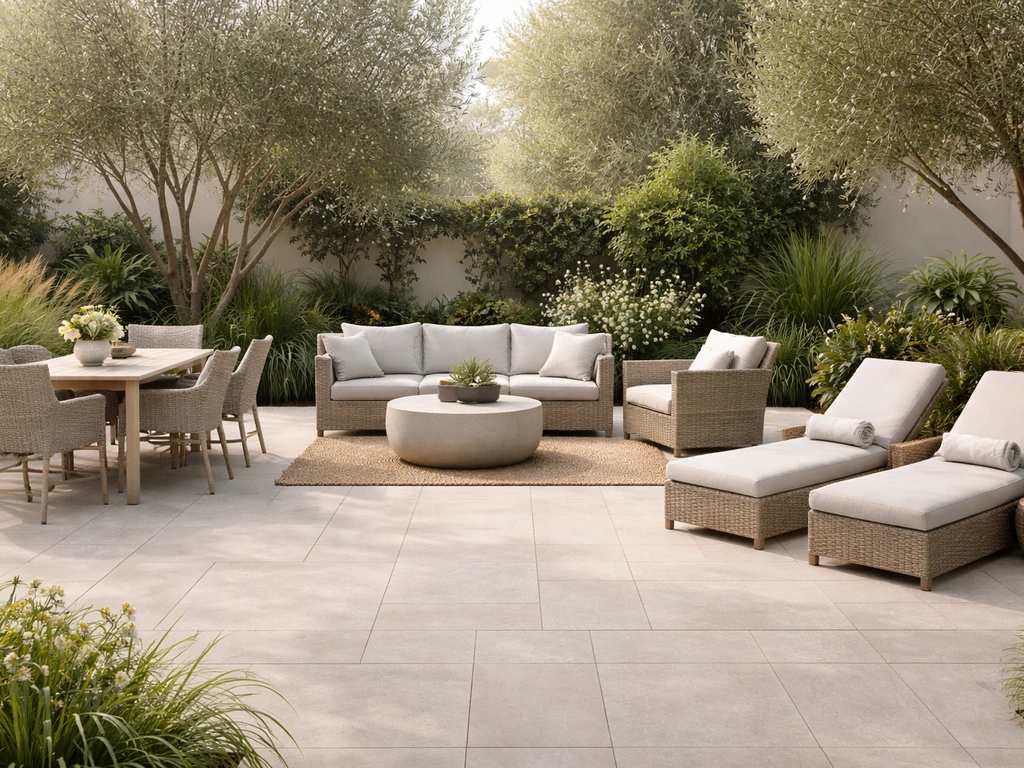
Home Depot carries a wide range: dining sets, conversation sets, sectionals, lounge chairs and chaise sets, and individual accent pieces. The right category depends less on what looks good and more on how you actually use your outdoor space.
| Category | Best For | Watch Out For |
|---|---|---|
| Dining Sets (4-7 piece) | Households that eat meals outside regularly; frequent entertaining | Chair-to-table height mismatches; rust on steel frames near coast or in freeze-thaw climates |
| Conversation Sets (3-5 piece) | Casual seating, drinks, evening hangouts; covered patios | Cushion thickness; sofa-height seats feel low to some users; wicker structural stability in wind |
| Sectionals | Large patios, frequent hosting, open-plan outdoor rooms | Modular connector failures; fabric cover requirements for off-season storage; heavy shipping weight |
| Chaise Lounges / Sling Sets | Pool decks, sunbathing, single or couple use | Sling tension loosens over time; frame feel-through on thin slings; complex adjustable hardware |
| Bistro / Counter Height Sets | Small balconies, apartment patios, limited square footage | Stability on uneven surfaces; fewer weather-resistant options at lower price points |
| Lounge / Adirondack Chairs | Low-maintenance relaxation; fire pit areas; rustic aesthetic | Deep seat makes standing up harder for some; HDPE options outlast wood but cost more upfront |
If you host parties of 6 or more regularly, a dining set is your anchor piece and everything else is secondary. If your outdoor time is more about coffee in the morning and drinks at sunset with 2 to 4 people, a conversation set or sectional gives you better comfort per dollar. Chaise lounges and sling chairs work well in sun-exposed pool or deck areas but need more attention to fabric condition over time.
Material-by-material: what to actually expect from aluminum, wicker, steel, and wood
Material choice is the single biggest predictor of long-term performance, and most buyers underweight it relative to appearance. Here's how each main material holds up in real backyard conditions.
Aluminum
Aluminum is the best all-around choice for most climates. It won't rust, it stays lighter than steel (easier to move and store), and cast or extruded aluminum frames at the higher end can carry lifetime limited warranties. UV-stable powder coating is the key variable: when it's done well (as with brands like POLYWOOD's aluminum line, which use UV-stable powder coatings specifically engineered for outdoor exposure), the finish holds for years. When it's done cheaply, you'll see chipping and oxidation within a season or two. In reviews, aluminum sets that get "no rust" and "still looks new" comments after 2 years are telling you the coating quality is solid. The downside is price: good aluminum costs more upfront, and budget aluminum at lower price points skips the quality coating. For coastal homeowners or anyone in a high-humidity climate, aluminum over steel is not optional, it's the right call.
Wicker / PE Rattan
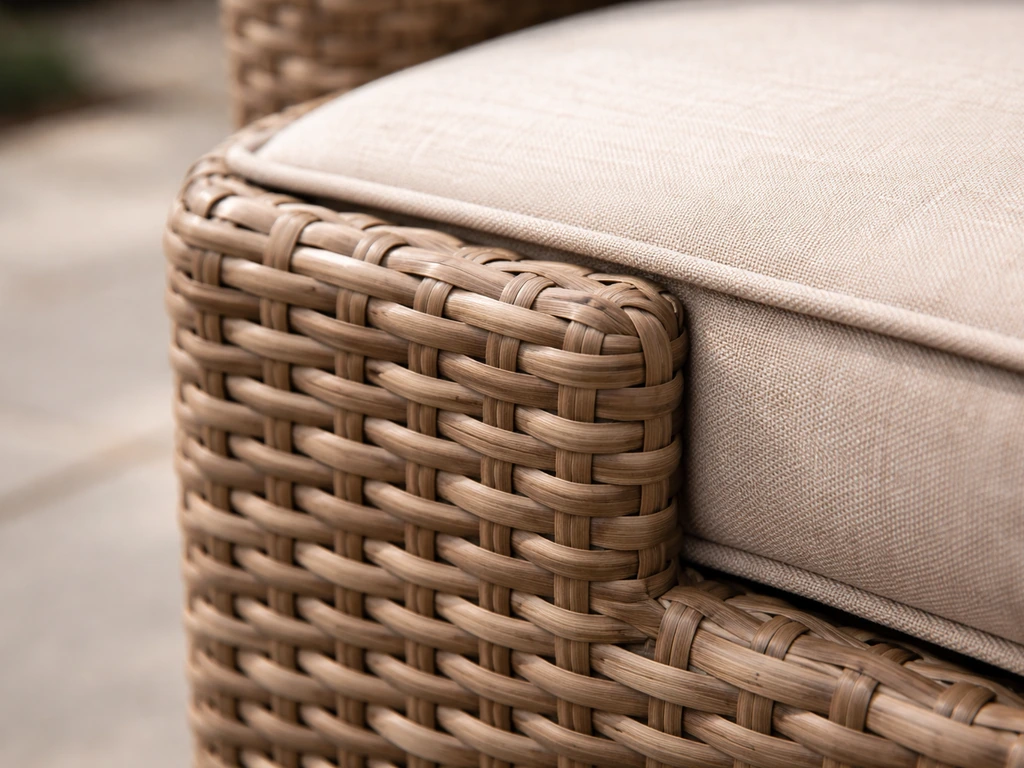
Most wicker sold at Home Depot today is PE (polyethylene) synthetic resin over a steel or aluminum frame, not natural rattan. The wicker weave itself is reasonably weather-resistant, but the frame underneath is the vulnerability. Reviews for wicker conversation sets frequently mention table wobble and assembly issues where "holes didn't line up," both of which point to the steel subframe flexing or the connection points being imprecise. If the frame is aluminum, the rust risk drops dramatically. If it's steel, keep it covered or stored during wet seasons. Cushions bundled with wicker sets are often the weakest link. Look specifically for sets that include Sunbrella fabric or equivalent UV-rated covers, since Sunbrella carries a legitimate warranty against fading and their fabric performance is well-documented. Generic cushion fabric on wicker sets tends to discolor or fade within one to two seasons.
Steel
Steel is heavier and more rigid than aluminum, which some buyers prefer for stability in wind-exposed spaces. The problem is corrosion. Home Depot's own metal furniture care PDF acknowledges that outdoor metal furniture requires active maintenance to prevent corrosion, and customer reviews on steel dining sets confirm this: one review on a Hampton Bay steel dining set specifically calls out the set "continued to rust" with rust drippings staining the deck surface below. Steel works best in dry climates or fully covered patios where it stays dry. In humid, coastal, or freeze-thaw climates, steel without premium rust-inhibiting coating is a multi-season maintenance project, not a set-and-forget purchase. If you buy steel, touch up nicks in the powder coat immediately and follow the manufacturer's care instructions before the first winter.
Wood and HDPE Lumber
Genuine teak and eucalyptus hold up extremely well outdoors with periodic oiling, but the price point at Home Depot for real wood is significant, and the mid-range "teak-look" options are often lower-grade hardwood that requires more maintenance. HDPE lumber (sold under brand names like POLYWOOD) is a different story entirely: it's made from recycled plastic with UV-inhibiting compounds built into the material, not just coated on. POLYWOOD confirms that colors will fade to some degree over time in sun, but the rate is dramatically slower than painted wood or fabric. HDPE doesn't rot, splinter, or absorb moisture, and it genuinely is low-maintenance. The tradeoff is that it can feel warm to the touch in direct sun and the aesthetic skews more casual/Adirondack than modern. For families with kids or pets where durability and easy hosing-down matters more than looks, HDPE lumber pieces are hard to beat for long-term value.
| Material | Rust/Rot Risk | UV/Fade Risk | Weight | Maintenance Level | Best Climate |
|---|---|---|---|---|---|
| Cast/Extruded Aluminum | Very Low | Low (with quality coating) | Light-Medium | Low | All climates, especially coastal |
| PE Wicker over Aluminum Frame | Low | Medium (cushions vary) | Light | Low-Medium | All climates; store cushions off-season |
| PE Wicker over Steel Frame | Medium | Medium | Medium | Medium | Dry or covered patios only |
| Powder-Coated Steel | Medium-High | Low-Medium | Heavy | Medium-High | Dry climates, covered patios |
| HDPE Lumber (POLYWOOD-type) | None | Low (UV inhibitors built in) | Medium-Heavy | Very Low | All climates |
| Teak / Hardwood | None (rot-resistant) | Medium (requires oiling) | Heavy | Medium | All climates with annual oiling |
How to read the most common negative reviews without overreacting
Not every negative review is a red flag. Some complaints reflect buyer error or unmet expectations that the product listing actually covers. Others are genuine product failures you need to know about before spending several hundred dollars. Here's how to sort them.
Assembly complaints
Assembly complaints are the most common negative theme across Home Depot patio furniture reviews, and they range from minor to serious. "Instructions were confusing" usually means the diagrams were low quality but the assembly itself wasn't actually hard. "Screws were too short" or "hardware didn't match" is more serious: this points to a quality control problem at the manufacturer level that may affect structural integrity once assembled. If multiple reviewers (3 or more in recent reviews) mention the same specific hardware issue, treat it as a known defect and factor in whether you're willing to source replacement fasteners yourself. Assembly time complaints of 2-3 hours for a complex sectional are normal and shouldn't deter you. Assembly complaints where the holes "didn't line up" even after following instructions suggest frame tolerances are off, which can mean the finished piece is slightly twisted or unstable.
Cushion and fabric complaints
Fading, discoloration, and fabric degradation are the second most common complaints, and here's the important context: Home Depot's own warranty PDFs explicitly exclude fading and discoloration of outdoor cushion covers from standard warranty coverage. That means if you buy a set with generic fabric cushions and they fade in a season, you likely have no recourse. The reviewers mentioning "yellowish discoloration" on sling lounge chairs after several months are describing something the warranty won't cover. The fix is to prioritize sets that either include Sunbrella or equivalent UV-rated fabric, or to budget for replacement covers with a better fabric rating. Sunbrella's warranty specifically covers fade resistance, which is why it commands a price premium.
Rust and corrosion complaints
Rust showing up within the first season on a steel set almost always means the powder coat was thin, was damaged in shipping, or the fasteners used were uncoated steel. This is a legitimate product failure worth taking seriously. Home Depot has a return policy that applies to furniture purchases, so if rust appears very early and you've documented it, you have a return path. But check the return window carefully, as furniture return policies have specific timeframes. Rust appearing after 2 or 3 seasons, especially on a set stored uncovered outdoors year-round, is more a maintenance issue than a product defect.
Wobble and stability complaints
Wobble in a finished piece can come from two sources: imprecise frame tolerances (a manufacturing issue) or assembly errors (a user issue). Check whether the reviewer mentions re-tightening fasteners eliminated the wobble, as that usually points to the latter. A table that wobbles even after assembly is done correctly, especially on a flat surface, is a product issue. For wicker sets specifically, wobble complaints frequently co-occur with "holes not lining up" during assembly, suggesting the frame components don't fit together precisely enough to stay rigid under real load.
Your pre-purchase checklist: sizing, cushions, hardware, and weather-readiness
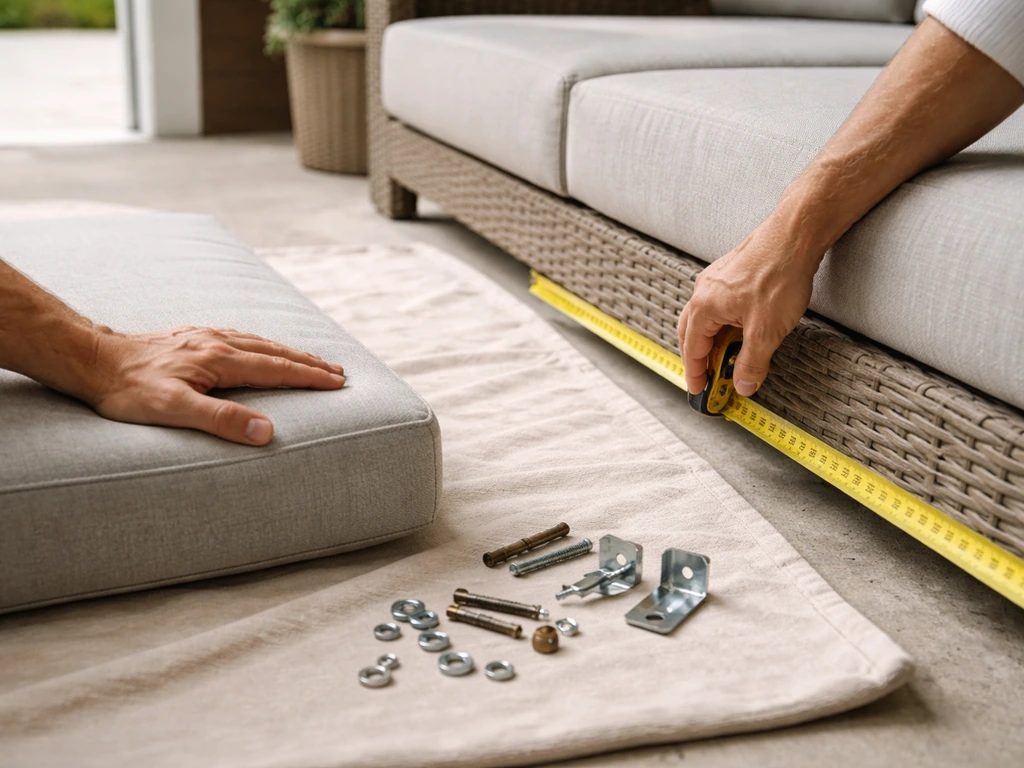
Before you add anything to your cart, go through this checklist. It sounds basic but covers the exact issues that generate the most buyer regret.
- Measure your space first. Note the actual usable area in feet, including clearance for chair pullout (typically 3 feet behind a dining chair). Compare to the assembled dimensions in the product listing, not just the table or sofa width alone.
- Check cushion thickness. Anything under 3 inches in a lounge or sofa seat will likely result in "feeling the frame" through the cushion, especially after the foam compresses over a season. Look for this measurement in the specs or read reviews specifically for "feel the frame" language.
- Identify the cushion fabric. Is it listed as Sunbrella, solution-dyed acrylic, or Olefin? Those are UV-rated fabrics worth paying for. "Polyester" cushion covers without a UV rating are a red flag for fading in sunny climates.
- Check fastener material in the specs or reviews. Stainless steel or coated fasteners are corrosion-resistant. Standard steel screws and bolts on an outdoor piece will rust before the frame does.
- Confirm the frame material and finish. "Powder-coated steel" is not the same as "rust-resistant aluminum." Read the full material description, not just the marketing headline.
- Look up the warranty coverage before buying. Home Depot surfaces warranty duration as a filter option (including a "3-year limited warranty" category). More important than the duration is what's actually covered: frame vs. fabric vs. cushion covers vs. hardware.
- Assess your weather exposure honestly. An uncovered patio in Seattle, a screened porch in Phoenix, and a pool deck in coastal Florida have completely different material requirements. Match your material choice to your actual conditions, not best-case conditions.
- Check whether replacement parts (cushions, slings, glides) are available. If a brand doesn't sell replacement cushions separately, you're likely replacing the entire set when the fabric gives out.
- Confirm the return window. Home Depot's return policy has timeframes that apply to furniture, and you need to know whether you can return after assembly. Read the policy before buying, not after delivery.
Where the real value is hiding: price vs. long-term performance
Patio furniture pricing at Home Depot spans a huge range, and the relationship between price and durability is not linear. A $700 steel dining set can underperform a $550 aluminum set over a 5-year horizon if the steel requires annual rust treatment and replacement cushions. Conversely, a $400 wicker conversation set with aluminum subframe and Sunbrella cushions can outperform a $600 set with a steel frame and polyester cushions in a humid climate.
The value calculation that most buyers skip is the total cost of ownership: original price plus replacement cushions, plus covers for off-season storage, plus touch-up paint or rust treatment, minus the expected lifespan. Aluminum frames with good powder coating and quality fabric cushions regularly last 7 to 10 years with minimal intervention. Steel sets in wet climates might need annual maintenance and cushion replacement every 2 to 3 years, which can add hundreds of dollars to the real cost.
Warranty terms are a useful proxy for manufacturer confidence. Brown Jordan, for example, offers lifetime limited coverage on cast and extruded aluminum frames, with separate multi-year coverage on fabrics and cushions. That structure tells you the manufacturer expects the frame to outlast the fabric, which is true for good aluminum. When a brand only offers a 1-year limited warranty covering defects "under normal use," read the exclusion list carefully, because fading, discoloration, and weather damage are typically excluded by default. Home Depot's own warranty PDFs confirm that cushion cover fading from sun exposure is a standard exclusion across most casual furniture brands.
HDPE lumber pieces (like POLYWOOD) deserve a specific mention here for long-term value. If you’re comparing options like Beachcrest Home patio furniture, reviews can help you spot common issues with comfort, build quality, and how the pieces hold up over time Beachcrest Home patio furniture reviews. The upfront price is higher than comparable-looking wood pieces, but the 10-year to lifetime warranties on most POLYWOOD products, combined with genuinely near-zero maintenance requirements, make the cost-per-year among the lowest of any material category. If you're buying for a vacation home or a space you can't monitor closely season to season, HDPE is worth the premium almost every time.
Budget tiers and what you realistically get
| Price Tier (Set) | What You Typically Get | Realistic Lifespan | Best Use Case |
|---|---|---|---|
| Under $300 | Steel frame, polyester cushions, basic powder coat, minimal warranty | 2-4 years with care | Seasonal/temporary use, covered patio, renters |
| $300-$600 | Mix of aluminum/steel or wicker over steel, thicker cushions, some UV fabric options | 4-6 years with care | Standard backyard use, covered or semi-exposed |
| $600-$1,200 | Cast aluminum or wicker over aluminum, Sunbrella-grade fabric options, 3+ year warranties | 7-10 years | Frequent entertaining, uncovered patios, humid climates |
| $1,200+ | Premium aluminum or HDPE, name-brand fabric, lifetime frame warranties, replacement parts available | 10+ years | Long-term investment, coastal/harsh climates, high-use spaces |
How to compare specific Home Depot sets today and actually decide
Here's the step-by-step process I'd use if I were shopping right now. It takes about 30 to 45 minutes and will save you from the most common mistakes.
- Start with the category filter, not the search bar. Go to the patio furniture category on Home Depot's site and filter by the specific type you need (dining, conversation, lounge, etc.). Then apply the "Highly Rated" or "Best Rated" filter to pre-screen for sets with the strongest review track records before reading any individual listings.
- Filter by material and price. Use the sidebar filters to narrow to your preferred material (aluminum is a safe default for most climates) and set a realistic budget ceiling based on the tiers above.
- Open 3 to 5 candidate listings and read the 2-star and 3-star reviews first. Skip the 5-star reviews initially. Sort by "Most Critical" if the option is available. Look specifically for assembly failure patterns, rust reports, and cushion complaints. Note whether the same issue appears across multiple reviewers, which signals a systemic problem vs. a one-off unit issue.
- Check the full product specs for every candidate. Confirm frame material, cushion fabric type and thickness, fastener material if listed, assembled dimensions, and weight. Compare these side by side.
- Look up the warranty for each set. Find the warranty duration in the listing specs or product documentation. Note what's covered and what's excluded, especially for cushions and fabric.
- Search for the set name plus "review" outside of Home Depot's site. YouTube assembly videos and third-party blog reviews often surface durability problems that haven't yet accumulated in the Home Depot listing.
- Verify replacement parts availability. Search the brand name plus "replacement cushions" or "replacement slings" to confirm you can source parts if needed. Brands that sell parts separately are worth a premium.
- Make your decision based on climate fit, not just aesthetics. Rank your final candidates by how well their material, frame, and fabric match your specific outdoor conditions, and choose the one that fits those conditions best at your budget. Looks fade. A rusted frame or shredded cushions after one season are much harder to ignore.
A few final things worth knowing before you buy
If you're comparing Home Depot's selection to specialty outdoor retailers or brands like Homecrest, bear in mind that Home Depot's strength is accessibility, price competition, and the ability to return or exchange in-store if something goes wrong. Specialty brands may offer tighter quality control and deeper parts ecosystems, but at meaningfully higher prices. For most homeowners buying in the $400 to $900 range, Home Depot's selection is genuinely competitive when you know how to filter it.
One practical tip that consistently gets skipped: buy a furniture cover at the same time as the set. Home Depot sells covers sized for dining sets, conversation sets, and individual chairs. A $40 to $80 cover extends the life of almost any patio furniture set by reducing UV exposure, keeping cushions dry, and preventing debris accumulation. It's the single cheapest insurance policy you can buy for your outdoor furniture investment, regardless of the material or price tier you choose.
Finally, take your measurements before the set ships. A 7-piece dining set that looks proportional in a lifestyle photo can feel overwhelming on a 12 by 14 foot patio once the chairs are pulled out. The assembled dimensions in the product listing are accurate; the room they take up in real life always feels larger than on a screen.
FAQ
How can I tell if a 4+ star Home Depot patio furniture review is trustworthy or just generic praise?
Filter the reviews by “recent” and then skim for the exact failure pattern, rust, fading, wobble, or hardware mismatch, and note whether it appears within the first season or only after year two. Early failures usually indicate a defect like damaged coating or weak fasteners, while late failures often point to maintenance gaps, uncovered storage, or UV exposure beyond what the fabric rating supports.
Are negative reviews about cushions usually covered by warranty, or do I need to budget for replacements?
Yes, especially for cushions and fabrics. If the product uses generic cushion covers, look for repeat mentions of yellowing, fading, or thinning during “summer” or “after a few months,” and then check whether the warranty explicitly excludes sun-fade coverage. If it excludes fading, plan on replacing covers rather than expecting the warranty to help.
What review wording should make me doubt “easy assembly” claims?
Take “assembly straightforward” seriously only when the reviewer also reports the hardware matched and holes lined up. If you see praise for ease of assembly but also see “screws too short” or “holes did not line up” in the same review, treat the praise as partial, because misaligned frames can create wobble weeks later even if the first steps are easy.
How do I interpret wobble complaints when some reviewers say re-tightening fixes it?
If the review says wobble improves after re-tightening, it often means loose fit during shipping or normal settling, not a structural flaw. If the reviewer describes wobble persisting after re-tightening and re-checking on a flat surface, that is a stronger indicator of manufacturing tolerances or incorrect frame geometry.
Do patio furniture covers really make a difference, or is it just a sales add-on?
Because covers prevent UV and keep moisture off frames and cushion seams, they reduce two of the most common complaint categories, fading and rust. Budget covers are still worthwhile, but prioritize ones that are “breathable” or vented if the set is stored outside, since trapped moisture under a non-vented cover can worsen metal corrosion.
I live near the coast. Should I avoid steel patio sets even if the reviews are mostly positive?
In humid or coastal areas, prioritize aluminum or HDPE with UV-rated components. If you must consider steel, require a thick, intact powder coat and confirm in reviews whether rust appears as surface oxidation or as fastener-driven drips that stain decks. The fastest way to avoid regrets is to avoid steel sets whose reviewers report rust within the first season.
If reviews complain about fading but nothing else, should I still be concerned?
Treat it like a small durability downgrade, not an automatic deal-breaker. If fading is the only complaint, the practical fix is replacement covers or switching to Sunbrella or equivalent UV-rated fabrics. But if the same reviews mention fabric deterioration plus frame corrosion or loose fittings, the fabric is not the only problem.
Why do some customers say the set arrived incomplete, even when the price looks right?
Look for product listing mismatch across “set includes.” Reviews can be confusing if a set photo shows cushions or accessories that are not actually included. Before ordering, compare the bundle contents (chairs, tables, cushions, covers) listed in the description with what reviewers say arrived in the box.
Do customer reviews assume a certain storage setup, and how should I adjust if I will leave furniture outside year-round?
Yes, storage location changes outcomes dramatically. A steel set stored under an uncovered patio or against a wall that traps moisture will rust earlier than one kept on a covered porch, even in the same climate. Ask yourself whether the “maintenance issue” reviews match your storage reality.
If rust shows up early, what’s the best next step to protect myself with Home Depot’s return policy?
Return quickly if you find early rust or major hardware defects. Document with photos before you start cleaning, and compare where rust starts, near seams or fasteners versus random spots, since reviewers often describe coating damage patterns. Also verify the return window before the season ends, since furniture returns can have shorter timelines than smaller items.
Should I prioritize cushion fabric reviews more than the frame reviews?
Yes. If you are getting cushions bundled with a set, the fabric quality matters more than the frame when it comes to “how it looks after one summer.” In reviews, prioritize mentions of UV performance and colorfastness. If the set does not specify UV-rated fabric in the description, plan on cover replacements.
What measurements should I double-check before buying a dining set so it fits comfortably?
Measure twice for use patterns, not just square footage. If chairs need clearance for pulling out, account for the extra space you will use daily, not only the footprint of the table. A dining set can feel cramped because the usable clearance area grows when you sit and pull chairs out.