
Eucalyptus patio furniture is a genuinely solid long-term buy for most homeowners, provided you treat it like real wood and not like plastic. It's one of the more durable hardwoods available at mid-range prices, naturally high in oils that resist moisture and decay, and it holds up better outdoors than most softwoods. The catch is that it does require real maintenance, it can crack or gray out if you ignore it, and the term 'eucalyptus' covers a pretty wide range of product quality depending on the brand and finish. Here's everything you need to know before putting money down.
Eucalyptus Patio Furniture Reviews: Honest Buying Guide

Grant Hollis
22 May 2026
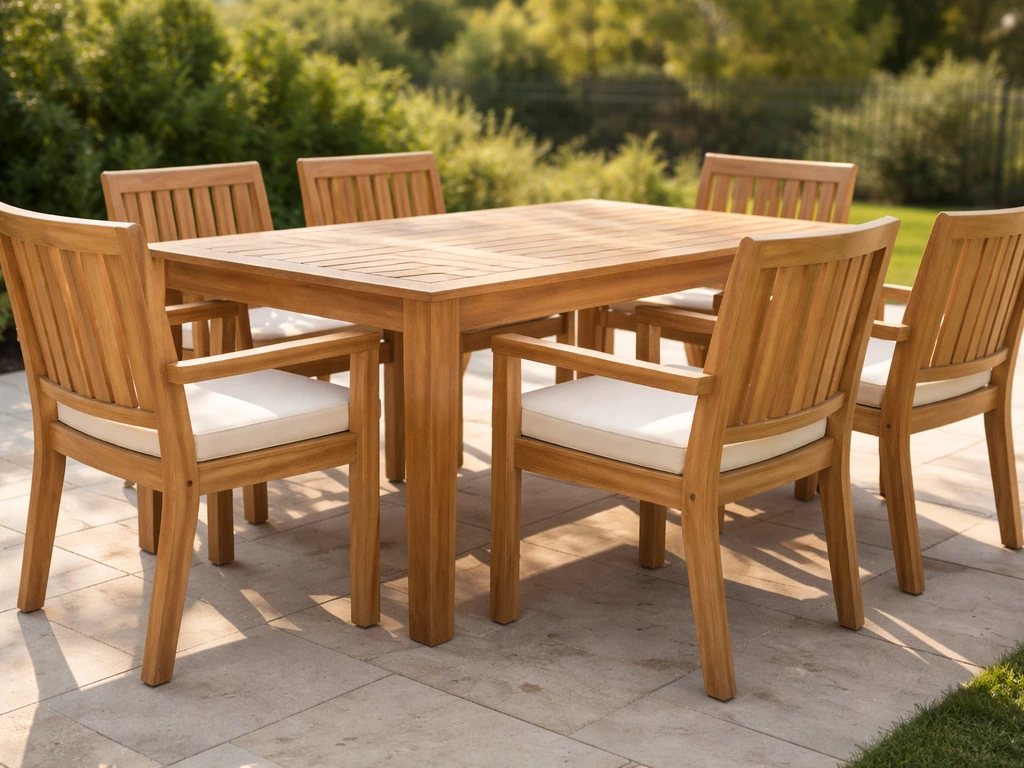
What eucalyptus patio furniture actually is
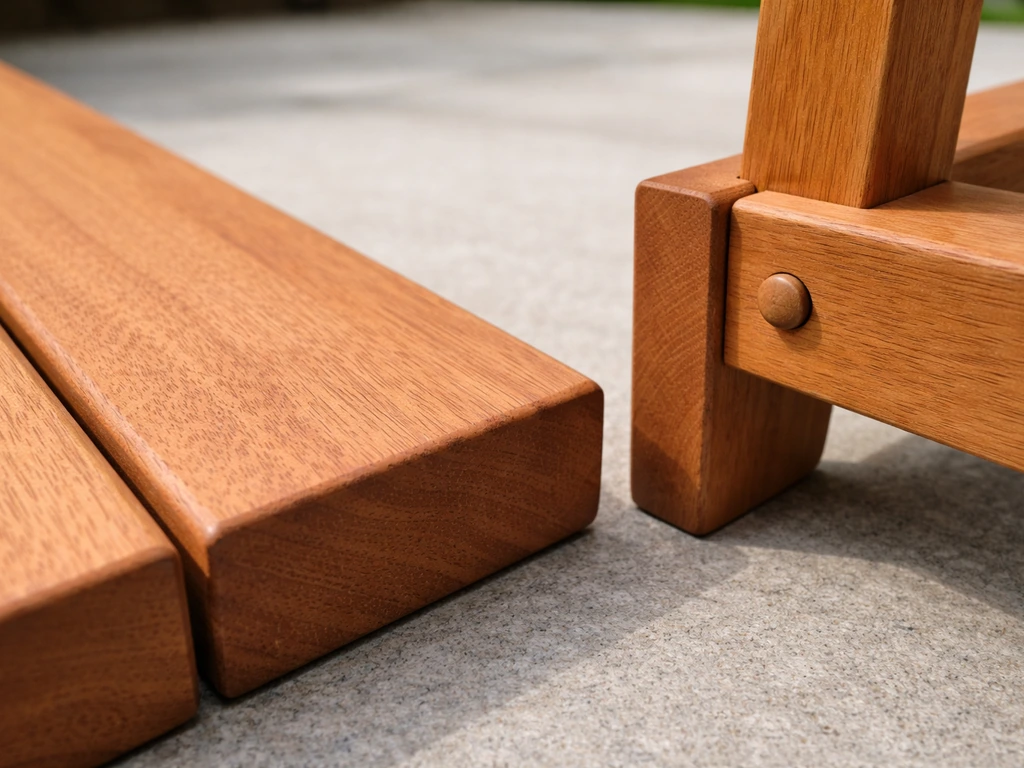
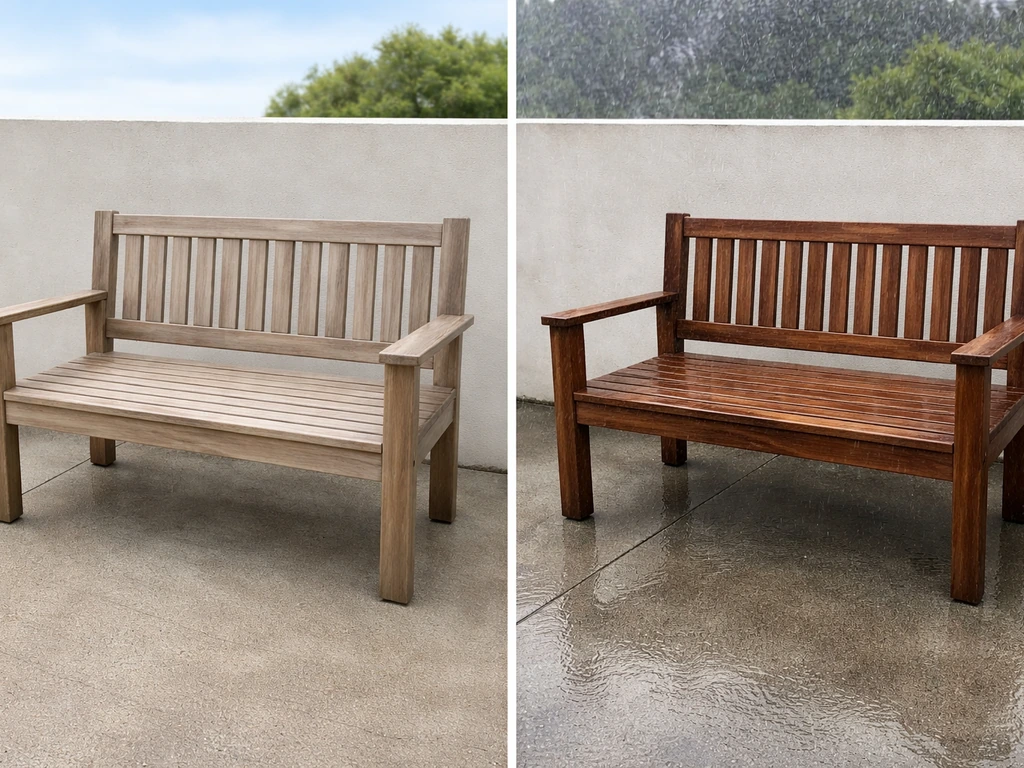
Eucalyptus is a fast-growing hardwood native to Australia but commercially harvested in Brazil, South Africa, and parts of Southeast Asia. For patio furniture, it sits in a similar category to teak and ipe: dense, naturally oily, and well-suited for outdoor exposure. You'll typically see it in a warm reddish-brown color when freshly oiled, which silvers out to a weathered gray if left untreated over time.
The construction types you'll run into break down into a few clear categories. Solid eucalyptus uses full boards or thick slats and is what you want for dining tables, benches, and chairs that need to bear real weight. Finger-jointed eucalyptus pieces are made from smaller segments glued and joined together, which can be perfectly acceptable for frames but is worth spotting in product specs before buying. Then there's the 'eucalyptus look,' which usually means another material (often a composite, MDF, or cheaper softwood) with a stain or veneer finish meant to mimic the wood grain. Those are not eucalyptus furniture, and they won't perform the same way outdoors.
Finishes matter a lot here. Brands like Outdoor Interiors explicitly pre-oil and stain their pieces before packaging, using UV-stabilized finishes applied at the factory. That means the wood arrives with a head start on protection. Other brands ship raw or lightly oiled, leaving more of the maintenance work to you from day one. Hardware is the other variable: look for stainless steel or hot-dipped galvanized hardware on any set you're considering. Zinc-plated or plain steel bolts will rust outdoors within a season, and that's a common complaint you'll see in customer reviews regardless of how good the wood itself is.
How it actually holds up outdoors
Eucalyptus is a Janka hardness-rated wood, typically sitting around 1,125 to 1,700 lbf depending on the specific species used, which puts it solidly in teak territory and well above cedar or pine. That density translates directly to outdoor durability. It resists surface scratches, doesn't dent easily, and the natural oil content means moisture doesn't penetrate as quickly as it would with softwoods. In practice, a well-maintained eucalyptus set on a covered patio can last 10 to 20 years without major structural issues.
That said, eucalyptus is not fully immune to weather. The biggest real-world vulnerabilities are cracking during seasonal dry spells and surface checking (small surface cracks) from repeated wet-dry cycles. If you live somewhere with a wide temperature swing between summer and winter, or you leave furniture out through a dry, hot summer without re-oiling, you'll see the wood start to check and gray. These are usually cosmetic issues rather than structural failures, but they do indicate the wood is under stress. Full sun exposure without any UV-protective oil accelerates this considerably.
Compared to teak, eucalyptus performs similarly but typically costs significantly less per piece. Compared to acacia (another popular mid-range outdoor hardwood), eucalyptus tends to be denser and more stable, though acacia is widely available and priced competitively. Against aluminum or powder-coated steel frames, eucalyptus obviously requires more active maintenance, but the warmth, comfort, and aesthetic payoff is why people choose it in the first place.
Weather performance by climate type
| Climate | Risk Level | What to Expect | Key Mitigation |
|---|---|---|---|
| Hot and dry (desert/SW US) | Medium-High | Surface checking, rapid graying, cracking if unoiled | Oil 3-4x per season, store or cover in peak heat |
| Humid subtropical (SE US, coastal) | Low-Medium | Performs well; mildew on cushions is a bigger concern | Oil 2x per season, ensure drainage under furniture |
| Temperate/Pacific Northwest | Low | Excellent natural durability; less oil needed | Annual oiling typically sufficient |
| Cold/freeze-thaw (Midwest, NE US) | Medium | Joinery stress from freeze-thaw cycles; hardware corrosion | Store indoors or cover tightly Oct through April |
| Tropical/heavy rain | Medium | Wood holds up; uncovered pieces develop mildew faster | Full covers when not in use, elevate feet off wet decking |
Build quality, comfort, and value: what the reviews actually tell you
Across customer reviews of eucalyptus patio furniture, a few themes repeat consistently. If you’re specifically looking for Elliot Creek patio furniture reviews, focus on whether buyers mention finish durability, cushion comfort, and how quickly any hardware starts to rust customer reviews. If you are comparing options, reading erommy patio furniture reviews can help you spot patterns in build quality and cushion comfort before you buy customer reviews.
If you want the fastest path to a practical answer, a dedicated ebel patio furniture review can help you compare durability, comfort, and build quality across real customer reports. If you are considering Erwin and Sons patio furniture, it helps to look closely at how real customers describe durability, cushions, and maintenance over time.
If you want a quick way to compare options, look for ace evert patio furniture reviews that call out build quality, cushion performance, and how the finish holds up after the first season customer reviews. If you're specifically curious about Elposun, you can also look up elposun patio furniture reviews to compare build quality, cushioning, and how the sets hold up after a season.
Build quality is generally good to excellent in the $400 to $1,200 range for dining sets, with solid joinery, decent sanding, and a finish that looks premium out of the box. Below that price point, you start seeing finger-jointing that shows more obviously, rougher surface prep, and hardware that starts showing rust within one season. Above $1,500, you're usually getting into better joinery precision, thicker stock, and cushions with better water-resistant cores.
Comfort depends heavily on whether the set comes with cushions and what those cushions are made of. Eucalyptus chairs without cushions tend to be firm and upright, which works for dining but gets uncomfortable fast for lounging. If you're buying a lounge or conversation set, cushions aren't optional. Look for cushion covers made from solution-dyed acrylic (like Sunbrella or similar) and foam cores rated for outdoor use. Many budget sets ship with polyester covers and plain foam that compress and mold within a season.
Design-wise, eucalyptus furniture is almost always sold in classic slatted or mission-style profiles, with some modern minimalist options at higher price points. It photographs very well and looks natural on almost any patio or deck surface. That aesthetic consistency is actually one of its strong suits, since the warm grain plays nicely with stone, composite decking, or grass. If you're also comparing styles from other brands, this ebel patio furniture review can help you gauge how their outdoor lines stack up.
Value for money is where eucalyptus really shines compared to alternatives. A solid eucalyptus dining set at $600 to $900 competes aesthetically and durably with teak sets priced two to three times higher. If you're willing to put in the oiling work, the price-to-longevity ratio is hard to beat in real wood patio furniture.
The real maintenance commitment (oiling, cleaning, and seasonal care)
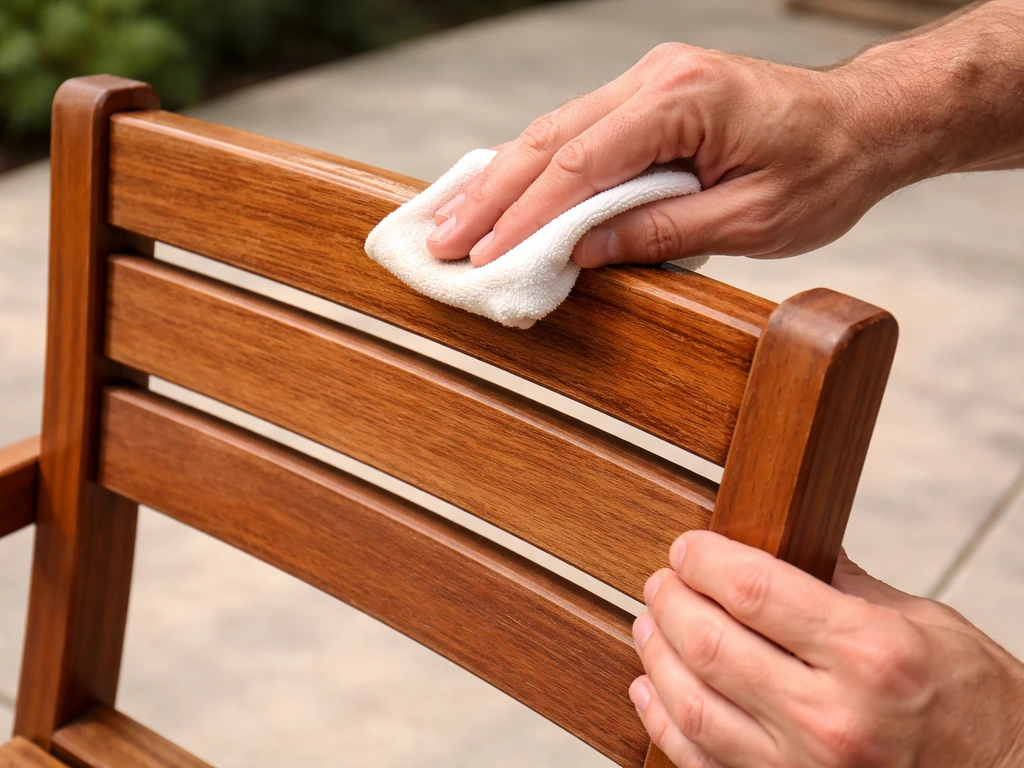
This is where a lot of buyers get surprised. Eucalyptus furniture is not a 'set it and forget it' material. If you want it to stay in good shape, you need an actual maintenance routine. Outdoor Interiors, one of the most widely distributed eucalyptus furniture brands, specifies applying teak or eucalyptus oil at least twice per season in spring and summer, with additional applications depending on your sun exposure, temperature, and humidity. That's a meaningful time commitment, and it scales up if you're in a hot, dry climate.
The oiling process itself is straightforward but has rules worth following. Apply oil with a clean cloth or brush, work it into the grain, and wipe off any excess after about an hour. Never apply oil in direct sunlight, since it dries too fast, soaks in unevenly, and can leave a tacky, blotchy surface. Early morning or evening application in the shade is the right approach. A single quart of teak or eucalyptus oil typically covers a full dining set two to three times, so the cost is minimal. It's the time and consistency that's the real investment.
For cleaning, warm soapy water and a soft brush handles most dirt and pollen. Avoid pressure washers at high settings since they'll lift the finish and raise the grain. If mildew appears (more common in humid climates), a diluted white vinegar solution or a dedicated outdoor wood cleaner works well. After any deep cleaning, let the wood dry completely before re-oiling, since trapping moisture under oil accelerates decay.
Pottery Barn's care guidance for their eucalyptus lines echoes what most manufacturers recommend: cover furniture with outdoor-rated covers when not in use or during inclement weather, and make sure pieces are fully dry before storage. That last point matters a lot in practice. Storing slightly damp wood in a garage or shed through winter is one of the fastest ways to invite mold and joinery issues.
Seasonal maintenance schedule at a glance
- Early spring: Clean off winter grime with warm soapy water, let dry 24-48 hours, apply first coat of oil
- Late spring/early summer: Second oil application, inspect hardware for rust or loosening
- Mid-summer: Optional third oiling if in a hot, dry, or very sunny location
- End of season: Clean thoroughly, make sure wood is bone dry before covering or storing
- Winter (cold climates): Store indoors or in a shed with covers; keep feet off wet surfaces to prevent moisture wicking
How to pick the right eucalyptus set for your patio
Start with your coverage situation. A covered patio or pergola dramatically reduces your maintenance burden and extends the furniture's lifespan. Full sun and full rain exposure is the hardest environment for any real wood furniture, and eucalyptus is no exception. If your patio is fully exposed, budget extra for quality covers and build in more frequent oiling, or honestly consider whether aluminum or synthetic wicker might serve you better.
Think about use type before you settle on a style. Dining sets with eucalyptus slatted tabletops and chairs are where this wood category really excels: the density holds up under heavy use, spills clean up easily, and the look fits almost any outdoor dining setting. Lounge and conversation sets in eucalyptus are great if you're buying cushioned versions with quality fabric, but bare eucalyptus chairs or sofas without cushioning are really only comfortable for short sits. Benches and accent pieces in eucalyptus are generally the lowest-maintenance format since they're simple, don't have moving joints, and are easy to store.
Here's a practical pre-purchase checklist when evaluating a specific listing:
- Confirm 'solid eucalyptus' in the product specs, not composite or MDF with eucalyptus finish
- Check hardware specs: stainless steel or hot-dipped galvanized screws and bolts only
- Look for pre-oiled or UV-stabilized factory finish (adds useful first-season protection)
- For sets with cushions: confirm water-resistant fill and solution-dyed or outdoor-rated cover fabric
- Check customer reviews specifically for mentions of rust, hardware failure, or joinery separation after one season
- Look for warranty coverage: at least 1 year structural, 2 years preferred
- Verify return policy before buying online, since shipping damage on wood furniture is a real risk
Assembly, shipping, and what typically goes wrong
Eucalyptus furniture sold through major retailers (Amazon, Lowe's, Wayfair, Pottery Barn, West Elm) almost always ships unassembled to keep shipping costs down. If you're considering West Elm options specifically, reading west elm patio furniture reviews alongside the general eucalyptus maintenance tips can help you spot which sets tend to have issues with hardware or cushioning. Assembly is typically moderate difficulty, meaning it's manageable for one person with basic tools but benefits from two people for larger dining sets or sectionals. Most pieces assemble in 30 to 90 minutes with included hardware and an Allen wrench. Directions quality varies a lot by brand and is something customer reviews surface clearly.
Shipping damage is probably the most common customer complaint across eucalyptus furniture lines. Dense hardwood pieces are heavy, and careless handling in transit leads to corner dings, finish scratches, and occasionally cracked boards. Inspect deliveries immediately, document any damage with photos, and contact the retailer within their damage reporting window (usually 24 to 72 hours). Buying from retailers with good return and replacement policies matters here more than with some other product categories.
The other common pain point is missing or stripped hardware. Budget brands in particular tend to cut corners on fastener quality, and stripped Allen bolts in pre-drilled holes are a recurring complaint in one-star reviews. If you encounter this, most local hardware stores carry metric replacement bolts that work fine. It's an annoying fix but not a dealbreaker, just something to be aware of upfront.
Cushion quality mismatches are a regular theme in reviews too, especially on sets in the $400 to $700 range. The wood frame is often genuinely good, but the included cushions are thin, compress quickly, or aren't truly weatherproof. Many buyers in this range are happy to swap the included cushions for higher-quality aftermarket options, which is a worthwhile upgrade if you're spending significant time on the patio.
Who should buy eucalyptus furniture (and who should look elsewhere)
Eucalyptus is the right choice if you want the look and feel of premium hardwood outdoor furniture without paying teak prices, and you're genuinely willing to oil it a couple of times per season. It's ideal for covered patios, moderate climates, and homeowners who treat outdoor furniture as an investment worth maintaining. Dining sets and benches are the highest-value formats in this material. If you're comparing specific brands across other wood types, it's worth knowing how eucalyptus stacks up against the offerings from brands like Ebel or West Elm, both of which sell wood-forward outdoor collections at different price and quality tiers.
Eucalyptus is probably not the right call if you want completely hands-off outdoor furniture. If you're not going to oil it, you're better served by powder-coated aluminum, all-weather resin wicker, or high-density polyethylene (HDPE) lumber furniture, all of which hold up well in full sun and rain with minimal effort. Similarly, if you're in a very harsh freeze-thaw climate and don't have covered storage for the winter, real wood furniture of any kind is going to require more work than most people want to do. Brands like Walker Edison and Erommy offer solid alternatives in metal and wicker categories if low maintenance is the priority.
For buyers who love natural wood but want something even more durable and lower-maintenance than eucalyptus, teak is the step up worth considering, though you'll pay a significant premium. For buyers who want the wood aesthetic on a tighter budget, acacia is worth a look, though it warps more readily and typically needs even more attentive care.
Quick comparison: eucalyptus vs common alternatives
| Material | Durability Outdoors | Maintenance Level | Typical Price (dining set) | Best For |
|---|---|---|---|---|
| Solid eucalyptus | Very good (10-20 yrs with care) | Medium (oil 2-4x/season) | $500-$1,500 | Covered/semi-covered patios, natural wood lovers |
| Teak | Excellent (20+ yrs) | Low-Medium (oil 1-2x/season) | $1,500-$5,000+ | Full exposure, low-maintenance premium buyers |
| Acacia | Good (7-12 yrs with care) | Medium-High (prone to warping) | $300-$900 | Budget-conscious buyers, covered patios |
| Powder-coated aluminum | Excellent (15-25 yrs) | Very low | $400-$2,000 | Full sun/rain exposure, minimal maintenance |
| All-weather resin wicker | Good (8-15 yrs) | Very low | $400-$1,800 | Casual use, budget buyers, low maintenance priority |
| HDPE lumber | Excellent (20+ yrs) | Very low | $600-$2,500 | Harsh climates, true zero-maintenance needs |
Your next steps if you're ready to buy
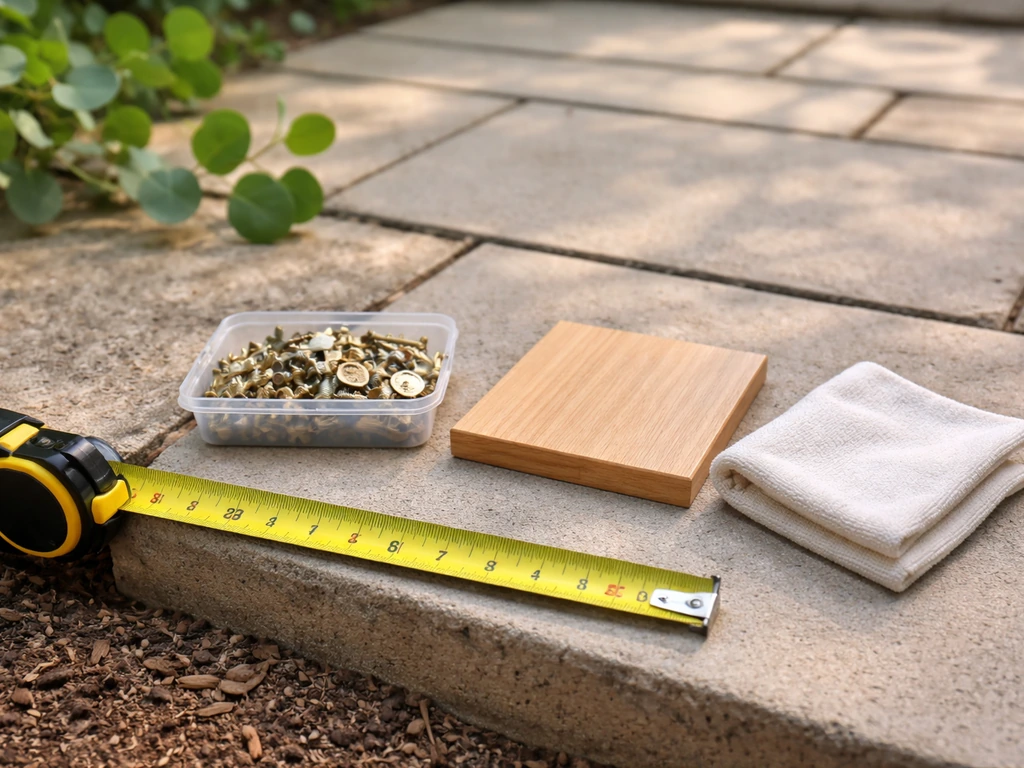
If eucalyptus sounds like the right fit, here's how to move forward with confidence. Nail down your space requirements first: measure your patio and leave at least 36 inches of clearance on chair-pull sides of dining tables. Then decide on dining versus lounge use, since that changes the frame design and cushion priorities significantly. Set a realistic budget that includes a bottle of eucalyptus or teak oil and a quality outdoor furniture cover, both of which are non-negotiable accessories rather than optional extras.
When you're scanning product listings, filter for 'solid eucalyptus' or 'FSC-certified eucalyptus,' look at the one and two-star reviews specifically for mentions of hardware rust or joinery failure, and check whether the brand sells replacement parts or hardware separately. That last detail is a quiet signal of a brand that stands behind its product. Buy from a retailer with a clear damage claim window, and you're set up for a eucalyptus set that can genuinely last you a decade or more.
FAQ
Is “solid eucalyptus” the same thing as “FSC-certified eucalyptus,” and does it matter for patio furniture reviews?
Not always. “Solid eucalyptus” describes construction (thick boards/slats vs composites), while “FSC-certified” is about sourcing. Reviews become more useful when they mention stable joinery and minimal finish issues, not just certification. If the listing claims FSC but also shows finger-jointed parts or thin slats, focus on the construction notes and hardware quality rather than certification alone.
How can I tell if a listing is truly eucalyptus versus “eucalyptus look” before buying?
Check for material language that specifies “eucalyptus wood” on the frame and tabletop. Vague phrases like “wood-toned,” “eucalyptus color,” or “wood veneer” are usually veneer or stained composite. Also scan photos of edges and underside surfaces, real wood grain will be visible there, veneer and MDF often look uniform or show edge banding.
What maintenance schedule should I plan for if my patio gets full sun?
Expect more frequent oiling than the minimum guidance. A practical approach is to inspect at least monthly during the bright season, when the surface looks drier or the grain stops looking “fed,” do the next oiling. Many owners end up re-oiling roughly every 6 to 10 weeks in hot, dry sun, then less often when shaded.
Will eucalyptus furniture still crack if I follow the oiling routine?
It can still crack, but good oiling reduces the risk and limits surface checking. The bigger driver is fast wet-dry and seasonal dryness, especially if you skip oiling before a dry summer stretch or leave furniture fully exposed during heat waves. If you see early surface cracks, oil sooner rather than waiting for the next season.
What kind of cover should I use, and should the furniture be dry first?
Use breathable outdoor-rated covers, not tight plastic that traps moisture. Before covering, make sure the wood is completely dry after cleaning and after any rain exposure, moisture trapped under oil or covers increases the chance of mildew and discoloration. If your cover has straps, tighten them so wind does not rub the finish.
Are cushion problems in eucalyptus sets mostly about comfort, or do they create real durability issues too?
Both. Thin foam and non-weatherproof covers lead to quick compression and loss of shape, and they also trap water that accelerates mildew and fabric breakdown. In reviews, look for mentions of foam “bottoming out” and fabric fading or staying damp after rain. If you plan to lounge, you may need to budget for replacement cushions even if the wood frame is excellent.
What hardware should I prioritize beyond the rust warnings in reviews?
Hot-dipped galvanized or stainless fasteners are the goal, but also check for how hardware is protected where it meets wood. Look for reviews that mention “no rust,” “no loosening,” or “threads still bite well.” If reviews describe stripped Allen bolts, it can indicate weak fasteners or holes that are drilled slightly off, and that can affect long-term stability even if rust is not yet present.
If a board gets damaged in shipping, can eucalyptus furniture be repaired easily?
Minor finish scratches are usually manageable with cleaning and re-oiling, for example sanding lightly and reapplying oil if needed. Corner dings can be harder to fix aesthetically. If you suspect structural damage like a cracked slat, don’t just repair the surface, request replacement while you are still inside the retailer’s damage window.
Is it safe to use a pressure washer on eucalyptus, and what’s the best alternative?
Avoid high-pressure washing because it can lift grain and remove finish unevenly, which increases checking. A safer alternative is warm soapy water with a soft brush, for tougher grime use a dedicated outdoor wood cleaner, then rinse gently and allow full drying before any re-oiling.
How do I estimate total cost for eucalyptus patio furniture, including accessories?
Budget for at least one quality bottle of eucalyptus or teak oil and a proper cover, those are recurring essentials, plus optional replacement cushions if you buy a lounge or if reviews show thin foam. If you live in full sun, plan for more oiling bottles over the first year to catch up on surfaces that shipped raw or lightly oiled.
What should I check in one- and two-star reviews that usually predicts real failure?
Prioritize mentions of recurring issues rather than one-off shipping complaints. The most predictive patterns are hardware rust within the first season, repeated stripped fasteners, warped or loosened joinery, and cushions that stay wet or mold quickly. If negative reviews are mostly about minor scuffs, that often points more to packaging than to long-term durability.
Do eucalyptus patio dining tables need special care around spills and standing water?
They do. Quick cleanup matters more than aggressive scrubbing, wipe spills promptly and avoid leaving standing water on slatted areas. If water beads disappear and the wood looks dry, re-oil after it has fully dried, this helps prevent localized surface checking around spill spots.
Is eucalyptus a good choice for freeze-thaw climates without covered storage?
It can work, but it’s higher maintenance than in mild climates. Freeze-thaw plus uncovered winter moisture increases the odds of surface checking and mildew in crevices. If you cannot store covered, consider all-weather alternatives (powder-coated aluminum or HDPE) or at least use a high-quality breathable cover and ensure the furniture is dry before covering.