
Wayfair patio furniture reviews are genuinely useful, but only if you know how to read them. The platform has thousands of outdoor furniture listings, each with dozens or hundreds of customer reviews, and the signal-to-noise ratio varies wildly. The short version: filter for reviews with photos, sort by most recent, focus on complaints about rust, fading, and wobbling rather than one-star delivery rants, and cross-check the dimensions listed on the product page against your actual patio measurements before you ever add something to your cart. Do that, and Wayfair's review ecosystem becomes one of the more reliable research tools you have for outdoor furniture today.
Wayfair Patio Furniture Reviews: How to Choose the Right Set

Grant Hollis
6 May 2026

What Wayfair patio furniture reviews can realistically tell you
Wayfair's review system collects feedback from verified buyers, and the volume is often large enough to spot real patterns. A set with 400 reviews averaging 4.2 stars is telling you something meaningful. A set with 12 reviews averaging 4.8 stars is not. The first thing to calibrate is your expectations about what reviews can and cannot reveal. Customer feedback is excellent at surfacing assembly difficulty, out-of-box quality, size accuracy, and first-season durability. It is much weaker at predicting 3-to-5-year performance, because most people don't return years later to update their reviews.
Wayfair also runs a 'Wayfair Verified' program that curates highly rated items based on customer review data. Wayfair's Investor Relations press release describes the multi-step evaluation used for the Wayfair Verified program, including qualitative quality review and checks for stability and comfort, as well as materials [Wayfair Verified' program that curates highly rated items based on customer review data](https://investor. wayfair. com/news/news-details/2025/Wayfair-Launches-Wayfair-Verified---A-New-Standard-of-Confidence-in-Home-Shopping/default.
aspx). That badge is a reasonable starting filter, but it is not a substitute for reading the actual reviews yourself. Some Reddit users are skeptical about how “Wayfair Verified” is determined and what the badge means in practice [Wayfair Verified program](https://www. reddit.
com/r/wayfair/comments/1lo6pjl). Verified items still have legitimate complaints buried in the feedback, and some of those complaints matter enormously depending on your specific use case. Think of Wayfair Verified as a first pass, not a final answer.
Reviews also reflect the buyer's context, which may or may not match yours. A family in Phoenix using a set on a covered patio will have a very different experience than someone in coastal New England leaving the same set uncovered year-round. That context rarely makes it into the star rating, which is why reading the text of reviews matters more than the aggregate score.
How to evaluate durability and weather resistance in reviews
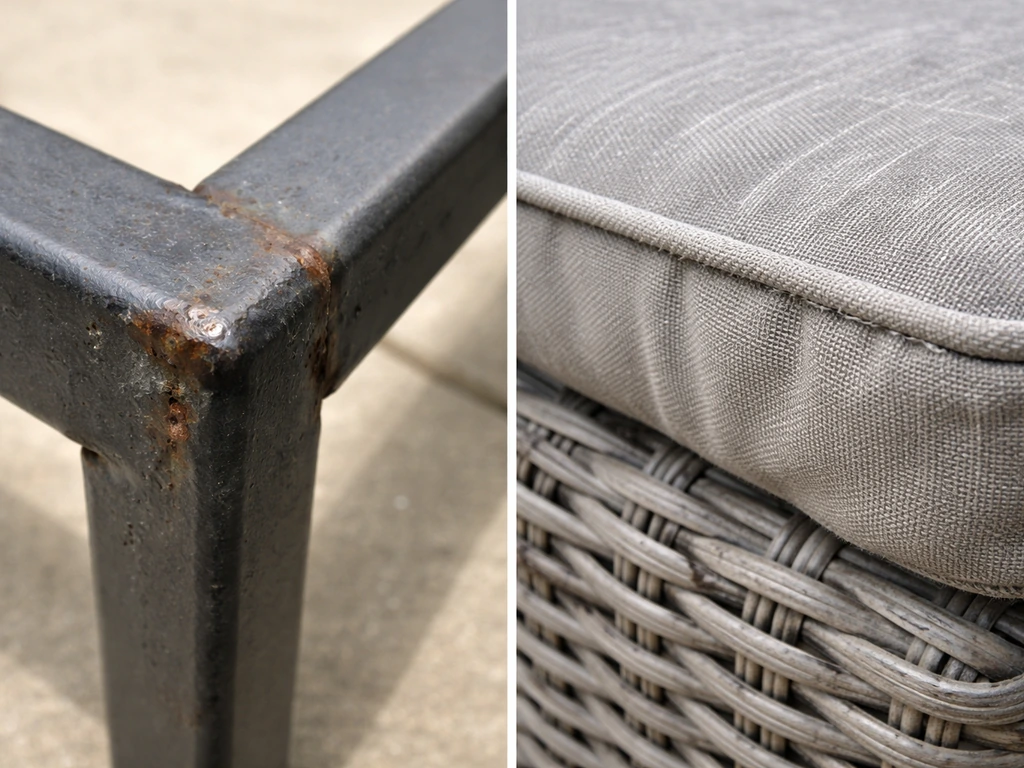
Durability complaints tend to cluster around a few specific failures: rust on steel frames, fading on cushions or wicker, wobbling at joints after a season of use, and cracking or brittleness in lower-grade plastics. When you're reading reviews, search the page for these exact words. Most browsers let you use Ctrl+F or Cmd+F to search text on a page, and doing a quick search for 'rust,' 'fade,' 'wobble,' or 'crack' inside the reviews section gives you a fast read on whether these are isolated incidents or recurring issues.
Pay close attention to the timing of complaints. A review that says 'started rusting after two months' is a red flag regardless of the overall star rating. A review that says 'still looks great after two summers' carries serious weight. Reviews posted in the same calendar year as your search are the most relevant because manufacturing quality can shift when a supplier changes components. Always sort reviews by 'Most Recent' rather than 'Most Helpful' for durability research, since the most helpful reviews might be two or three years old.
Material type is the single biggest durability predictor for patio furniture, and reviewers often mention it in context. Powder-coated aluminum frames almost never rust and show up in reviews with consistent long-term praise. Steel frames with thin or chip-prone coatings generate rust complaints much faster. All-weather wicker (resin wicker) holds up far better than natural rattan outdoors, and reviewers who confuse the two sometimes leave misleading feedback. Solid teak and high-density polyethylene (HDPE) lumber pieces draw the fewest weather-related complaints but usually carry premium price tags.
How to judge comfort, build quality, and materials from user feedback
Comfort is subjective, but reviewers give you enough detail to triangulate. Look for comments about seat depth, cushion thickness, and back support angle. A cushion described repeatedly as 'thin' or 'flat after a few weeks' is a genuine issue. Seat depth matters for taller or longer-legged buyers: anything under 20 inches of seat depth tends to generate complaints from adults about feeling perched rather than relaxed. Reviewers with photos are especially valuable here because you can see actual cushion compression and frame proportions rather than relying on studio product shots.
Build quality is harder to assess remotely, but reviewers describe it through specific language. Phrases like 'feels solid,' 'no wiggle,' and 'heavy and sturdy' are positive signals. 'Lightweight,' 'flimsy,' and 'plastic-y' are warning signs even when attached to four-star reviews. Some buyers rate a set four stars despite real structural concerns because the price was low or the look was right, so don't let a decent star average override repeated qualitative descriptions of flimsiness.
For materials, use the product page specs alongside reviews. If the listing says 'aluminum frame' but reviewers mention rust, that's a red flag worth investigating: it may be steel with an aluminum-look finish. If the listing says 'all-weather wicker' but reviewers describe cracking in the first winter, you're likely looking at lower-grade resin rather than the thicker, UV-stabilized material used by better manufacturers. Cross-referencing specs with review language catches a lot of misleading product descriptions before you commit.
Spotting common review red flags (assembly, sizing, parts, delivery)
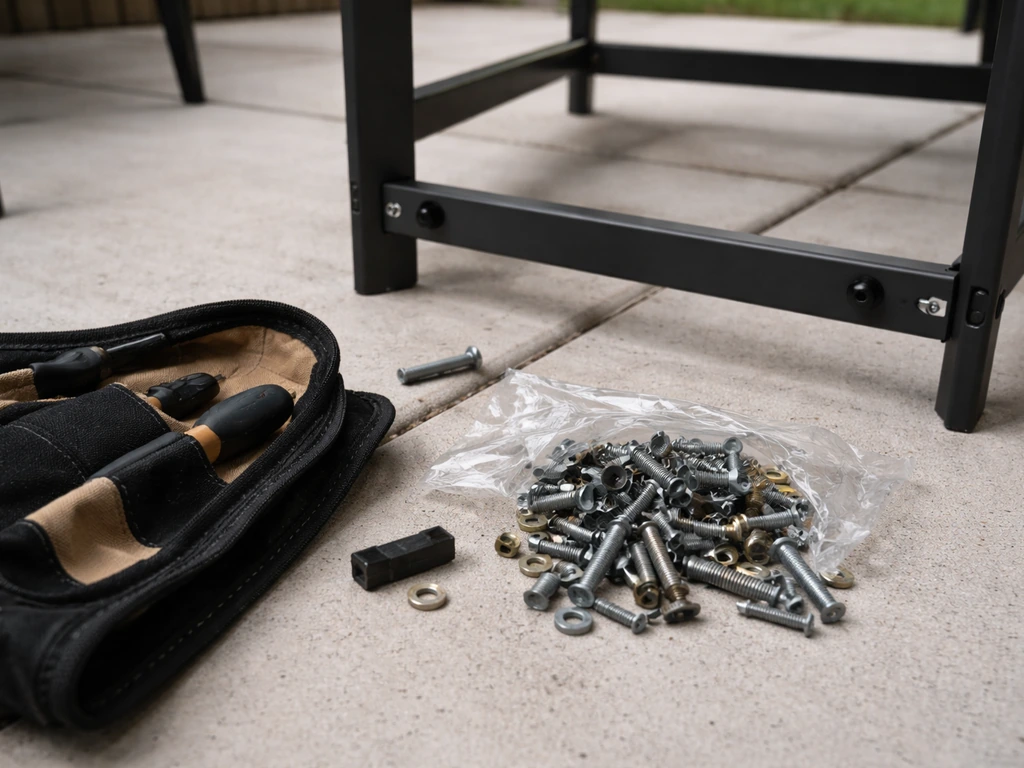
Some of the most valuable information in Wayfair reviews is about problems that have nothing to do with long-term quality but still affect your buying decision. Assembly difficulty, incorrect sizing, missing or damaged parts, and delivery damage are all common complaint categories, and they require different responses.
Assembly complaints
Assembly reviews are worth taking seriously. A set that requires two adults and three hours with imprecise hardware is a real-world inconvenience, especially if it needs to come apart for seasonal storage. Look for comments about unclear instructions, misaligned holes, or stripped hardware. One or two assembly complaints in 200 reviews is noise. Twenty percent of reviewers mentioning assembly frustration is a pattern. If a set consistently draws assembly complaints, factor in whether you want to pay for Wayfair's assembly service or hire someone locally.
Sizing and fit issues

Sizing complaints are extremely common and often preventable. Many negative reviews for patio furniture come down to the buyer not measuring their space. That said, some listings have genuinely inaccurate dimensions or photos that make pieces look larger than they are. If multiple reviewers say a set is 'much smaller than expected' or 'the table barely fits four adults,' that's a product-level issue, not a measurement error. Always check whether the listed dimensions match the review descriptions before ordering.
Damaged or missing parts on delivery
Delivery damage is a known risk for large patio furniture orders. Wayfair's protection plans cover claims for damaged or missing parts through their customer service team, and most delivery and damage issues can be resolved without a full return. The 30-day return window also applies to most patio furniture items if a resolution isn't possible. Wayfair’s operator-facing returns policy also describes an easy return policy for unused items up to 30 days after delivery [30-day return window](https://sell.
wayfair. com/operate-returns). The important thing is to inspect every box on arrival and document damage with photos before signing off. Reviews that mention delivery damage but also describe a positive resolution from Wayfair's support team are actually useful signals that the company's service works as intended.
Matching reviews to your patio needs (covered vs uncovered, climate, maintenance)
The most useful thing you can do when reading reviews is filter them through your own situation. A covered patio in a mild climate is a completely different environment than an exposed rooftop deck in a humid coastal city. Reviews written in those two contexts are not interchangeable, and a set that holds up beautifully under a pergola in California may show rust or fading within a season left uncovered in Florida or New England.
| Your Situation | What to Look For in Reviews | Red Flags to Watch |
|---|---|---|
| Uncovered patio, rainy or humid climate | Rust resistance, UV fade comments, water drainage in cushions | Any mention of rust within first season, cushion mold or mildew |
| Covered patio, mild climate | Overall comfort and build quality over 2+ seasons | Structural wobble, hardware corrosion even under cover |
| Hot, sunny, dry climate | UV stability, color fading on cushions and frames | Fading within 6 months, cushion cracking or brittleness |
| Cold-weather patio, seasonal storage | Off-season storage ease, cushion durability after folding and stacking | Wicker cracking after temperature cycles, frame paint chipping |
| Year-round outdoor use, no storage | Long-term durability reviews (2+ years old), material quality | Any review mentioning significant deterioration before year two |
Maintenance tolerance is another filter. If you don't want to oil teak annually or re-cover cushions every two seasons, look for reviews that specifically mention low maintenance. HDPE lumber and powder-coated aluminum consistently get praised for low upkeep. Natural teak and wrought iron can be beautiful but generate maintenance-related comments that reveal how much ongoing care is required. Buyers who hate maintaining their furniture and bought something demanding often drop a star or two just for that reason.
A step-by-step way to shortlist and decide today
Here's the exact workflow I'd use to go from browsing to confident order in a single session. It takes about 30 to 45 minutes if you do it methodically.
- Measure your patio first. Write down the usable length and width of your outdoor space, leaving at least 3 feet of clearance around any table and chairs for comfortable movement. Note whether you have any overhead constraints like a pergola or umbrella hole requirement.
- Define your non-negotiables before you start browsing. Pick two or three things that matter most: weather resistance, comfort, price ceiling, specific seating count, or style. This prevents you from getting distracted by listings that look great but don't fit your actual needs.
- Use Wayfair's filters to set a price range, material type, and seating capacity. Start with a broader price range than you think you need so you can compare budget and mid-range options side by side.
- Apply the Wayfair Verified filter as a first pass, then look at review counts. Focus on sets with at least 50 reviews. More than 150 is better for spotting reliable patterns.
- For each shortlisted item, sort reviews by Most Recent. Spend five minutes reading the most recent 10 to 15 reviews with attention to durability, sizing, and assembly mentions. Use browser search to scan for your key words: rust, fade, wobble, small, instructions.
- Check for photo reviews. Buyer photos taken outdoors in actual use conditions are more reliable than studio shots and show real color, scale, and cushion thickness.
- Confirm the dimensions match your measurements. If reviewers consistently say the item runs small, add a few inches to the listed dimensions when planning your space.
- Check the return policy for your specific item. Most patio furniture falls under Wayfair's standard 30-day return window, but verify this on the product page before ordering.
- Add your top two options to your cart and compare them side by side in separate browser tabs. Look at material specs, warranty language, and total price including any shipping fees.
- Order your top choice. Photograph the boxes before opening, inspect all pieces immediately on arrival, and contact Wayfair customer service the same day if anything is damaged or missing.
Quick measurement checklist before you order
- Patio length and width (usable space, not total area)
- Minimum clearance needed around chairs when pulled out (plan for at least 36 inches behind each chair)
- Doorway or gate width if furniture needs to be moved in and out seasonally
- Umbrella hole requirement if you want shade (standard is 1.5 to 2 inches)
- Overhead clearance if you're buying a dining set with chairs that stack or umbrellas that tilt
- Number of people you need to seat regularly vs occasionally (size for regular use, not maximum guests)
Value comparison and budgeting: premium vs budget choices on Wayfair
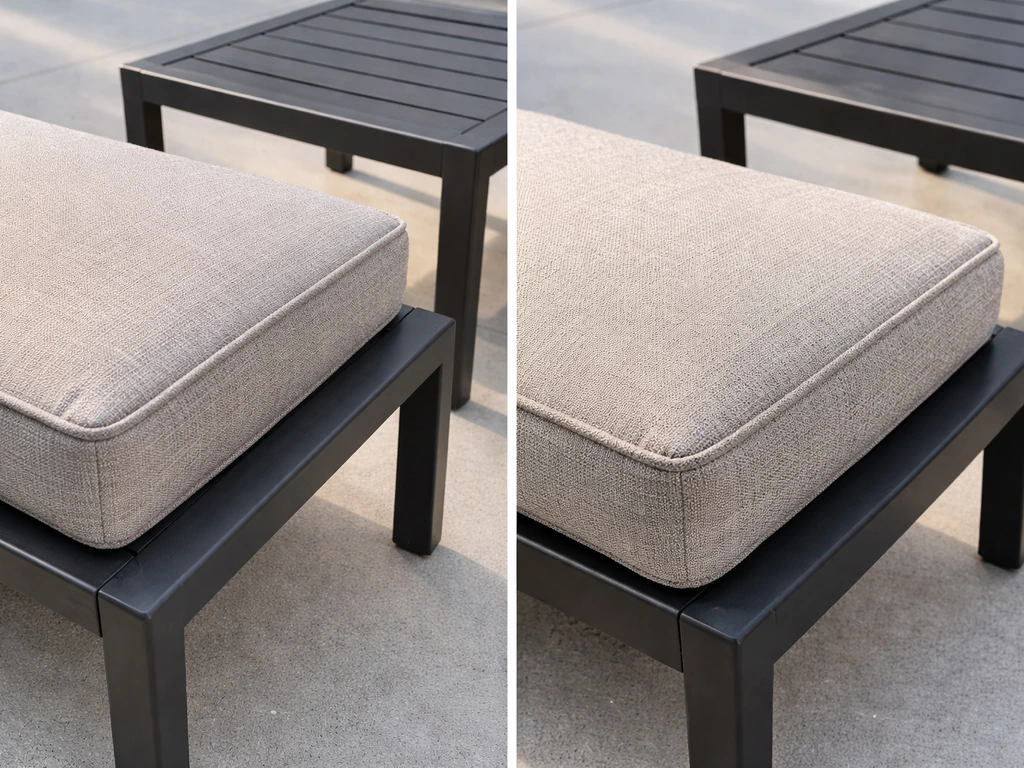
Wayfair sells everything from sub-$300 conversation sets to $3,000-plus dining collections, and the quality difference is real but not always proportional to price. Budget sets in the $300 to $700 range often use steel frames with powder coating of variable quality, thinner resin wicker, and cushions with lower fill density. They can look good for a season or two under good conditions, but uncovered outdoor use accelerates wear noticeably. Mid-range sets in the $700 to $1,500 range tend to use aluminum frames, thicker all-weather wicker, and higher-density foam cushions with solution-dyed fabric that holds color longer. Premium options above $1,500 typically feature solid aluminum, HDPE lumber, or genuine teak, with commercial-grade fabric cushions and multi-year warranties.
| Price Tier | Typical Frame | Cushion Quality | Expected Lifespan (uncovered) | Best For |
|---|---|---|---|---|
| Budget ($300-$700) | Steel or thin aluminum | Standard polyester fill, basic fabric | 1-3 seasons | Covered patios, renters, seasonal-only use |
| Mid-Range ($700-$1,500) | Powder-coated aluminum, thicker resin wicker | Higher-density foam, fade-resistant fabric | 3-6 seasons | Most homeowners, mixed covered/uncovered use |
| Premium ($1,500+) | Solid aluminum, HDPE lumber, or teak | Commercial-grade foam, solution-dyed Sunbrella-type fabric | 7-15+ seasons | Permanent installations, year-round climates, long-term investment |
The honest trade-off analysis: budget sets are not a bad choice if your situation suits them. A covered back porch in a mild climate can get years of good use from a $500 set. Where budget sets consistently disappoint is in full-sun, uncovered, year-round exposure. Reviewers in those conditions almost always note early deterioration, and those reviews are the most useful data you have for making the right call.
If you're comparing Wayfair options against other retailers, it's worth knowing that specialty outdoor furniture brands, such as those reviewed separately at sites covering Frontgate, Fortunoff, or Portofino, often offer more consistent premium-tier durability with dedicated outdoor warranties. If you want more specific insights, you can also read portofino patio furniture reviews for comparisons on premium outdoor options.
If you want a different style of premium-brand comparison, looking at Frontgate patio furniture reviews can help you benchmark durability and warranty support against Wayfair’s options. Wayfair's strength is breadth and price competition, not exclusive access to the highest-end manufacturers. For most homeowners, that breadth is exactly what they need. For buyers who want guaranteed 10-year outdoor performance and are willing to pay for it, a dedicated outdoor furniture specialist might be a better fit.
One more practical note on value: factor in cushion replacement cost from the start. Many Wayfair sets use non-standard cushion sizes, which means when the cushions fade or flatten in years two or three, you may be ordering replacements directly from the manufacturer rather than picking them up at a home store. Reviewers sometimes mention this late in their feedback, and it's worth checking whether the brand sells replacement cushions before you commit to a set.
The bottom line is that Wayfair's review system, used carefully, gives you more actionable pre-purchase information than most physical showrooms ever could. If you want to see how these review signals play out for specific product types, you can also check Gluckstein patio furniture reviews for real buyer experiences. You just have to read it the right way: recent reviews first, pattern complaints over isolated ones, material specs verified against reviewer descriptions, and your own patio context applied to every piece of feedback you read. Do that and you'll order with genuine confidence rather than hope.
FAQ
How can I tell if a negative Wayfair review is about a one-off problem or a real durability issue?
Sort reviews by Most Recent and then look for the “failure window” in the text, for example rust after 2 months or fading after one summer. If the earliest complaints cluster around the same season, assume you are seeing the product’s real durability limit rather than random bad luck.
What comfort details in Wayfair patio furniture reviews matter most for avoiding buyer’s remorse?
For chairs and dining sets, pay attention to seat height, seat depth, and cushion thickness, not just overall comfort ratings. If reviewers mention feeling perched (too shallow) or weak back support (angle or lumbar support issues), prioritize those details over star averages.
What assembly-related review signals should make me reconsider a patio set?
Check whether reviewers mention specific hardware problems like stripped screws, misaligned bolt holes, or missing tools, and compare that to the product’s assembly requirements (number of pieces, tool type, and whether it needs two adults). If multiple reviews describe the same assembly flaw, plan to return or budget time for rework.
How do I use reviews to verify that “outdoor” materials actually hold up in wet weather?
If the listing includes “outdoor rated” materials, compare that claim to reviewer wording about mildew, peeling, or cracking after winter. Mildew or peeling often points to inadequate UV or water resistance, even when the material name sounds “outdoor-safe.”
Should I factor in storage and cover compatibility from Wayfair patio furniture reviews?
Look for confirmation that the set fits your storage plan. Reviews that mention needing to disassemble for storage, awkward carrying, or covers that do not fit properly are often missing from the product page, and they affect your real ownership cost and effort.
How can I interpret “wobbling” complaints correctly?
Yes. Many reviews mention whether frames wobble immediately, after tightening, or only after weather exposure. If wobbling starts right away, assume build-quality or hardware fit issues, but if it appears after outdoor exposure, assume material or joint design limitations.
What should I do if the listing says aluminum but reviews mention rust?
When reviewers say “steel” or “powder-coated,” also search for contradictions like rust staining under cushions or rust despite “coated” claims. If you see repeated rust descriptions while the listing only emphasizes powder coating, treat it as a coating durability red flag.
How should I use older Wayfair patio furniture reviews if I’m buying now?
Use the “most relevant year” approach. Compare reviews from the same season or climate as your location, and treat older reviews as less predictive if the text suggests material or supplier changes (for example, “updated this year” or “instructions changed”).
How do I match review experiences to my specific sun and weather exposure?
Instead of relying on star rating, look for complaints that list both the symptom and a trigger condition, such as “after rain,” “full sun,” “winter freeze,” or “uncovered.” That makes it easier to match to your exposure level and decide whether to prioritize shade coverage or invest in more durable materials.
Why should I consider cushion replacement cost when reading Wayfair patio furniture reviews?
Check whether reviewers mention replacement cushions sold separately and whether they describe the cushion size as standard or “custom.” If the set uses non-standard sizing, replacement could require ordering direct and paying shipping, so confirm availability before buying.
How can I judge delivery damage risk and Wayfair support quality from reviews?
Inspect reviews for delivery and resolution details. If multiple reviews mention damage but also describe quick replacement parts or refunds without a full return, that suggests the support workflow is effective. If damages frequently require long delays or multiple contacts, weigh that risk into your purchase decision.
Are “Wayfair Verified” reviews always the best ones to trust?
Confirm whether the “verified” badge is paired with photos and specific material descriptions. If most “Verified” reviews are short without detail, the badge helps less, and you should lean harder on reviewer text that names issues like rust, fading, or cracking and includes timeframe info.