
Cast aluminum, powder-coated steel, and UV-stabilized resin wicker consistently come out on top when you look at real customer reviews for brick patio furniture. They hold up against moisture and abrasion better than most alternatives, they sit stably on hard paver surfaces, and they don't punish you with heavy maintenance seasons. The tricky part isn't finding furniture that looks good on brick, it's knowing which review signals actually predict long-term performance, and which complaints are noise. This guide gives you both: a clear framework for reading reviews and a practical shortlist process so you can pick the right set for your specific patio without second-guessing.
The Brick Patio Furniture Reviews: What Works Best

Grant Hollis
8 Jun 2026
Why brick patios change how you should shop for furniture
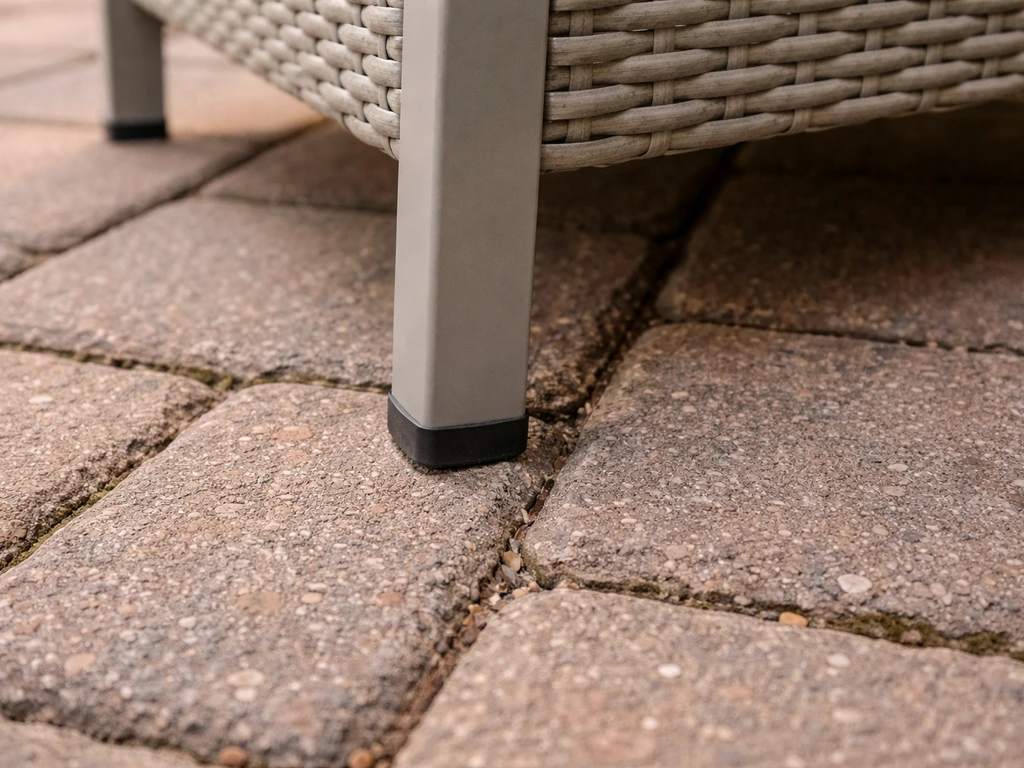
Brick and paver surfaces look gorgeous, but they create a specific set of problems that soft-surface or deck patios don't. First, the surface is uneven at every grout line, which means furniture legs that aren't perfectly level will rock. Second, brick is abrasive, bare metal legs will scratch and wear through protective coatings faster than they would on composite decking or indoor tile. Third, the material retains moisture in those same grout joints, which means anything sitting close to the surface is exposed to ambient humidity even on dry days.
Those three issues, wobble, coating wear, and moisture, are exactly what cluster in the worst reviews for patio furniture used on pavers. When you see a reviewer complain that 'the legs started rusting after one season' or 'it wobbles no matter how I adjust it,' those are almost always brick-surface problems, not manufacturing defects per se. Shopping with that context changes which materials and designs you prioritize.
What to look for in patio furniture reviews (and how to read them)
Reading reviews for brick-compatible furniture is a skill. Most people skim the star rating and the first two or three written reviews, which tells you almost nothing useful. Here's how to extract the signals that actually matter.
Filter by surface type and use context
Search the review text for words like 'patio,' 'pavers,' 'concrete,' and 'brick.' Reviewers who used the furniture on hard surfaces will mention stability, leg wear, or sliding, the exact issues you care about. Reviews from people using it on a soft lawn or indoors are almost irrelevant to your situation.
Look at one-star reviews specifically for pattern complaints
One-star reviews split into two groups: isolated bad experiences (wrong item shipped, missing part) and systemic issues (peeling finish after six months, legs bending under normal weight). You want to identify which category the complaints fall into. If five out of eight one-star reviews mention rust at the joints or frame wobble within a year, that's a real red flag for brick patio use. If they're all about shipping damage, the product itself may be fine.
Assembly complaints tell you about long-term durability
This sounds counterintuitive, but assembly difficulty is often a proxy for structural quality. Reviewers who struggled with poorly aligned bolt holes or cheap hardware are telling you that manufacturing tolerances are loose, and loose tolerances mean frames that wobble and connection points that trap moisture and corrode faster on abrasive hard surfaces. Conversely, reviews that call out clean welds, tight hardware, and level legs out of the box are usually describing furniture that will also stay stable on brick.
Check for long-term follow-up reviews
Many retailers now show 'verified purchase' reviews filtered by time since purchase. Look for reviews posted at least 12 to 18 months after purchase, these are the ones that tell you whether the powder coating is holding, whether the resin wicker is cracking, and whether the cushions have survived a real season. Six-month reviews are too early to judge most furniture placed on brick.
Best materials and styles for brick patios
Not all patio furniture materials handle the specific demands of brick and paver surfaces equally. Here's an honest breakdown of the main options.
| Material | Brick-Surface Durability | Weight/Stability | Maintenance Level | Best For |
|---|---|---|---|---|
| Cast aluminum | Excellent — rust-proof, holds coating well | Medium-heavy, stays put | Low — occasional wipe-down | Long-term dining sets, conversation sets |
| Powder-coated steel | Good — depends on coating quality at joints | Heavy, very stable | Medium — inspect joints annually | Statement pieces, dining chairs |
| UV-stabilized resin wicker | Very good — flexible, doesn't chip or rust | Light-medium, may need anchoring | Low — rinse and air dry | Conversation sets, loungers |
| Teak/acacia wood | Good — naturally dense and moisture-resistant | Heavy, stable | Medium-high — cleaning and sealing | Premium dining, accent chairs |
| Wrought iron | Moderate — heavy but coating failure is costly | Very heavy, extremely stable | High — repaint if coating chips | Classic/traditional styles only |
Cast aluminum: the safest bet on brick
Cast aluminum is genuinely rust-proof, there's no iron in it, so moisture exposure at grout lines won't cause corrosion even when the coating wears at leg contact points. It's also heavy enough to stay in place on smooth pavers without sliding constantly. The downside is that cast aluminum sets tend to cost more upfront, and some budget-tier versions use thinner casting that can flex under heavy use. In reviews, look for mentions of 'solid' or 'no flex' as positive indicators.
Powder-coated steel: durable but needs watching
Powder-coated steel is marketed heavily as an outdoor-ready finish, and a quality coating really does resist UV and moisture well. The vulnerability on brick is at connection points, where bolt hardware meets the frame, or where legs contact the paver surface repeatedly. Abrasion at those spots breaks the coating, and once the coating is gone, bare steel rusts fast. Annual inspection and touch-up paint at joints can extend the life significantly. For brick use, prioritize sets with welded (not bolt-assembled) frames wherever possible.
UV-stabilized resin wicker: surprisingly practical
PE resin wicker that's genuinely UV-stabilized doesn't crack, fade, or grow mildew the way natural rattan does outdoors. On brick, the main advantage is that the frames are usually aluminum, so you get the rust-proof benefit underneath. The main risk is lighter pieces sliding on smooth pavers, solved easily with furniture pads. Look for zip-off or removable cushion covers in reviews, because that feature makes the difference between a cushion that survives multiple seasons and one that grows mildew by August.
Teak and hardwood: beautiful but specific
Teak is naturally dense and oil-rich, which makes it resistant to moisture without heavy treatment, but on brick, the weight is an asset and the maintenance is a real commitment. Some guidance actually discourages teak oil because it can promote mildew buildup; regular cleaning and allowing the wood to get natural sunlight tends to be the better approach. Acacia is a more affordable alternative that performs similarly but often requires more consistent sealing in wet climates. For most brick patios, teak makes most sense as dining table tops or accent chairs rather than full seating sets.
Stability, protection, and setup on pavers
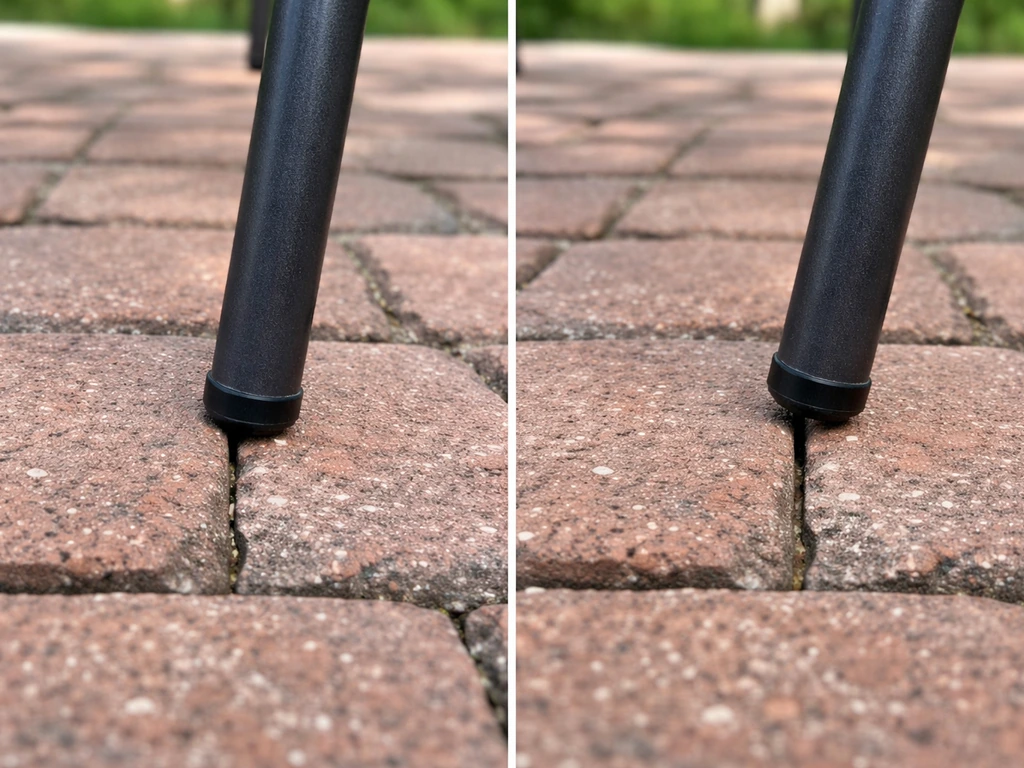
Getting furniture to sit correctly on brick is mostly a setup problem, not a product problem. The right approach at installation saves you from a season of wobble complaints.
The two-leg wobble test
After setup, press down on two diagonal corners of any chair or table, if it rocks, one or more legs aren't fully engaging the surface. On brick, this is almost always caused by grout lines rather than a bent frame. The fix is screw-style adjustable glides, which let you fine-tune each leg height independently. These are more durable and more precise than rubber stick-on pads, and they're worth adding to almost any metal-framed set you put on pavers.
Rubber and felt pads: what actually works on brick
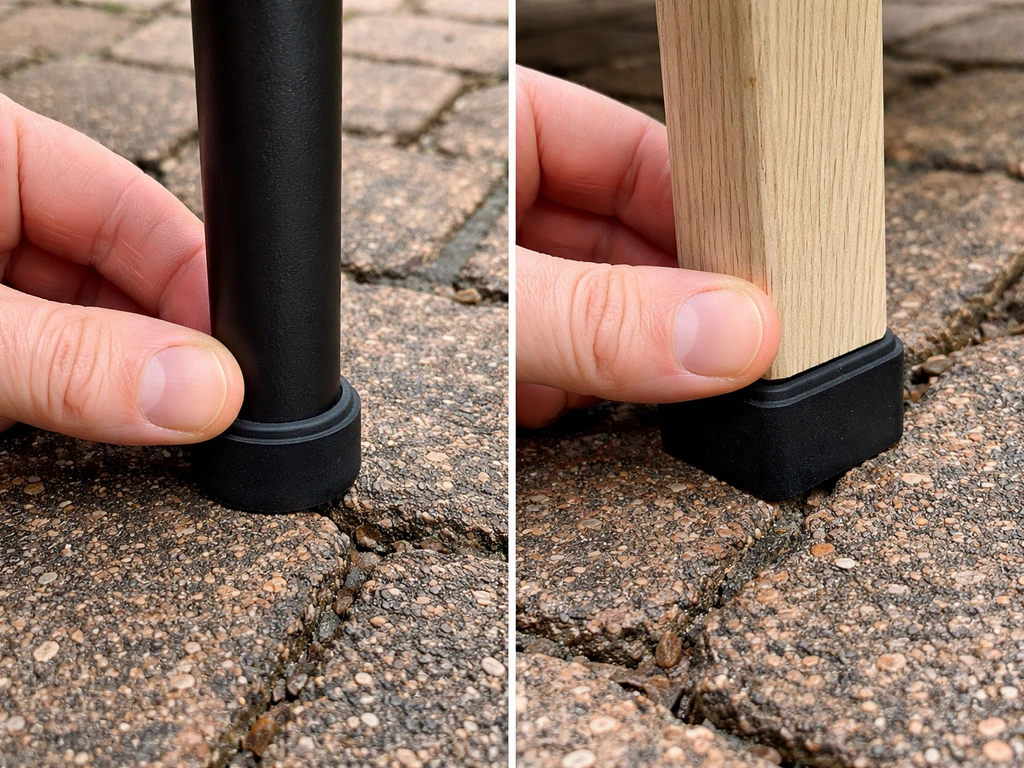
For sliding, rubber furniture pads sized to match the leg shape (round for round legs, square for square legs) grip brick surfaces well and also protect the coating at the contact point from abrasion. Felt pads work indoors but trap moisture against metal legs outdoors, which is the opposite of what you want. Stick with rubber or silicone pads specifically labeled for outdoor use.
Outdoor rugs as a stability layer
An outdoor rug under a seating group does two things: it anchors lighter resin wicker pieces and it protects both the brick surface and furniture legs from direct abrasion. The critical detail is the rug pad underneath, use open-weave rubber or PVC, not solid felt, because solid pads trap moisture against the brick and cause mildew under the rug. Look for outdoor rug pads specifically designed for drainage.
Layout planning on irregular brick
Measure your patio's functional zone (not just its total square footage) before buying any set. Account for foot clearance, about 3 feet behind chairs for pulling out, 18 inches from the table edge to the patio border. On brick, it's also worth noting where the most uneven grout lines fall before placing a dining table, since table stability is more critical than chair stability for comfortable meals.
Top picks by use case: dining, conversation, and lounging
Rather than recommending specific SKUs that may go in and out of stock, here's how to match furniture category to your actual use case on a brick patio. The right category narrows your shortlist faster than any star rating.
Dining sets: prioritize weight and joint quality
For dining on brick, stability under dynamic load (people pulling chairs, setting plates) matters more than for any other furniture category. Cast aluminum dining sets in the 5-piece or 7-piece range are the most reviewed and most consistently praised for paver patios. Look for sets where the table has a central pedestal or widely spaced leg geometry rather than four narrow legs clustered near the center, that geometry handles grout-line unevenness better. Stackable chairs with rubber foot caps are a bonus for storage flexibility.
Conversation sets: go for aluminum-framed resin wicker
Conversation sets, loveseat, chairs, and coffee table groupings, work extremely well on brick when the frames are aluminum under the resin wicker. They're lighter than cast iron and feel casual in a way that suits most backyard brick patio layouts. The main buyer mistake in reviews is choosing sets with thin cushions to save money. Cushion thickness (at least 4 inches of foam) makes a real comfort difference for extended entertaining, and reviews consistently call out thin cushions as the top regret purchase. Budget at least 20 to 30 percent of the set's cost for replacement cushion quality if the included ones seem thin in the listing photos.
Loungers and chaises: weight matters more than you think
Chaise loungers on brick need enough weight to not slide when someone shifts position, but not so much weight that repositioning during the day becomes a chore. Aluminum-frame loungers in the 25 to 35 pound range hit that sweet spot well. Fully flat-bottom loungers without individual leg contact points tend to sit more stably on uneven brick than narrow-leg versions. For families with kids or pets, powder-coated aluminum loungers with quick-dry sling fabric outperform cushion-based versions for obvious maintenance reasons.
Quick comparison by use case
| Use Case | Best Material | Priority Feature | Watch Out For |
|---|---|---|---|
| Dining (family) | Cast aluminum | Wide leg spread, heavy frame | Narrow leg clusters, cheap bolt hardware |
| Dining (entertaining) | Powder-coated steel or cast aluminum | Expandable table, stackable chairs | Coating gaps at joints |
| Conversation/lounging | Aluminum + resin wicker | Thick cushions, zip-off covers | Thin foam, non-removable cushion fabric |
| Loungers/sunbathing | Aluminum frame + sling or quick-dry fabric | Flat or wide base, adjustable back | Narrow legs on uneven pavers |
| Small brick patio | Any lightweight aluminum | Bistro scale, foldable options | Oversized sets that crowd the space |
Care, weatherproofing, and long-term durability
The difference between furniture that lasts three years on a brick patio and furniture that lasts ten years is almost entirely about maintenance habits, not initial price. Here's what actually makes a difference.
End-of-season inspection is non-negotiable for metal frames
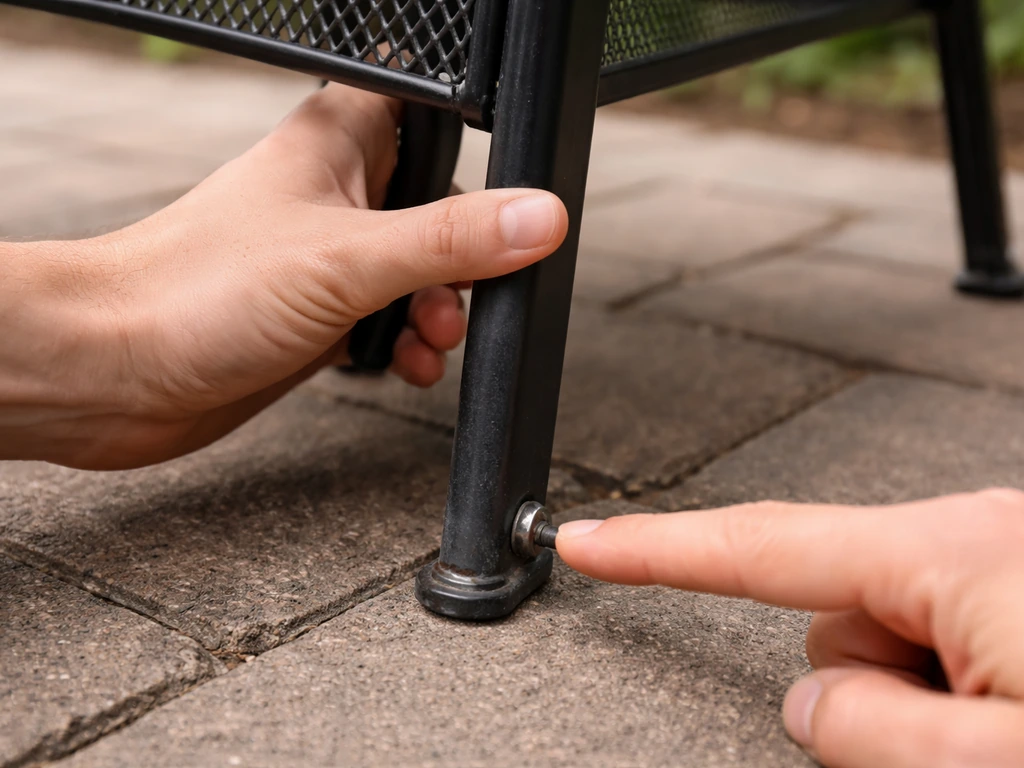
Every fall, flip your chairs and check leg contact points and any bolted connections for coating wear or rust spots. A small bottle of matching touch-up enamel costs a few dollars and extends the life of a powder-coated frame by years. Wrought iron needs this most urgently, a chip in a wrought iron coating left through a wet winter will look like significant rust by spring. Cast aluminum doesn't rust, but its coating can still chalk and peel with UV exposure, so a light application of auto wax to the frame once a year keeps the finish looking clean.
Cushion care on brick patios
The biggest cushion killer on brick patios isn't rain, it's leaving wet cushions sitting on metal frames after it rains. The combination of trapped moisture, warm temperatures, and limited airflow is exactly what causes mildew. If your set didn't come with zip-off covers, build a habit of standing cushions upright or storing them under cover after rain. For cleaning, follow the care label first, but most outdoor cushion fabrics handle a mild soap solution and rinse well, and sunlight after cleaning actively helps prevent mildew re-growth.
Weatherproofing for different climates
- Humid Southeast and Gulf Coast climates: prioritize mildew-resistant cushion fabric (Sunbrella or similar solution-dyed acrylic) and aluminum or resin frames — avoid wrought iron entirely.
- Rainy Pacific Northwest: covers are essential year-round; choose sets with water-shedding frame geometry (no upward-facing hollow tubes that collect water).
- Freeze-thaw Northern climates: store cushions indoors October through April; check that table bases don't collect standing water that expands when it freezes.
- Dry Southwest and desert climates: UV degradation is the primary threat; look for UV-stabilized coating certifications and avoid natural fiber accent pieces.
When to use furniture covers (and when not to)
Furniture covers protect against UV and debris, but on brick patios they can trap moisture underneath if they're not breathable or fitted well. Covers that pool water or don't ventilate create worse conditions for metal joints than leaving furniture uncovered in mild weather. Look for covers with vented sides and secure tie-downs, a cover that blows off in wind does nothing. For most climates, covering during extended rain or snow periods and uncovering in dry weather is better than year-round covering.
How to choose fast: measuring, budgeting, and building a shortlist
If you're trying to make a decision today, here's the process I'd walk through. It takes about 20 minutes and eliminates most of the guesswork.
- Measure your brick patio's usable zone: length and width of the area minus any walkway clearance, planters, or grill space. Write this down before browsing a single product.
- Decide on your primary use case: dining, lounging, or conversation — pick one as the anchor and plan secondary pieces around it.
- Set a real budget including cushion replacement: whatever you're comfortable spending, subtract 15 to 20 percent and consider that your cushion or accessory fund. Good-quality furniture with mediocre cushions is a common regret purchase.
- Filter by material first using the table above, based on your climate and maintenance tolerance. This alone cuts most product categories out.
- Go to your chosen retailer and filter by the material category you've chosen, then sort by most reviewed rather than highest rated — volume of reviews gives you more signal.
- Read the most recent one-star reviews for the top three options, specifically searching for the words 'wobble,' 'rust,' 'peel,' and 'mildew.' Flag any product where these appear in more than 20 percent of negative reviews.
- Check availability of replacement parts — cushions especially. A set without available replacement cushions after two years is a set you'll be replacing entirely in year three.
- Look for the two-leg wobble test outcome in reviews (people describing whether the furniture sits level on hard surfaces), and check whether rubber feet or adjustable glides are included or available as accessories.
If you're cross-shopping specific brands, it helps to look at how similar furniture performs in other retail-specific reviews. The comparison framework above applies to any of them, material category, joint quality, cushion specs, and long-term review patterns tell you more than brand loyalty alone big joe patio furniture reviews. Brands like Broyhill Birchcrest, Berkley Jensen, Big Joe, and Brown Jordan all occupy different spots on the price-to-durability spectrum, and each has a different track record on hard outdoor surfaces. If you want, you can narrow options by specifically reading broyhill birchcrest patio furniture reviews for stability, coating wear at joints, and long-term cushion condition on pavers. The comparison framework above applies to any of them, material category, joint quality, cushion specs, and long-term review patterns tell you more than brand loyalty alone.
The bottom line: brick patios reward furniture that's heavy enough to stay put, rust-resistant enough to handle paver-level moisture, and designed with accessible replacement parts. Cast aluminum dining sets and aluminum-framed resin wicker conversation sets check all three boxes most reliably across price points. Add rubber leg pads at setup, inspect joints every fall, and keep cushions dry, and you'll get a decade or more out of the right set on a brick patio. If you're comparing options like brown jordan patio furniture reviews, look specifically for long-term notes on coating wear at leg joints and stability on hard surfaces.
FAQ
Can I use patio furniture that wasn’t designed for pavers or brick on a brick patio?
Yes, but only if the legs have levelable glides or if you’re willing to pad and adjust at installation. Softer furniture legs (thin metal feet, straight pins, or small-diameter posts) tend to rock on grout lines unless the manufacturer includes adjustable hardware, so confirm the set mentions “adjustable glides,” “leveling feet,” or “self-leveling” in review text before buying.
What specific review phrases are the best predictors of whether furniture will survive on brick?
Look for review phrases that describe contact-point wear, not just general fading. The most predictive complaints for brick are about rust starting at leg bases, bolt-hardware spots loosening, coating peeling “where legs touch,” or “wobble at the grout lines,” especially in reviews posted after a full summer and the following spring.
What’s the most common cushion-related mistake people make on brick patios?
Avoid cushions labeled “water-resistant” without a plan for ventilation and drying. Even quick-dry fabrics can develop mildew if cushions remain on a metal frame after rain, so prioritize sets with zip-off covers or at least reviews that mention easy removal, fast drying, and storing cushions upright or under cover.
How do I know if my table will rock on brick even if it feels stable in the showroom?
It depends on how the set contacts the surface. If a table has four clustered legs, grout unevenness can cause rocking more often than with a central pedestal or widely spaced geometry, so verify in reviews whether stability improves after adding glides. If the rocking only appears “after rain” or “after it gets humid,” that often points to coating wear at joints rather than a bent frame.
Are powder-coated steel sets risky for brick patios, and how can I reduce that risk?
Powder-coated steel can last, but you must protect the frame at the bolt and leg contact points. Choose welded frames when possible, and if the reviews mention bolt-assembled seams, plan on annual touch-up enamel and regular checks of rust “around hardware” rather than only monitoring visible surface scratches.
Should I use felt pads or rubber pads under patio furniture on brick?
Not automatically. Solid felt can trap moisture against metal legs and speed up coating failure outdoors, while outdoor-rated rubber or silicone pads are designed to grip and allow drainage. Confirm pads are for outdoor use and match the leg shape (round-to-round, square-to-square) to avoid rocking from partial contact.
Do outdoor rugs help on brick patios, or can they make things worse?
Yes, if the rug pad is breathable and drains. Use open-weave rubber or PVC outdoor pads, and avoid solid felt under a rug because it can hold moisture and increase mildew risk for both the furniture legs and the rug underside. Reviews that mention “rug stays dry” or “no mildew smell” are a helpful signal.
What should I look for in furniture covers used on brick patios?
Many covers fail because they either don’t ventilate or they pool water. In reviews, watch for mentions of “wet under cover,” “mildew after storms,” or “cover blew off,” and choose covers with vented sides plus secure tie-downs. For most climates, covering during extended wet periods and uncovering in dry weather beats year-round covering.
How should I measure spacing for dining sets on a brick patio?
Measure your functional zone, not only total square footage, and treat clearance like a minimum requirement. Reviews often complain about crowding when people underestimate pull-out space, so verify “3 feet behind chairs” and “table edge to patio border space” in your layout, especially if you plan to move chairs in and out frequently.
Is assembly difficulty really a sign of future problems on brick patios?
Yes, assembly difficulty can be a real clue, but it only helps if you read the pattern. If many reviews report misaligned bolt holes, missing hardware, or frames that flex even when tightened, it correlates with wobble and faster corrosion on brick. If assembly is merely slow but the end result is “level out of the box,” that’s usually less concerning.
How can I test stability on brick after assembling the furniture?
A quick at-home test is more reliable than the first impression. When you push down on opposite corners, the absence of rocking is the goal, but if you hear clicking or see a leg hovering, address it with adjustable glides, not extra shims. On brick, rocking almost always traces to grout-line unevenness rather than a bent frame.
When and where should I inspect and do maintenance on my brick-patio furniture?
You should inspect legs and joints every fall, but also do a mid-season check after the first heavy rain or freeze-thaw cycle in your area. Touch-up enamel is most effective when rust is just starting, and focusing only on the tabletop or cushions can miss early coating failure at the leg bases.