
Pottery Barn patio furniture sits in a specific sweet spot: it looks genuinely good, it's built better than big-box store stuff, but it doesn't quite reach the level of true contract-grade outdoor furniture from specialty brands. If you go in knowing that, pick the right materials (teak or all-weather wicker over wood in wet climates), and choose Sunbrella cushions instead of the base polyester option, you'll likely be happy. If you buy the cheapest cushion option for a sun-drenched uncovered patio and skip the covers, you'll be writing a frustrated review by year two.
Pottery Barn Patio Furniture Reviews: Worth It?

Grant Hollis
5 May 2026
What Pottery Barn patio furniture actually is
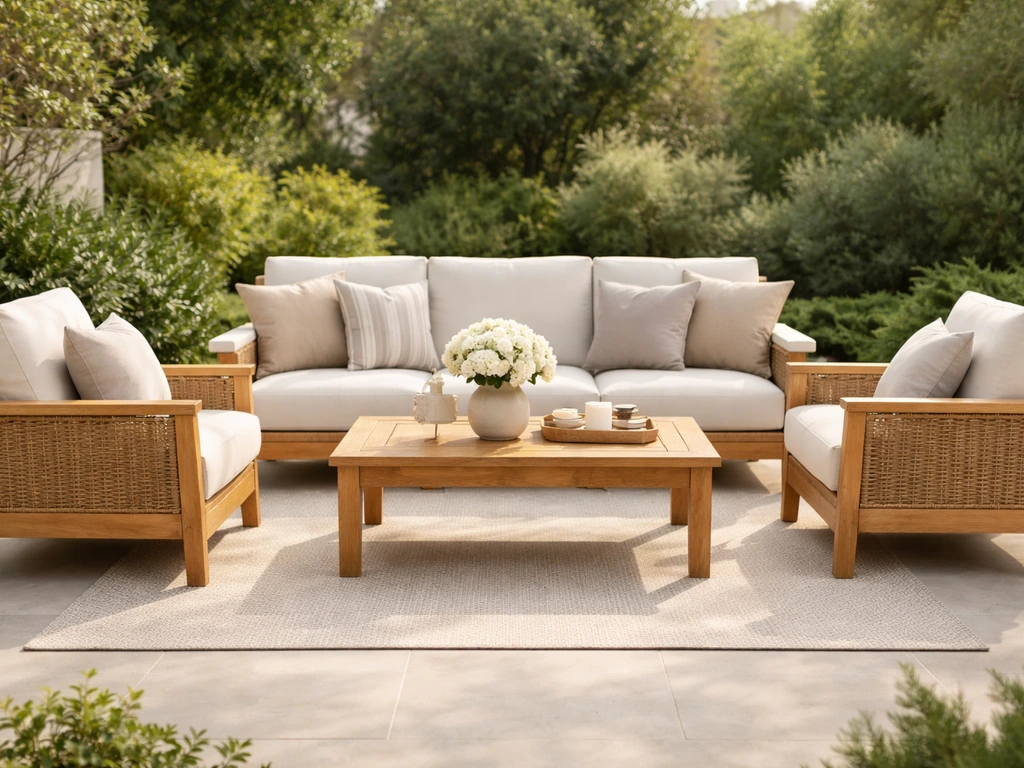
Pottery Barn organizes its outdoor line into distinct collections rather than selling one-off pieces. The main categories you'll run into are all-weather wicker lounge sets (Huntington, Chatham), slipcovered sectionals with engineered wood frames (Big Sur), teak pieces, and metal or modern dining sets like the Rockport line. Most collections are built as full ecosystems: you can buy a sofa, matching sectional pieces, chaises, dining chairs, and side tables that all coordinate, along with replacement cushions and slipcovers sold separately.
The Huntington collection is their most prominent wicker line and carries a 'Contract Grade' label, which means Pottery Barn is positioning it for higher-frequency use than standard offerings. The Big Sur slipcovered sectional uses an engineered wood frame with kiln-dried wood components specifically to resist warping, splitting, cracking, and mildew. Teak pieces are labeled as water-resistant and UV-resistant, which is accurate to the nature of teak as a material. Cushions are the wildcard: the base option on many collections uses 100% polyester canvas with a quick-drying, water-repellent finish, while Sunbrella fabric is available as an upgrade and is the option worth paying for.
What real customer reviews consistently say
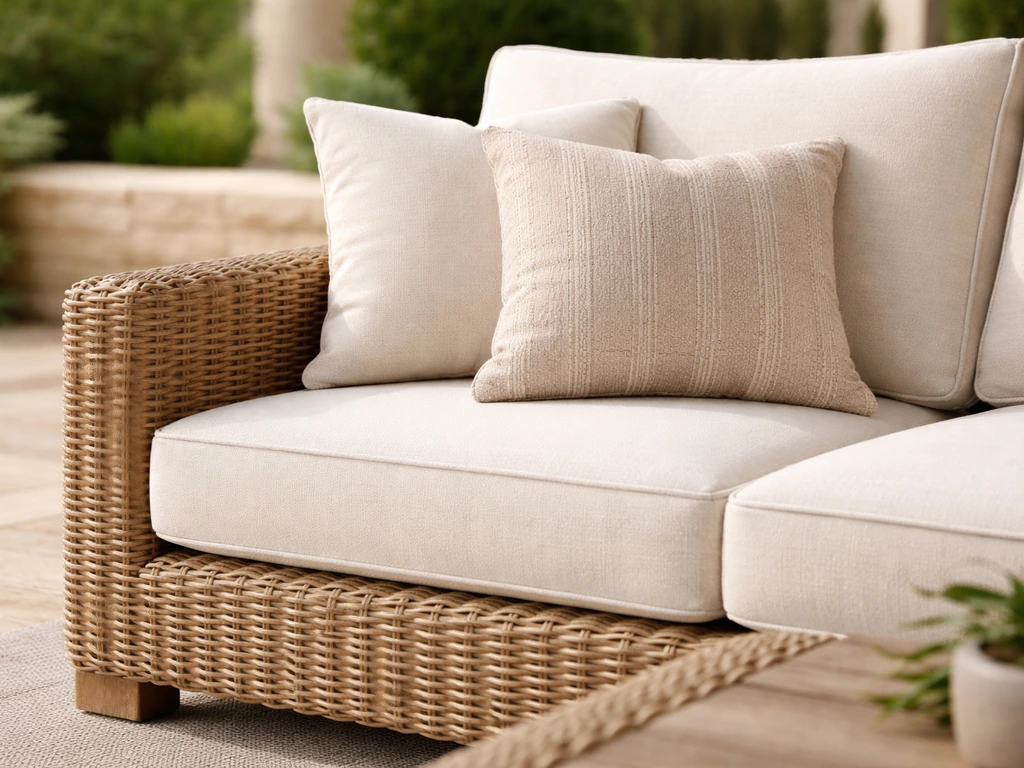
The pattern across reviews is pretty consistent. People love the aesthetic, the coordinated look of a full collection, and the fit and finish when the furniture arrives. What frustrates buyers tends to cluster around a few specific issues: cushion longevity on the base polyester fabric, comfort that doesn't always match the premium price, and the realization that some items need more care than expected for a set that costs this much. In Houzz discussions, buyers share their real experiences and perceptions of Pottery Barn and Sunbrella fabrics, including comments on pilling and expected maintenance buyer comments on pilling and maintenance expectations for Pottery Barn and Sunbrella fabrics.
What people love
- Strong visual appeal and cohesive design across collections
- The all-weather wicker holds its shape and color well when covered during off-season
- Teak pieces age gracefully and require minimal intervention beyond occasional oiling or staining
- Modular configurations (especially Huntington and Chatham sectionals) give genuine layout flexibility
- Sunbrella cushion options perform well against fading and are easy to clean
What people complain about
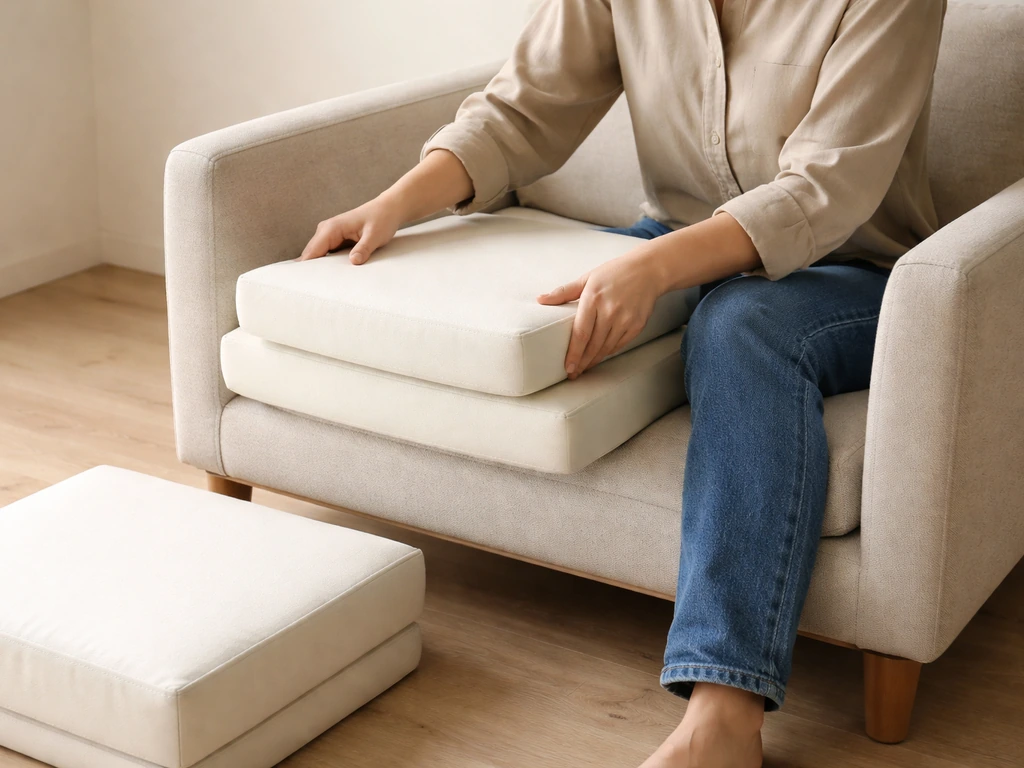
- Seating comfort gets mixed marks: reviewers on Houzz explicitly warn to sit in pieces before buying, noting that ergonomics don't always match the price point
- Base polyester cushions show wear faster than expected for the investment
- Sunbrella fabric, while generally durable, has some reported pilling and occasional chemical odor from new cushions
- Pottery Barn is regularly described as 'not your source' for true quality by design professionals, who suggest it occupies a middle tier
- Hardwood and engineered wood frames need more maintenance than buyers anticipate
- Customer service and delivery issues appear in reviews, though this varies by location and order size
Durability and weather performance by material
Material choice is the single biggest factor in how your Pottery Barn set will perform three or four years from now. Here's how each major material category holds up in real conditions.
| Material | Weather Resistance | UV/Fade Resistance | Maintenance Need | Best Climate |
|---|---|---|---|---|
| All-weather wicker (Huntington, Chatham) | Good when covered; can loosen with prolonged sun exposure | Moderate; cover during off-season | Low to moderate; needs covers in harsh weather | Covered patios, mild to moderate climates |
| Teak | Excellent; naturally water-resistant and UV-resistant | Very good; grays naturally without damage | Low; re-stain every 3-5 years if you want original color | Any climate including rainy and coastal |
| Engineered/kiln-dried wood (Big Sur) | Good; kiln-drying resists warping, splitting, mildew | Moderate; needs protective finish maintenance | Moderate; clean, sand, and stain periodically | Covered patios preferred; avoid standing water exposure |
| Metal (Rockport and similar) | Very good; look for powder-coated or rust-resistant finish | Good with quality powder coat | Low; wipe down periodically | Hot/dry climates; covered in rainy areas |
| Sunbrella cushions | Excellent; mold, mildew, and fade resistant | Excellent; rated for direct sunlight | Low; spot clean or machine wash covers | All climates, uncovered patios |
| Base polyester cushions | Moderate; quick-drying but less durable long-term | Moderate; fading reported over time | Moderate; bring inside or cover when not in use | Covered patios, mild climates only |
Teak is the standout for anyone with an uncovered patio or a coastal, humid, or rainy climate. It's the one material in the Pottery Barn lineup that genuinely handles neglect well. The all-weather wicker collections perform solidly for covered patios and moderate climates, but they're not quite as resilient as teak when left fully exposed year-round. Pottery Barn's own care instructions for wicker recommend using outdoor covers during inclement weather, which is an honest acknowledgment of the material's limits.
Comfort, size, and real-world functionality
Comfort is where Pottery Barn gets its most honest mixed reviews. The furniture photographs beautifully and the proportions look generous in product images, but the actual seating experience is inconsistent across collections. If you're buying online without sitting in a piece first, that's a real risk at this price point. The advice from experienced buyers: if you're near a Pottery Barn store that has floor samples, sit in the piece before ordering. The seat depth, cushion firmness, and back angle vary noticeably between collections.
The Huntington and Chatham sectionals are large-scale pieces designed for sprawling patios and entertaining setups. The Huntington 6-piece sectional, for example, works well for families and hosting but would feel overwhelming on a small urban balcony. The modular connectors (hidden plastic connectors on pieces like Big Sur) keep configurations locked in place, which is genuinely useful for entertaining when you don't want sections drifting apart. Stability on hard surfaces like concrete and tile is generally good; on uneven surfaces like natural stone or brick, some wobble is possible depending on the leg design.
For dining sets, the Huntington dining chairs and Rockport-style metal pieces offer solid everyday functionality. Seat height and armrest positioning are standard, though again, sitting in store samples removes the guesswork. If you have kids or pets, look for collections with removable, machine-washable cushion covers, as most Sunbrella covers do have zipper closures for easy removal.
Assembly, care, and what maintenance actually looks like
Assembly on most Pottery Barn outdoor pieces is relatively straightforward, but Pottery Barn explicitly recommends that assembly be done by two or more adults, particularly for larger sectional components. That's practical advice, not just liability language: the pieces are heavy and alignment is easier with a second set of hands. Most collections don't require extensive tools, but having a rubber mallet handy for tight-fitting modular connectors is useful.
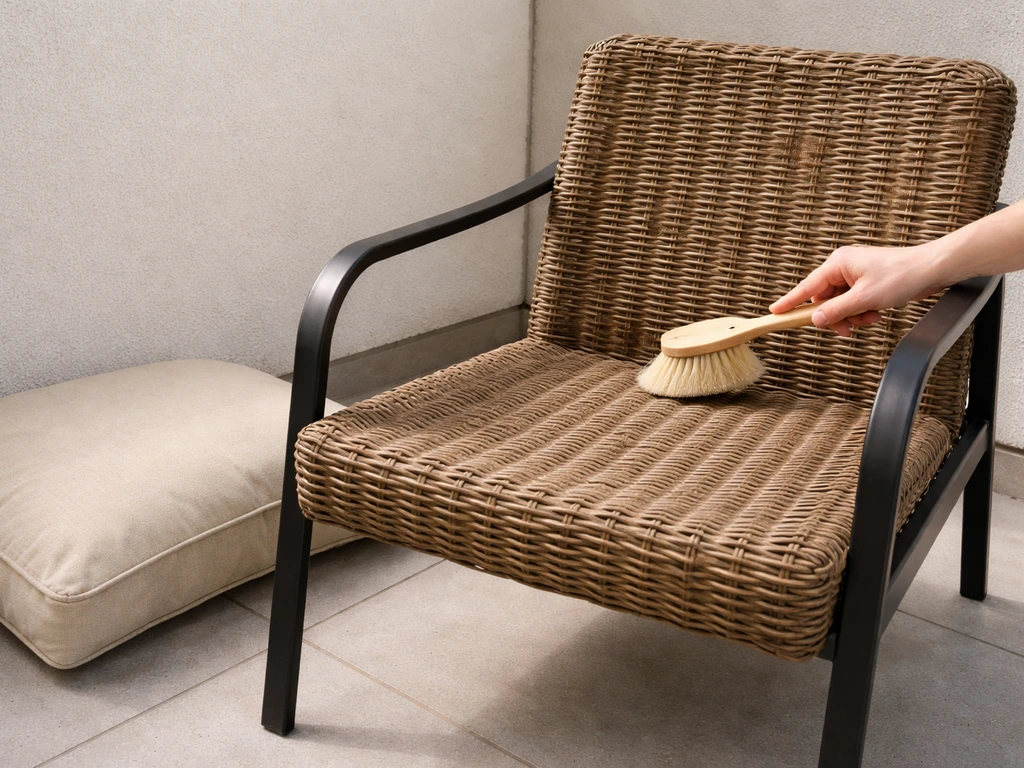
For day-to-day care, the basics are simple: dust wicker and metal frames with a dry lint-free cloth, blot spills immediately rather than rubbing them in, and avoid chemical cleansers, abrasives, or furniture polish on lacquered finishes. Pottery Barn specifically discourages those on the Huntington line, so stick to mild soap and water for deep cleaning. For cushion covers with Sunbrella fabric, remove the cover via the zipper and hand wash or machine wash on a gentle cycle.
Hardwood and teak pieces have the most involved maintenance schedule. Pottery Barn recommends refreshing hardwood outdoor furniture with weatherproof stain every three to five years: clean the surface, sand with 120-grit sandpaper, apply stain, and allow 48 hours of drying time. That's a manageable Saturday project, but it's something to factor into ownership if you're comparing teak against powder-coated aluminum, which needs almost nothing beyond a wipe-down.
Seasonal storage and protection
- Use Pottery Barn's own outdoor furniture covers or equivalent third-party covers for wicker pieces during off-season or extended rain
- Bring polyester cushions inside during winter or store in a dry location; Sunbrella cushions are more forgiving but still benefit from storage in prolonged wet seasons
- Teak can stay outside year-round without structural damage, though bringing it under cover will slow the natural graying process if you prefer the original color
- Metal frames: inspect for any chips in the powder coat annually and touch up to prevent rust underneath
Best choices for different patio types and climates
Matching the right collection to your specific situation makes a big difference in long-term satisfaction. Here's how I'd break it down by common patio scenarios.
| Patio Situation | Best Pottery Barn Option | Key Reason |
|---|---|---|
| Uncovered patio, hot/sunny climate | Teak collection + Sunbrella cushions | UV and water resistance; teak handles heat and direct sun without degrading |
| Covered patio or screened porch | Huntington or Chatham wicker sets | Looks great, performs well when protected from full weather exposure |
| Rainy/humid climate (Southeast, Pacific Northwest, coastal) | Teak or metal (Rockport-style) + Sunbrella cushion upgrade | Moisture resistance is critical; skip engineered wood or wicker in persistent rain |
| Small balcony or apartment patio | Individual Torrey chairs or a compact dining set | Large sectionals are sized for expansive patios; look at dimensions carefully |
| Families with kids and pets | Any collection with Sunbrella zipper-closure cushion covers | Easy to remove, wash, and reattach; Sunbrella handles staining and spills well |
| Entertaining-focused large patio | Huntington 6-piece sectional or Chatham modular setup | Full ecosystem with matching tables, chaises, and configurable layouts |
| Year-round outdoor use with minimal maintenance | Teak or powder-coated metal frames | Both handle neglect better than wicker or slipcovered engineered wood |
Is Pottery Barn patio furniture worth the price?
Pottery Barn occupies a clear middle tier in the outdoor furniture market. It's priced above mass-market retailers like Target or Wayfair, but it doesn't reach the build quality of true commercial or specialty outdoor brands. Design professionals and experienced buyers consistently describe it as style-forward rather than durability-forward, which is a fair assessment. You're paying for cohesive aesthetic design, decent mid-grade materials, and coordinated collections, not necessarily for the best raw construction quality at the price. If you're specifically looking at Bancroft pieces, these Bancroft patio furniture reviews can help you gauge quality and comfort before you buy.
For context, Crate and Barrel's aluminum outdoor line (like the Walker series with Sunbrella cushions) targets a similar buyer at comparable or slightly higher price points and also carries 'Contract Grade' labeling on many pieces. Both brands use Sunbrella fabrics as their premium cushion option, and both serve a design-conscious homeowner who wants something that looks elevated without going full custom or specialty-brand. If you've been comparing Pottery Barn against Crate and Barrel, the honest answer is that the decision often comes down to which aesthetic appeals more, since build quality and material options are broadly comparable.
Where Pottery Barn earns its price: the full-collection ecosystem approach, the Contract Grade wicker pieces, and teak offerings are genuinely solid investments when maintained. If you're specifically hunting for Corvus patio furniture reviews, pay attention to how different wicker lines compare on comfort and long-term weathering Contract Grade wicker pieces. Where it doesn't quite earn its price: base cushion fabric, some seating ergonomics, and pieces that need consistent protection to hold up. If you're comparing against budget brands, Pottery Barn is a clear step up in material consistency and design. If you're comparing against premium specialty outdoor brands, it's a clear step down.
Buyer checklist: what to verify before you order
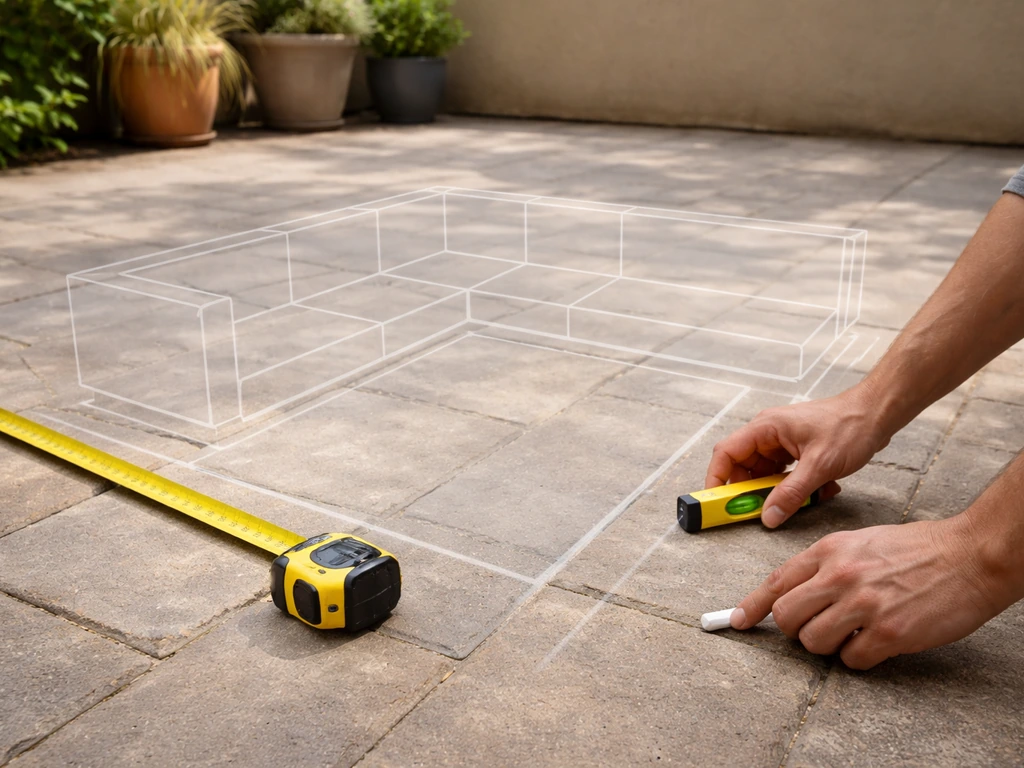
Before you finalize any Pottery Barn patio furniture order, run through these checkpoints. They'll save you from the most common buyer regrets.
- Measure your patio and map the layout first. Large sectionals like the Huntington 6-piece are designed for spacious patios; get exact dimensions from the product page and tape them out on your patio before ordering.
- Upgrade to Sunbrella cushions. The base polyester option is functional but not the right choice for uncovered patios or climates with heavy sun or rain. Sunbrella resists fading, mold, mildew, and pilling far better.
- Check if Sunbrella Rain is available for your collection if you're in a consistently wet climate. It offers the fastest drying performance.
- Confirm cushion cover closure type. Most collections offer zipper closures for removal and washing, but verify before ordering if easy cleaning is a priority.
- Choose your frame material based on your climate: teak for rainy/coastal, powder-coated metal for hot/dry, all-weather wicker for covered or moderate conditions.
- If possible, visit a Pottery Barn store and sit in the collection you're considering. Comfort varies and is not fully conveyed by product images or dimensions alone.
- Review the warranty and return policy specifically for outdoor furniture. Confirm coverage for finish defects, frame issues, and what's excluded (weathering, cushion fabric fading under some conditions).
- Factor in cover costs. Pottery Barn recommends using outdoor furniture covers on wicker and many other pieces during off-season or bad weather. Add those to your budget.
- Check current lead times. Large sectionals and custom cushion colors can have extended shipping windows, especially heading into summer.
- Plan your maintenance schedule. If you're buying teak, commit to the staining refresh every 3-5 years. If you're buying wicker, plan on covering it seasonally.
If you want to compare how Pottery Barn stacks up against other premium outdoor brands before committing, it's worth looking at options in the same tier. Brands like Jensen and Crate and Barrel are worth a look for aluminum and teak alternatives at similar price points, and budget-conscious buyers comparing Pottery Barn's entry price points against mid-range options will find useful context in reviews of brands like Corvus and Bancroft that target a lower price tier with different trade-offs. Knowing exactly where Pottery Barn sits in that spectrum helps you decide whether the premium is justified for your specific setup.
FAQ
Are Pottery Barn patio furniture covers worth buying separately, or can I rely on the materials alone?
For uncovered or frequently damp climates, covers are usually the deciding factor, especially for all-weather wicker. Even collections that are marketed as “all-weather” are still vulnerable at the cushion and connection points, so prioritize breathable, correctly sized covers and add them before the first cold or rainy season.
How can I tell whether I should upgrade from the base polyester cushions to Sunbrella?
If the set will sit in sun for most of the day, is under partial cover, or you expect frequent spills, Sunbrella is the safer bet. A practical check is to look for removable covers that let you wash the fabric routinely, because polyester-base cushions often hold onto stains and odors faster even when they dry quickly.
What should I look for when buying online if I can’t visit a store to test comfort?
Compare seat depth, cushion firmness, and back height across collections using the measurements, not the photos, since comfort varies a lot by line. If possible, buy from a retailer with a straightforward return policy, and verify whether cushions can be swapped later, because that’s often the easiest way to fix an “it looks right but feels wrong” purchase.
Do the “Contract Grade” labels mean the furniture will last indefinitely?
No. The label mainly signals intended use frequency and build positioning, it does not override environmental exposure. For long-term performance, you still need the correct material match (teak for year-round exposure, covers for wicker) and consistent cleaning practices to prevent mildew buildup in seams and cushions.
Is the modular connector system a pro for stability, or can it still loosen over time?
Hidden connectors help keep sections aligned during entertaining, but they can loosen on uneven surfaces. If your patio is natural stone or brick, consider adding non-slip shims under legs and re-checking alignment periodically, especially after moving sections for cleaning or winter storage.
How should I handle spills and stains on the cushions beyond blotting?
Blotting is the first step, but for repeat accidents you should clean based on the fabric type. Sunbrella covers generally tolerate gentle, fabric-safe cleaners and regular wash cycles, while the base polyester option often benefits from prompt rinsing with water and avoiding harsh solvents that can accelerate fading or stiffening.
What’s the safest way to clean the Huntington line without damaging the finish?
Stick to mild soap and water, use a soft cloth, and avoid any product described as abrasive, polishing, or “concentrated” cleaner, because the lacquered finishes can be sensitive. If you are unsure, spot-test in a hidden area first and let the area fully dry before you cover or sit on it.
Can I leave teak outside year-round, and what’s the simplest maintenance routine?
Teak is the most forgiving option in the lineup for year-round exposure, but it still benefits from periodic care. If you want to preserve a consistent color, plan on the recommended refresh schedule, clean first, sand lightly only when needed, and let the wood fully dry before applying any stain.
Will powder-coated aluminum or metal sets feel stable on uneven ground?
Stability varies by leg design and how the feet contact the surface. On uneven patios, metal dining sets can rock if the feet are not compensating, so check for adjustable leveling feet or use thick protective pads and shims, then confirm wobble before you load heavy items onto the table.
How difficult is it to replace cushions or slipcovers later, if I change my mind about comfort or fabric?
Replacement availability is part of the ecosystem approach, but not every piece uses the same cushion sizing across collections. Before ordering, confirm cushion model compatibility (especially for sectional components) and whether covers zip off cleanly, since that affects how easy it is to refresh the look or swap to Sunbrella later.