
The best island patio furniture sets right now are those built around powder-coated aluminum or high-density polyethylene (HDPE) frames, all-weather cushions with solution-dyed acrylic fabric, and modular configurations that can adapt to the awkward angles most outdoor kitchen islands create. If you want a short answer: for most homeowners, a mid-range aluminum sectional or dining set from brands like Polywood, Telescope Casual, or Homecrest hits the durability-to-value sweet spot.
Island Patio Furniture Reviews: What to Buy and Why

Grant Hollis
15 Jun 2026
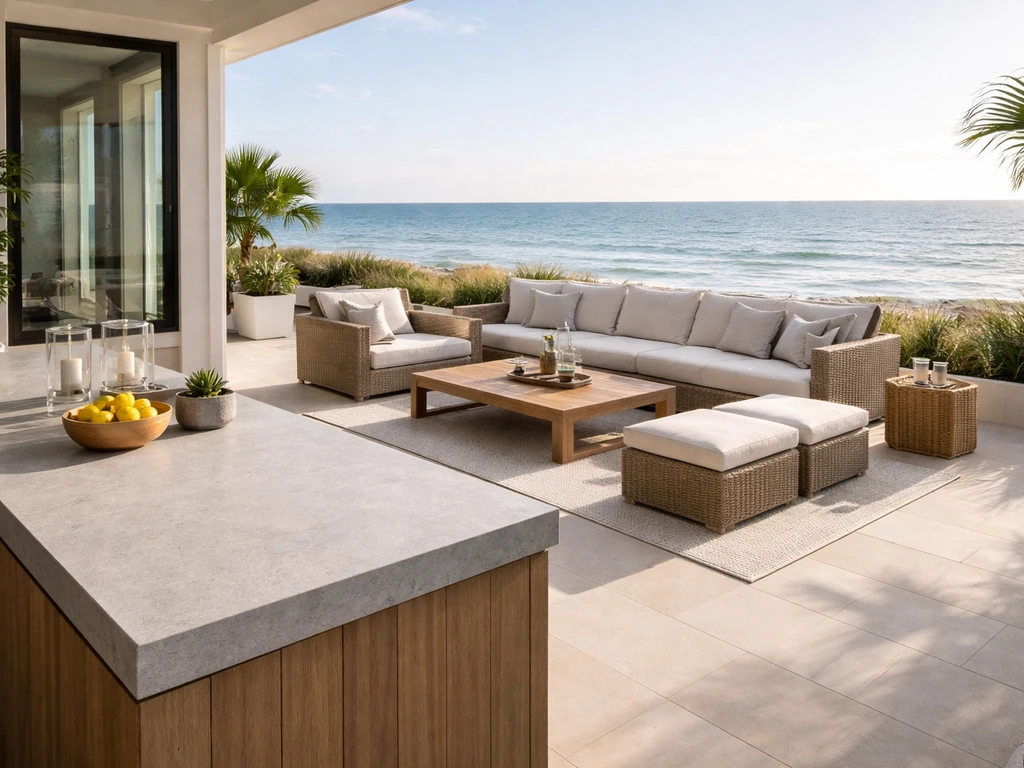
Budget shoppers get genuine value from HDPE options like Breezesta and Beka. Premium buyers who want near-zero maintenance and serious weather resistance should look at cast aluminum or marine-grade polymer pieces. The rest of this guide walks you through how to pick the right one for your actual space, climate, and budget.
How to Choose Island Patio Furniture for Your Space
Choosing island patio furniture is not like buying a regular dining set. Your outdoor kitchen island changes everything: it creates fixed focal points, forces foot traffic into predictable lanes, and often leaves oddly shaped remaining floor space. Before you look at a single product listing, measure your patio and plan your clearances.
Clearance and layout: the numbers you actually need
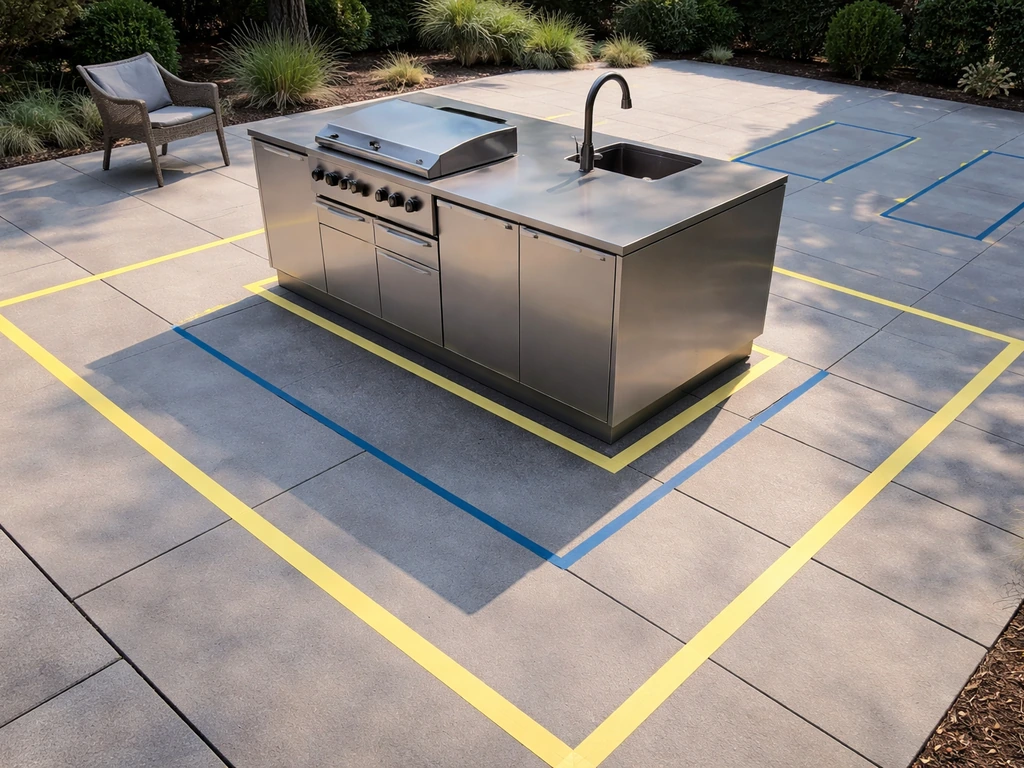
Wayfair's space planning guidelines call for 30 to 40 inches of clearance in high-traffic areas and at least 24 inches in lower-traffic zones. For any dining table surrounded by chairs, plan on roughly 36 inches of clear space on all sides so people can pull chairs out and move around without bumping into the island or a grill cart.
The Garden Scene recommends 24 to 36 inches behind dining chairs and 30 to 36 inches for walking lanes, with extra room near any door swings. [Federal accessibility guidance uses 36 inches as the standard clear ground space on all usable sides of a table](https://www. access-board. gov/files/aba/guides/outdoor-guide.
pdf), and that is a smart number to default to even if accessibility is not your primary concern. Peak Home Furnishings flags the most common mistake buyers make: they forget to account for chair pull-out depth, door swing arcs, and circulation paths around the island itself. Tape your layout on the ground before you order anything.
- Walking lanes alongside the island: aim for 36 inches minimum, 30 inches absolute minimum
- Behind dining chairs (pull-out clearance): 24 to 36 inches depending on chair depth
- Around a freestanding dining table: 36 inches on all sides
- Near exterior doors or gate swings: add at least 6 more inches to your baseline
- Bar stool overhang from island counter: 9 to 12 inches of knee clearance under the counter
Once you have your clearances mapped, figure out the seating configuration. Island patios typically support one of three layouts: bar seating along the island counter itself (bar stools or counter stools), a separate dining group placed off to one side, or a lounge conversation set in a dedicated zone away from the cooking area. Many homeowners try to do all three and end up with a crowded, hard-to-use space. Pick one primary use and design around it.
Matching furniture scale to your island
A chunky teak sectional looks gorgeous in a showroom but eats your clearance fast. Check the seat depth (typical range: 20 to 28 inches), the overall frame width of sofas and loveseats, and the footprint with legs included. For tight island patios under 200 square feet, furniture with a seat depth of 20 to 22 inches and slim metal frames gives you the most usable floor space. For larger patios 300 square feet and above, deeper lounge seating (24 to 28 inch depth) is comfortable and still leaves room to move.
Top Island Patio Furniture Picks and Quick Comparisons
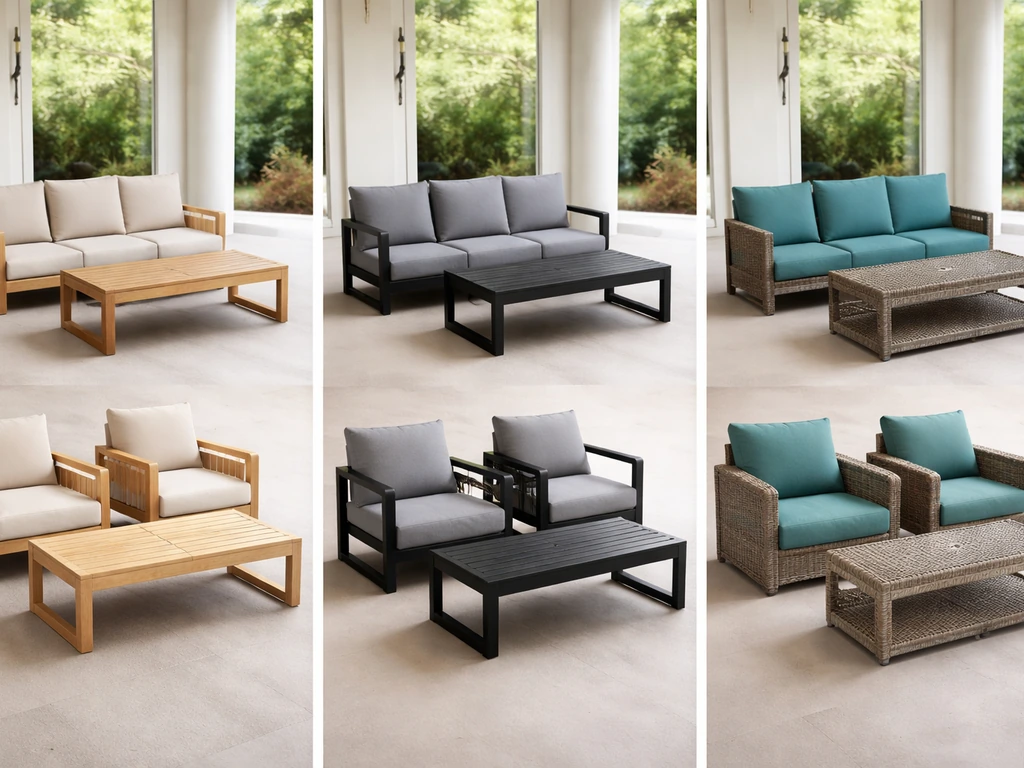
These are the sets and brands that consistently come up in reliable reviews and hold up under real outdoor use. I have organized them by price tier so you can make a direct comparison within your budget.
| Brand / Set | Frame Material | Price Range (set) | Best For | Rating Snapshot |
|---|---|---|---|---|
| Polywood Nautical Collection | HDPE lumber | $800–$2,200 | Low maintenance, coastal climates | 4.7/5 durability, 4.4/5 comfort |
| Telescope Casual Aluminum | Powder-coat aluminum | $1,200–$3,500 | Lightweight, modular island layouts | 4.6/5 durability, 4.6/5 comfort |
| Homecrest Outdoor Living | Aluminum / steel hybrid | $1,500–$4,000 | Premium comfort, long warranty | 4.7/5 durability, 4.8/5 comfort |
| Breezesta Dining & Lounge | Recycled HDPE | $600–$1,800 | Budget-friendly, eco-conscious buyers | 4.5/5 durability, 4.2/5 comfort |
| Beka Outdoor Furniture | Powder-coat steel | $400–$1,200 | Entry-level, covered patios | 4.2/5 durability, 4.3/5 comfort |
| Tommy Bahama Outdoor (Lexington) | Aluminum / wicker combo | $2,500–$6,000 | Resort aesthetic, premium buyers | 4.5/5 durability, 4.8/5 comfort |
| Bahama Winds Collection | Powder-coat aluminum | $900–$2,800 | Coastal style, mid-range value | 4.4/5 durability, 4.5/5 comfort |
Polywood is probably the most universally recommended HDPE option because the lumber-style pieces look traditional, require almost no maintenance, and come with a 20-year residential warranty. Telescope Casual is the go-to for people who want lightweight aluminum that does not feel flimsy, with strong dealer support and genuine modularity. Homecrest is the pick for buyers who want deep, plush seating and are willing to pay for it.
Breezesta and Beka both offer honest value for buyers on tighter budgets, and Breezesta in particular shares DNA with the recycled-plastic category that Polywood pioneered. If the tropical-resort look is a priority, the Tommy Bahama Outdoor and Bahama Winds lines deliver that aesthetic authentically. If you are deciding between Bahama Winds patio sets and similar island-style lines, it helps to read Bahama Winds patio furniture reviews to compare comfort, materials, and build quality.
Durability and Weather Resistance: What the Materials Actually Mean
Weather resistance is the single most important factor for any outdoor furniture, and the materials used for frames, finishes, and cushions tell you almost everything you need to know about how a set will age.
Frame materials compared
| Material | Rust Risk | UV/Fade Risk | Weight | Maintenance Level | Typical Lifespan |
|---|---|---|---|---|---|
| Powder-coated aluminum | Very low | Low (quality finish) | Light | Low | 15–25 years |
| HDPE / recycled plastic lumber | None | Very low | Moderate | Very low | 20–30 years |
| Cast aluminum | None | Very low | Heavy | Very low | 25+ years |
| Powder-coated steel | Moderate (if finish chips) | Low | Heavy | Moderate | 8–15 years |
| Teak wood | None | Moderate (grays without oil) | Heavy | Moderate–High | 20–30 years |
| Resin wicker over aluminum | Very low | Moderate | Light–Moderate | Low | 10–20 years |
For island patios in coastal or high-humidity environments, aluminum and HDPE are the clear winners. Steel frames can work fine under a covered patio or in dry climates, but any chip in the powder coat creates a rust entry point. Teak is beautiful but requires annual oiling if you want to keep that honey color; left untreated it goes gray, which some people actually prefer. Resin wicker over an aluminum frame is a good middle ground for buyers who want a woven look without the weight and maintenance of natural rattan.
Cushion performance: what to look for beyond thread count
Cushion fabric matters more than most buyers realize. Solution-dyed acrylic (Sunbrella is the benchmark brand) is dyed at the fiber level rather than printed on top, which means the color does not fade from UV exposure the same way polyester screen prints do. It also resists mildew better in humid climates. Look for a fabric weight of at least 8 ounces per square yard for outdoor use.
The foam inside the cushion matters too: high-resiliency (HR) polyurethane foam or open-cell foam with drainage holes keeps cushions from staying soggy after rain. Avoid cheap closed-cell foam; it pools water and breaks down within two seasons. Quick-dry foam cores with a Dacron wrap are now standard on most mid-range and premium sets and are worth the upcharge.
Hardware and connection points
Check that all hardware is stainless steel or marine-grade galvanized. Zinc-plated screws and bolts are fine indoors but corrode on coastal patios within a season or two, staining the frame and weakening connections. Premium brands like Telescope Casual and Homecrest use stainless throughout. Budget brands sometimes mix materials, so read the spec sheet rather than the product description.
Design and Functionality: Features That Actually Matter Day to Day
Beyond durability, the features that make island patio furniture genuinely useful are the ones you interact with every time you use the space. Here is what to prioritize.
Seating capacity and configurations
Be honest about how many people you actually entertain at once, not your maximum theoretical number. A sectional rated for eight people requires significantly more floor space than one rated for four, and the difference in clearance eats into your island workflow fast. Modular sectionals (pieces sold separately and connectable) are the most flexible option for island layouts because you can start small and expand, or rearrange when the layout is not working. Brands like Telescope Casual and Homecrest design with genuine modularity in mind, meaning the connection hardware is standardized across their lines rather than bolted on as an afterthought.
Storage, swivel seating, and extras worth paying for
- Storage ottomans: useful for cushion storage or extra seating, look for a 100-liter minimum capacity to fit four standard cushions
- Swivel rocking chairs: great for conversation zones near the island so guests can turn to face the cooking action, but add 6–8 inches to your clearance planning
- Adjustable back positions: deep lounge sectionals with multi-position backs (usually 3 to 5 settings) let the same piece serve as both upright dining and reclined lounging
- Built-in cup holders or side table clips: small but genuinely useful for outdoor kitchen entertaining where counter space is already occupied
- Stackable or folding chairs: if your island patio doubles as a pass-through space, chairs that stack or fold reduce clutter when the space is not in use
Bar vs. counter vs. dining height: getting it right for your island
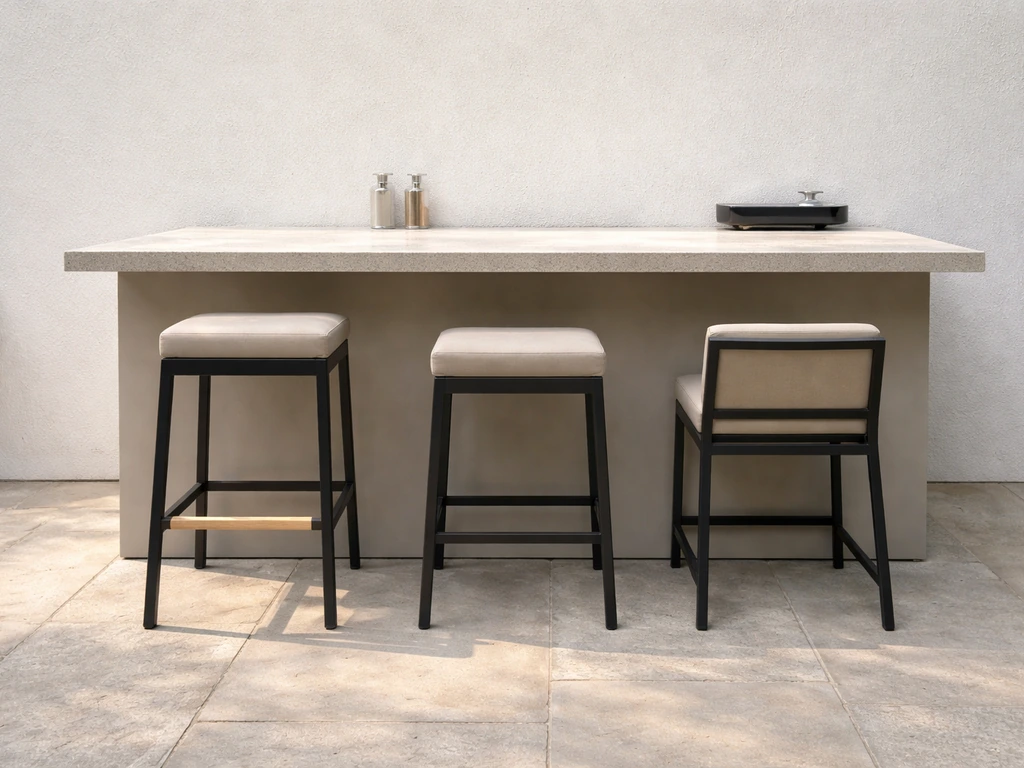
Outdoor kitchen islands typically have counters at bar height (41 to 43 inches) or counter height (35 to 36 inches). Standard dining tables are 28 to 30 inches. Match your seating to your surface: bar-height stools (28 to 30 inch seat height) for bar-height counters, counter stools (24 to 26 inch seat height) for counter-height surfaces. Mixing heights is a common and frustrating mistake. If your island has a mixed-height design with both a prep area and a raised bar, consider a counter stool that works at both heights, usually around 26 inches seat height.
Assembly, Maintenance, and What Ownership Actually Costs
What to expect during assembly
Most island patio furniture sets ship in multiple boxes and require at least partial assembly. HDPE and aluminum furniture from brands like Polywood and Telescope Casual typically has cleaner, well-labeled instructions and takes one to two hours for a four-piece set with basic hand tools. Budget steel sets can be more time-consuming, with more hardware pieces and occasionally misaligned pre-drilled holes. Cast aluminum furniture often arrives largely pre-assembled since the frames are cast as single pieces. If you are ordering online, check customer reviews specifically for assembly complaints rather than just overall rating, because a beautiful product with a confusing instruction sheet is a real weekend frustration.
- Before you start: inventory all hardware against the parts list and photograph any damage before assembly
- Tools you will likely need: rubber mallet, adjustable wrench, Phillips and flathead screwdrivers, and a level for dining tables
- Two-person tasks: frame assembly for sofas and sectionals almost always requires a second set of hands for alignment
- Check all connections: tighten all bolts after the first week of use since frames settle slightly with temperature changes
- Save packaging: keep boxes for the first season in case anything needs to be returned
Ongoing maintenance by material
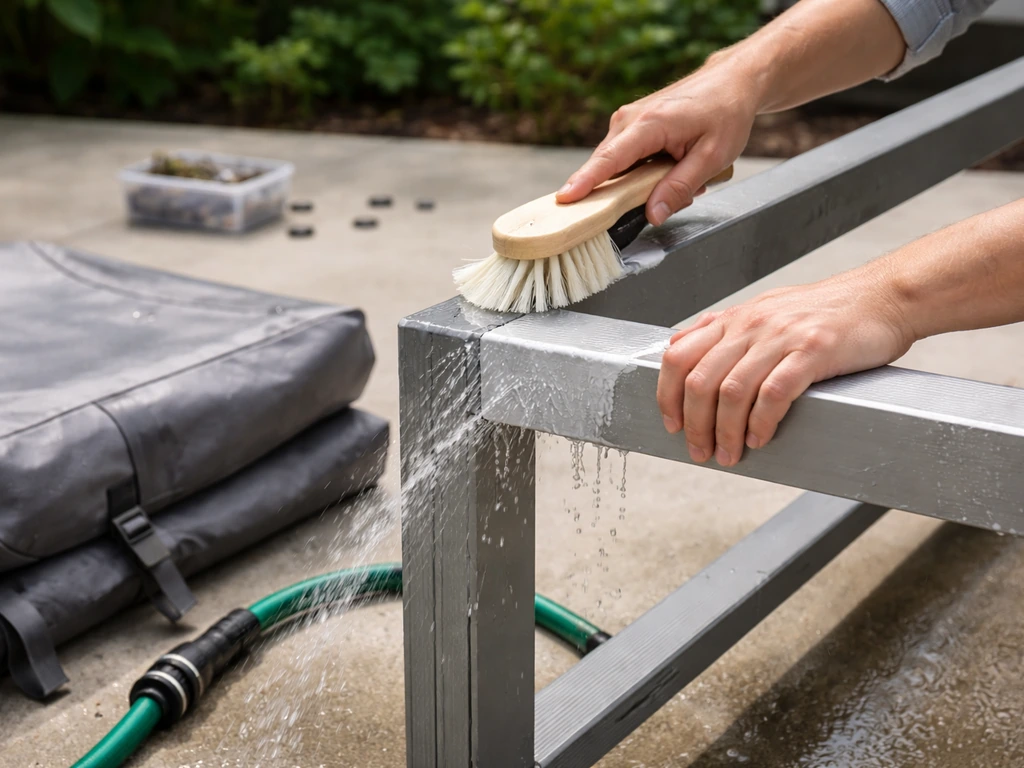
HDPE and aluminum frames are the lowest maintenance outdoor furniture you can own. For HDPE, soap and water once a year is genuinely all it needs. Aluminum frames with intact powder coating just need a rinse and occasional wipe with a mild cleaner. Teak needs annual oiling (about 30 minutes per piece) if you want to preserve color, or simply let it gray naturally and it still lasts decades. Steel frames need a seasonal inspection for paint chips and touch-up with matching outdoor spray paint to prevent rust spread. Resin wicker should be cleaned with a soft brush and soapy water to clear debris from the weave channels where moisture collects.
Long-term ownership costs to budget for
- Replacement cushions: plan on replacing cushions every 5 to 8 years even with quality covers; budget $50 to $150 per cushion for Sunbrella-fabric replacements
- Furniture covers: a quality set of covers runs $80 to $200 per season and significantly extends frame and cushion life, especially in coastal or freeze-thaw climates
- Storage: if you live somewhere with hard winters, plan for indoor or garage storage for cushions at minimum; full furniture storage if using steel frames
- Touch-up paint or sealant: for powder-coated steel, budget $10 to $20 per year for touch-up spray
- Warranty claims: document purchase dates and keep receipts; Polywood's 20-year warranty and Telescope Casual's lifetime structural warranty are genuinely honored, but you need proof of purchase
Best Value vs. Premium: Where to Spend and Where to Save
The honest truth is that the $400 to $800 price range for a patio set is where you will find the most compromises. Cheap frames, thin powder coat, and low-density foam cushions are common at this tier. That does not mean you cannot find good value here. Breezesta and Beka both offer genuinely solid pieces in this range, especially for covered patios or drier climates where weather stress is lower. Windy Isle and Sarasota Breeze Silver Lake sets also compete in the value tier and are worth comparing if you are prioritizing aesthetics on a budget.
| Budget Tier | Price Range | Best Picks | What You Get | What You Sacrifice |
|---|---|---|---|---|
| Entry level | $300–$800 | Beka, Breezesta basics | Solid frames, decent cushions | Cushion longevity, limited warranty, fewer configurations |
| Mid-range | $800–$2,500 | Polywood, Bahama Winds, Telescope Casual entry | Quality materials, real modularity, better warranties | Some comfort compromises vs. premium |
| Premium | $2,500–$6,000+ | Telescope Casual full line, Homecrest, Tommy Bahama Outdoor | Best comfort, lifetime/20-year warranties, full modular systems | High upfront cost, sometimes longer lead times |
My general recommendation: stretch to the mid-range if you can. The jump from entry-level to mid-range buys you significantly better cushion fabric, frame warranty, and modularity. The jump from mid-range to premium buys you mainly comfort and aesthetics, which matter but are harder to justify on a pure value basis. If you are on the coast, in a high-UV region, or entertain heavily, the premium tier pays back over 10 to 15 years in avoided replacement costs.
Where to Buy and What to Check Before You Order
Where to shop
For mid-range and premium brands, buying direct from the manufacturer or from a specialty outdoor furniture dealer gives you better customer service and faster warranty resolution than a big-box retailer or generic marketplace listing. Polywood, Telescope Casual, and Homecrest all have dealer locators and ship directly. For entry-level sets, Wayfair and Overstock carry Beka and Breezesta with competitive pricing and reasonably reliable shipping. Avoid marketplace third-party sellers listing premium brand names at steep discounts; knockoff pieces using the same product photography as legitimate brands are common and almost impossible to return.
Pre-order verification checklist
Before you finalize any order, run through this list to avoid the most common island patio furniture buying mistakes.
- Measure your patio and mark your clearance zones with tape: confirm 36 inches of walking clearance around the island and 36 inches of pull-out space behind dining chairs
- Record the exact counter height of your outdoor island and match it to the correct stool seat height (bar, counter, or standard dining)
- Confirm all listed dimensions include the full frame footprint, not just the seat surface
- Check that the frame material is explicitly listed as powder-coated aluminum, HDPE, cast aluminum, or equivalent (not just 'metal' or 'durable frame')
- Verify that cushion fabric is solution-dyed acrylic or Sunbrella-equivalent, not polyester
- Look for all-stainless or marine-grade hardware in the spec sheet, especially if you are in a coastal zip code
- Read at least 20 customer reviews and filter specifically for comments about assembly difficulty, rust, and cushion wear
- Confirm the warranty terms in writing: what is covered, for how long, and what voids it
- Check lead times now: mid-range and premium outdoor furniture often ships in 4 to 12 weeks, especially in spring and early summer
- Ask about return policy for assembled items before you order, since many retailers will not accept returns on assembled furniture
Once you have cleared these checks, you are in a much stronger position than most buyers who just click and order based on photos. Island patio furniture is a significant investment and the space constraints around an outdoor kitchen make fit more critical than almost any other outdoor furniture purchase. Get the measurements right, pick the material tier that matches your climate, and buy from a source with a real warranty policy. That is the combination that gets you furniture you will still be happy with five years from now. If you are searching for windy isle patio furniture reviews, focus on brands and materials that match your local coastal conditions.
FAQ
How do I choose island patio furniture if my patio has a covered section and an uncovered section?
Treat the uncovered side as the “worst-case” zone, especially for cushions and exposed hardware. Choose the higher UV and moisture-resistant fabric and foam for everything that can be moved into sun or rain, then prioritize rust-resistant fasteners on frames so you do not get uneven aging across the set.
What cushion thickness should I look for, not just seat depth, on an island patio?
Seat depth tells you footprint, cushion thickness determines comfort and usability. For outdoors, aim for cushions that do not bottom out, then verify whether the listing includes foam thickness and drainage design (open-cell foam or a drainage channel system). If thickness is missing from specs, rely on HR foam notes or model-specific reviews that mention how the cushion behaves after a rain.
Is powder-coated aluminum always rust-free in coastal air?
It is highly resistant, but not indestructible. If the powder coat chips, saltwater can start corrosion at the damage point, so check reviews for reports of flaking or bare spots, and prefer sets that explicitly state stainless or marine-grade hardware throughout.
Can I use outdoor furniture on a tile or stone patio without damaging it or making it slide?
Yes, but plan for non-slip contact points. Look for leveling feet or glides that are designed for hard surfaces and check whether the base has drainage so water does not pool under legs, which can cause staining on light tile and make the set feel wobbly in wind.
What should I do about rain pooling under cushions and between sectional modules?
Confirm whether the cushion cores have drainage holes and whether the frame design allows water to run off instead of trapping it in channel seams. For modular sectionals, check how modules connect, whether the connection area stays elevated, and whether reviews mention staying dry after storms.
If I am buying modular island patio furniture, how do I verify the modules will still connect correctly later?
Before ordering, find out whether the brand uses standardized connection hardware across all sizes and whether replacement modules are sold as the same “generation.” Also confirm that the connection mechanism is not color-matched only, meaning the structural connector dimensions are compatible, not just the appearance.
Do I need to cover island patio furniture, even if it is HDPE or powder-coated aluminum?
For aluminum and HDPE, you can usually get away with light cleaning and occasional rinsing, but covering still helps reduce sun fading on cushions and prevents dirt buildup in tight seams. Use breathable covers rather than fully airtight tarps, so trapped moisture does not accelerate mildew on cushion fabric and foam edges.
How can I tell if a fabric is truly solution-dyed acrylic versus just “acrylic” in the description?
Look for wording that specifies solution-dyed or dyed at the fiber level, then verify the cushion weight and mildew resistance notes. If a listing only says “acrylic fabric” and does not mention solution-dye or fabric weight, assume it is more likely printed or lighter weight and may fade faster.
What is the safest way to match stool heights to island counters if my measurements are slightly off?
Measure the counter surface height where people actually sit or rest their thighs, then confirm seat height in the listing (not just “bar height” or “counter height”). If you have a mixed-height island, prioritize a single stool that matches the dominant seating height, around a 26-inch seat height as a compromise, and avoid stacking heights that force people to hover or reach.
Should I prioritize stainless steel fasteners even on mid-range brands?
Yes. Stainless or marine-grade galvanized hardware matters because it directly affects rust staining and long-term joint strength. If the spec sheet is vague, use customer reviews to find mentions of corrosion, loose connections, or hardware replacement, especially in coastal locations.
How do I evaluate assembly risk beyond reading the instructions?
Check reviews specifically for assembly time and missing parts, not just star ratings. If multiple reviewers mention “wrong hardware” or “misaligned holes,” treat it as a higher risk sign, and confirm whether you can return or exchange easily if the setup is frustrating.
What is a realistic way to estimate seating capacity for clearance planning?
Use the number of people you host most often, then add buffer for chair pull-out space. If you are planning dining chairs around an island, assume people will pull chairs out fully, not partially, and if your layout is tight, choose a smaller “rated” set size instead of trying to seat the maximum number shown in marketing.