
The best cozy corner patio furniture for most homeowners in 2026 is a 5-piece L-shaped sectional set in powder-coated aluminum or all-weather wicker, with thick (at least 4-inch) cushions and a seat depth of 22 to 24 inches. Budget sets from Costway and similar brands start around $400 to $600, mid-range options from brands like Kinbor or Red Barrel Studio land between $700 and $1,200, and premium picks push past $1,500. Which tier you need depends mostly on how exposed your patio corner is, how much you'll actually use it, and whether you're measuring your space before or after you buy (measure first, always).
Cozy Corner Patio Furniture Reviews: Best Picks, Sizes, Durability

Grant Hollis
21 Jun 2026
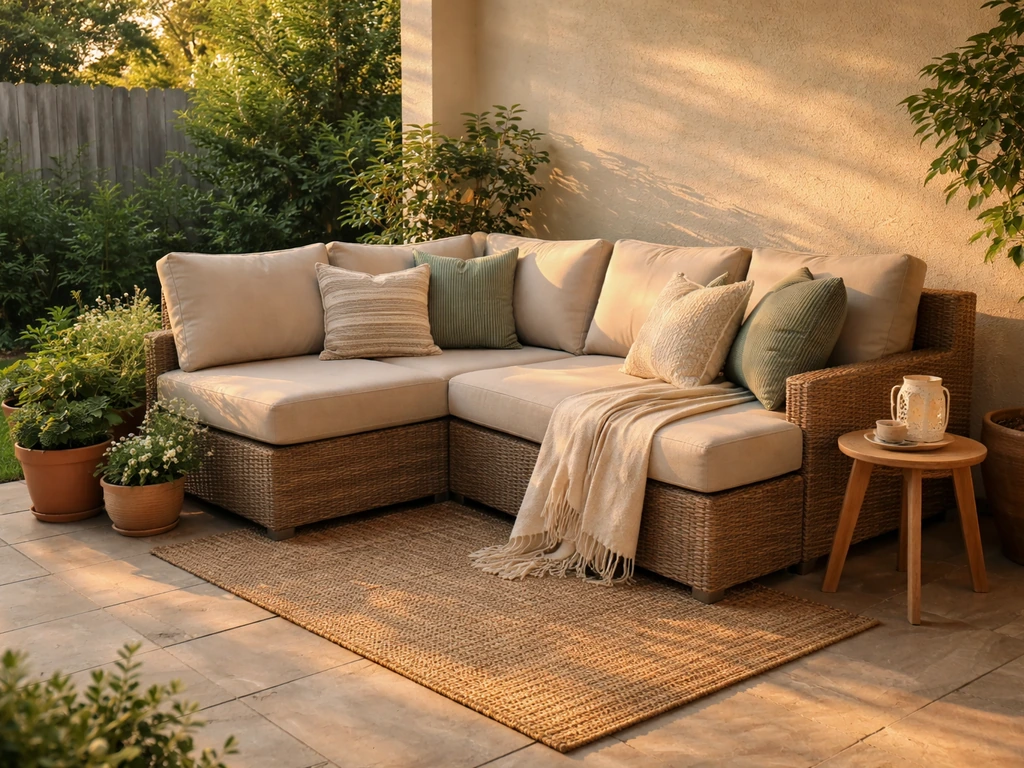
What 'cozy corner patio furniture' actually means
When people search for cozy corner patio furniture, they're usually picturing one of four setups. The most popular is the L-shaped sectional conversation set, which typically includes two or three armless sofa pieces, a dedicated corner unit, and one or two ottomans that double as a coffee table. The second type is a smaller corner nook arrangement using two armchairs angled into a corner with a shared side table or small ottoman between them. Third, some people mean a true modular sectional (like the IKEA KIVIK corner sectional indoors) that they want to replicate outdoors. Fourth, a 'corner bistro' style with two chairs and a compact round table tucked tightly into a corner works for small patios under 6 feet wide.
The sectional-style L-shape dominates the reviews landscape because it fits naturally into a right-angle corner, seats 4 to 6 people, and creates that enclosed, living-room-on-the-patio feel people are chasing. Retail patterns at Costco, Home Depot, and Amazon typically package these as 5-piece sets: two armless sofa pieces, one corner sofa piece, and two ottomans. That's the configuration I'd recommend shopping for first unless your space is genuinely tight.
Quick buying criteria before you look at a single product
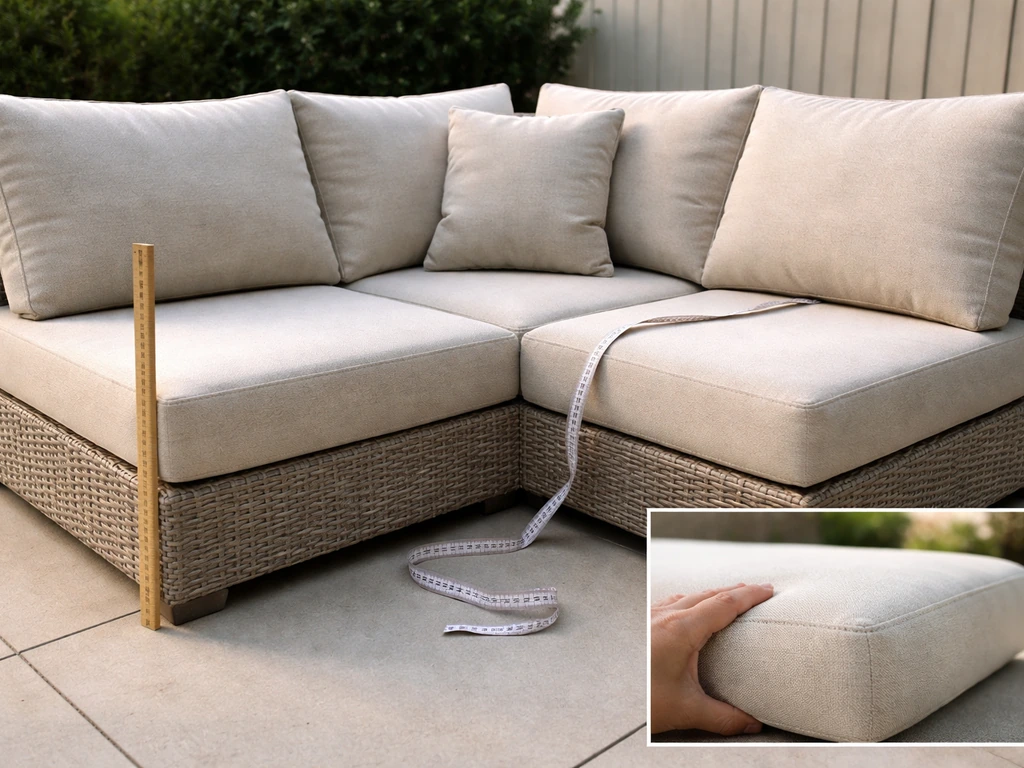
Comfort
Seat depth is the number reviewers complain about most when they're unhappy. You want at least 22 inches of seat depth for real lounging. The IKEA KIVIK indoor sectional, for reference, hits 23 5/8 inches of seat depth, which is why it feels so inviting. Outdoor sectionals in the $400 to $800 range often cut this down to 20 inches or less, which ends up feeling like a park bench. Cushion thickness matters equally: 4 inches minimum, 5 to 6 inches for premium comfort. Seat height around 17 to 18 inches (the KIVIK is 17 3/4 inches) keeps things proportional for most adults.
Size and spacing
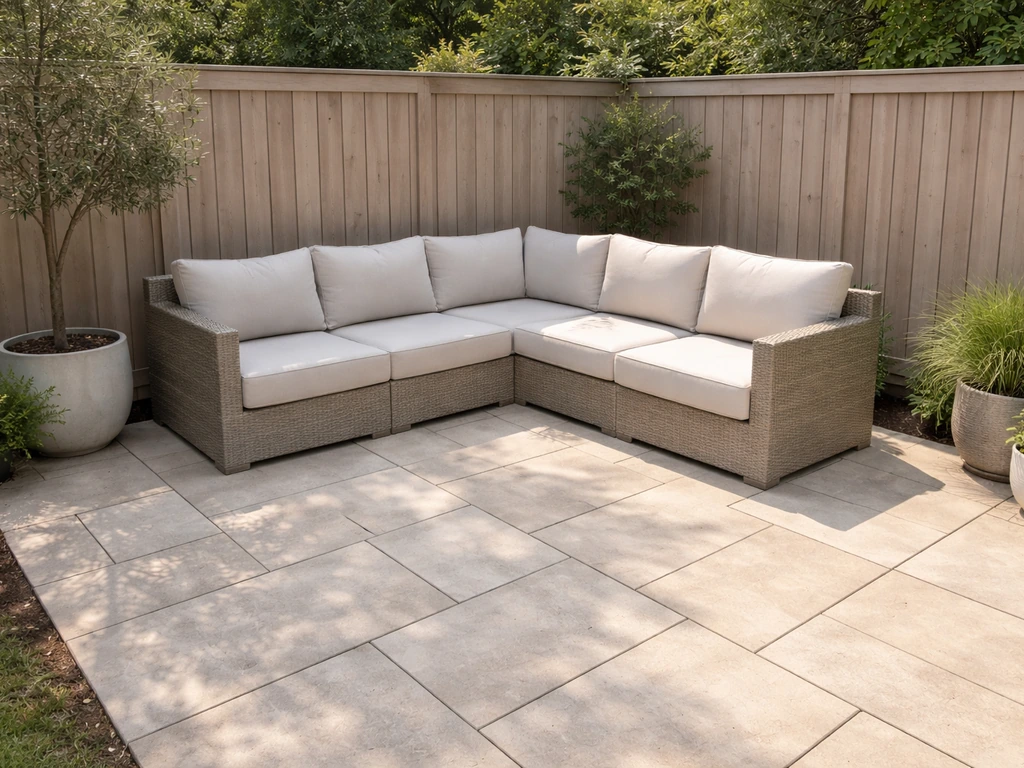
A standard 5-piece L-shaped set typically runs 100 to 120 inches along each arm of the L. You need at least 10 feet by 10 feet of usable patio space, and that's tight. Add 18 to 24 inches of clearance for traffic paths around the furniture, more if a door swings outward nearby. Measure your corner from wall or railing to wall, subtract those clearances, and you'll know your maximum arm length.
Materials
Frame material drives long-term durability more than anything else. Powder-coated aluminum is the gold standard for weather resistance. Steel is heavier and stronger but rusts if the coating chips. Resin wicker over a steel frame is common at mid-range prices and performs well if the frame is actually aluminum underneath. Solid teak or eucalyptus wood is beautiful but adds maintenance. Cushion fabric should be rated for at least 1,000 hours of UV exposure (look for Sunbrella, Olefin, or polyester with a TPU backing as the most reliable options).
Weather resistance
If your patio corner is exposed to direct sun and rain, fabric lightfastness rating matters. The IKEA KIVIK indoor cover, for example, only achieves lightfastness level 5/8, which is why it's not meant for full outdoor exposure. The IKEA KIVIK product details list a 10-year limited warranty and a cover with lightfastness level 5/8, indicating color fading resistance. Outdoor-specific cushion covers should hit at least a 6/8 lightfastness rating, and ideally carry a water-repellent or quick-dry fill. A cover for the whole set when not in use adds years of life regardless of fabric quality.
Top-reviewed corner seating options by budget and style
Here's how the market breaks down right now, based on consistent review patterns across major retailers and direct-to-consumer brands. I've organized these by tier because the trade-offs at each price point are very different.
| Budget Tier | Price Range | Best For | Typical Frame | Common Pros | Common Cons |
|---|---|---|---|---|---|
| Entry-level | $350–$650 | Occasional use, covered patios | Steel with resin wicker | Low price, easy to find, quick assembly | Thin cushions, rust risk at welds, shorter lifespan |
| Mid-range | $700–$1,200 | Regular use, partial sun exposure | Aluminum or steel + wicker | Better cushion thickness, more style options, decent warranty | Assembly can be fiddly, some cushion fading after 1–2 seasons |
| Premium | $1,300–$2,500+ | Full sun, daily use, long-term investment | Powder-coated aluminum + Sunbrella | Superior fade/rust resistance, deep seats, solid warranties (3–5 years) | High upfront cost, heavy pieces, longer lead times |
| Modular/custom | $2,000+ | Flexible layouts, large patios | Aluminum or teak | Fully configurable, highest quality materials | Very expensive, complex assembly, long shipping timelines |
Entry-level picks (under $650)
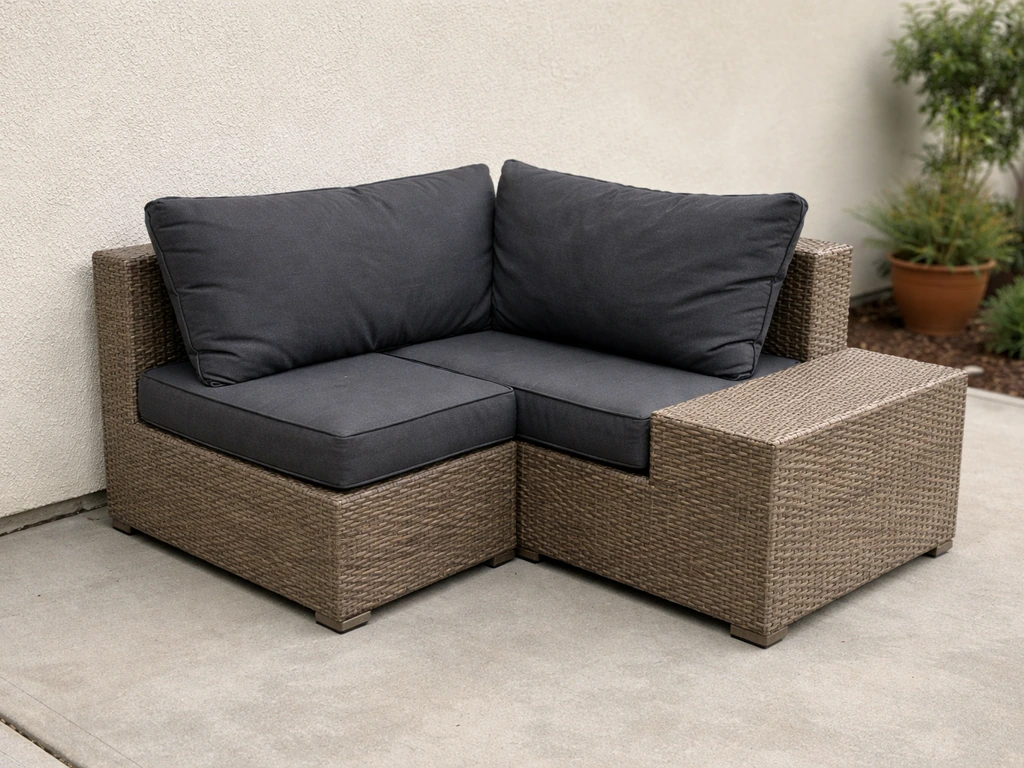
Costway's 5-piece wicker patio conversation sectional sets, typically available at Home Depot and Amazon for $400 to $600, consistently appear in reviews as the entry-level benchmark. Reviewers like the price and the color options (navy cushions are the most popular), and most report a reasonably clean setup in 30 to 60 minutes. The main complaints: cushion thickness often lands at 3 inches rather than the advertised 4, the steel frame shows rust at weld points within one to two seasons if left uncovered, and the wicker weave can loosen at corners with heavy use. These sets make sense if your patio is covered, you're in a mild climate, or you're furnishing a rental or seasonal space.
Mid-range picks ($700–$1,200)
This is where the market gets interesting. Brands like Kinbor and Red Barrel Studio have built a reputation for offering better-than-entry-level construction without jumping to premium prices. Kinbor's sectional sets in particular get consistent praise for seat depth and cushion quality relative to price. Red Barrel Studio's outdoor line (available through Wayfair) scores well on aesthetics and fabric color retention in its first two seasons, though some reviewers note the cushion cores start compressing by year three. At this tier, look for sets that specify aluminum frames, not just 'rust-resistant steel,' and check that cushion covers are removable and machine washable.
Premium picks ($1,300 and up)
At the premium tier, Polywood, Telescope Casual, and direct-to-consumer brands like Outer consistently earn high marks. Outer's sectionals in particular are frequently cited for deep seat comfort (24-inch seat depth), weatherproof cushion storage, and honest long-term durability in full-sun environments. Broyhill Eastlake, sold through Big Lots, occupies an interesting middle space: it's priced more aggressively than most premium brands but uses better-than-mid-range construction. Reviews are generally positive on build quality and comfort, though availability can be inconsistent.
Materials and construction quality: what actually holds up
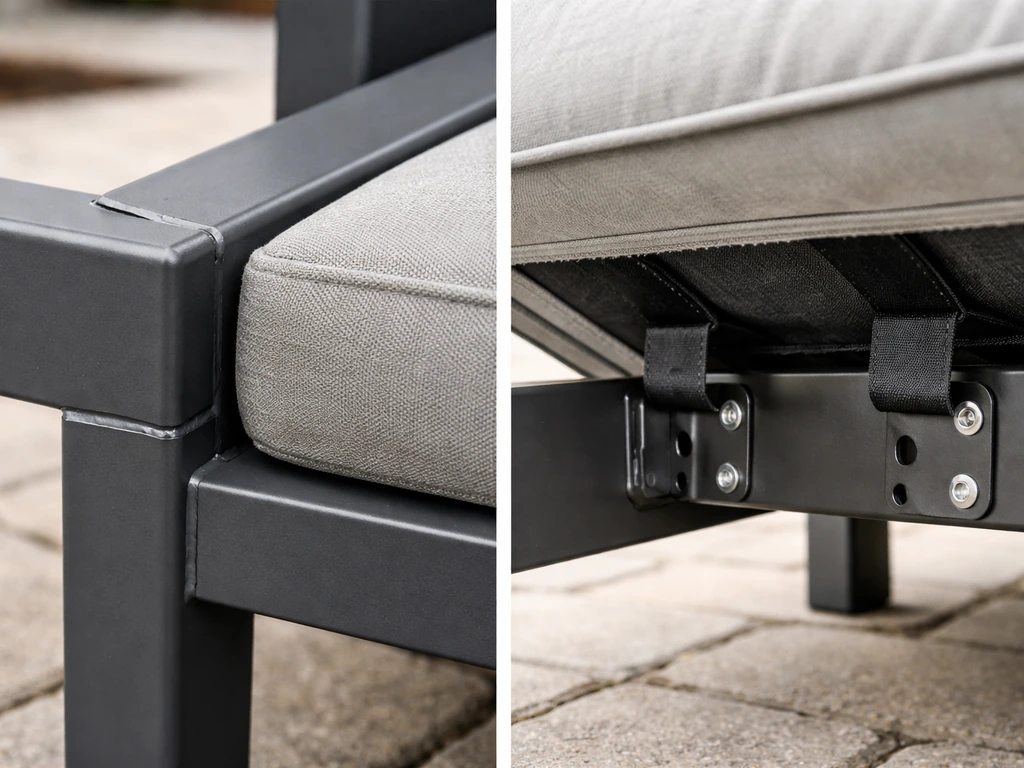
Frames
Powder-coated aluminum is the clear winner for outdoor corner sets. It doesn't rust, it's light enough to rearrange without wrecking your back, and quality powder coating doesn't chip the way paint does. Steel frames are heavier and cheaper to manufacture, which is why they dominate entry-level sets. If you go steel, inspect the welds closely on arrival because that's where rust starts. Resin wicker woven over aluminum lasts significantly longer than wicker over steel. Solid wood (teak, eucalyptus, acacia) looks great and weathers well with annual oiling, but it adds maintenance and can crack in freeze-thaw climates if not stored.
Cushions
Cushion quality is where budget sets consistently disappoint reviewers. The core issue is fill: cheap polyester batting compresses within one season, leaving you sitting on a thin, flat surface. Better sets use a high-resilience foam core (similar to what IKEA uses in the KIVIK with its pocket spring plus foam plus polyester fiber combination) wrapped in a quick-dry polyester shell. For outdoor use, the cover fabric matters as much as the fill. Olefin and solution-dyed acrylic (Sunbrella is the brand name most reviewers recognize) are the most fade-resistant. Avoid covers that aren't solution-dyed, they fade from the outside in and look washed out within a summer.
Hardware and connection points
This is the overlooked category. The bolts, brackets, and connectors holding sectional pieces together are often stainless steel in premium sets and zinc-plated steel in budget ones. Zinc plating eventually fails outdoors, leading to rust streaks on your patio and wobbly joints. Check product listings for 'stainless hardware' specifically, and hand-tighten connections every spring as part of seasonal maintenance.
Assembly, maintenance, and daily-use comfort
Assembly reality check
Most 5-piece corner sets arrive in multiple boxes. The IKEA KIVIK sectional corner, for context, ships in 6 packages, and that's an indoor set without the added bulk of weather-treated frames. Outdoor sectionals often arrive in 3 to 5 boxes. Budget one to three hours for a typical mid-range 5-piece set, more if the instructions are poorly translated (a common complaint in reviews for Chinese-manufactured sets under $700). The most frequent assembly frustration isn't complexity, it's pre-drilled holes that don't quite align. Having a rubber mallet handy fixes most of these issues. Reviewers consistently recommend assembling on a flat surface like a garage floor before moving pieces to the patio.
Cleaning and seasonal maintenance
For wicker frames, a hose-down plus a soft brush and mild soap handles most dirt and pollen. Do this two to four times a season if your patio is under trees. For cushions, remove covers and machine wash on cold if the tag allows. Spot-treat mildew (which appears as black dots on light fabric) immediately with a solution of 1 cup bleach to 1 gallon of water, then rinse thoroughly. For wood frames, apply teak oil or a similar penetrating sealer once a year in the spring. For aluminum and powder-coated steel, a wax-based automotive polish applied once a season helps protect the coating.
Storing cushions and covers
This is the single biggest factor in cushion lifespan that reviewers underestimate. Cushions left outdoors year-round in humid climates develop mildew in the fill, which is almost impossible to fully eliminate once it sets in. Bring cushions inside or into a dry storage bin when not in use for more than a few days, especially in summer humidity. A furniture cover (sized to fit the full sectional) protects the frame and wicker weave from UV degradation and keeps birds from nesting in the corners, which happens more than you'd expect.
Daily comfort factors
Beyond seat depth and cushion thickness, back angle matters for long sessions. The most-loved corner sets in reviews sit at a slight recline, roughly 100 to 105 degrees between seat and back. Armrest height should land close to your elbow when seated, typically 24 to 26 inches from the ground. If you're tall, look for sets with seat heights of 18 inches or higher. If you're shorter, 16 to 17 inches feels more natural. These details rarely appear in product specs but come up constantly in reviewer feedback.
What reviews consistently say about value and satisfaction
Across entry, mid-range, and premium tiers, the themes in reviews are remarkably consistent. Happy reviewers almost always mention that the set looks better in person than in photos, that it transformed their corner into a usable outdoor living space, and that assembly was easier than expected. Unhappy reviewers almost always mention one of three things: cushions were thinner than advertised, the set started rusting within a season, or customer service was difficult when a piece arrived damaged.
- Cushion compression is the top long-term complaint across all price points, especially in budget sets used frequently
- Shipping damage on one or two boxes is common in sets with multiple packages; photograph everything on arrival before assembly
- Sets with removable, machine-washable cushion covers consistently rate higher in long-term satisfaction
- Reviewers who bought furniture covers alongside the set report dramatically better condition after year one
- Assembly instruction quality is rated poorly in roughly 40% of budget-set reviews but improves significantly at mid-range and above
- Warranty claims are rarely smooth at the budget tier; mid-range brands like Kinbor and Red Barrel Studio get better marks for responsiveness
Value perception follows a clear pattern: buyers who measured their space carefully and matched the set size to their corner almost always feel the purchase was worth it. Buyers who ordered without measuring and ended up with a set that felt cramped or oversized are far more likely to leave negative reviews, regardless of the furniture's actual quality.
How to choose the right set for your space
Measuring your corner
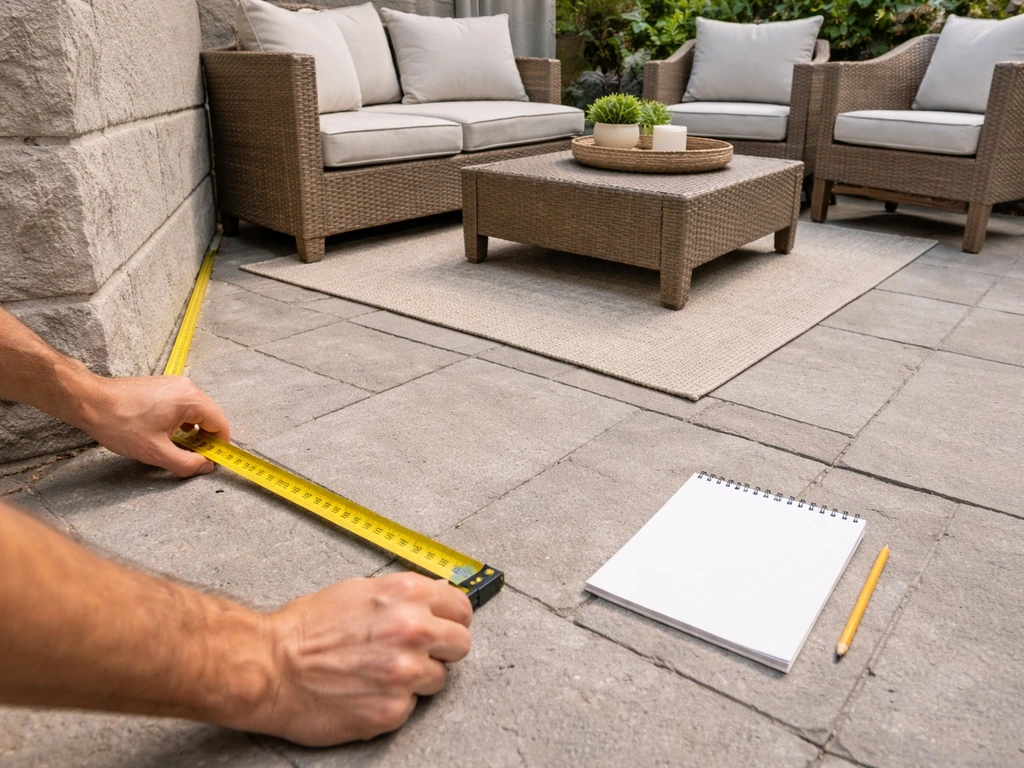
Start by measuring the two walls (or railings) that form your corner. Write down the usable length of each wall, then subtract the clearances you need: 18 inches minimum for a traffic path alongside the furniture, 36 inches if a door opens outward into that space. What's left is your maximum arm length for each side of the L. A 12-foot wall with a door allows roughly 84 inches (7 feet) of furniture along that wall after clearances. Most 5-piece sectionals need 90 to 120 inches per arm, so in that scenario you'd want to look at compact or small-scale sectionals, or switch to the two-chair corner nook format.
Layout examples
| Patio Corner Size | Recommended Setup | Approximate Furniture Footprint | Seating Capacity |
|---|---|---|---|
| 8 ft x 8 ft | 2 deep-seat chairs + small corner table | 60" x 60" max | 2–3 people |
| 10 ft x 10 ft | 3-piece compact sectional (no ottomans) | 84" x 84" | 3–4 people |
| 12 ft x 12 ft | 5-piece L-shaped sectional with 1 ottoman | 100" x 100" | 4–5 people |
| 14 ft x 14 ft or larger | 5-piece sectional + 2 ottomans/coffee table | 110"–120" x 110"–120" | 5–6 people |
If your patio is on a deck with planks running in one direction, align the longer arm of the L parallel to the planks for a cleaner visual. On a square concrete or tile patio, the corner of the sectional should sit roughly 12 to 18 inches from the actual corner of the space so there's room for the corner piece to breathe and for cushions to not press against a wall.
Choose this if decision path
- Choose entry-level ($350–$650) if: your patio is covered or sheltered, you'll use it only occasionally, or you're furnishing a rental property and longevity isn't the priority
- Choose mid-range ($700–$1,200) if: you use your patio regularly from spring through fall, your corner gets partial sun exposure, and you want a set that looks good for 3 to 5 years without constant maintenance
- Choose premium ($1,300+) if: your patio is fully exposed to sun and rain, you host guests frequently, or you want a set that performs well for 7 to 10 years and holds its look
- Choose a compact chair arrangement instead of a sectional if: your usable corner is under 8 feet on either side, you need to move furniture frequently, or you prefer a more open feel
Where to buy and what to check before you order
For entry-level sets, Amazon, Home Depot, and Walmart carry the widest in-stock selection and the fastest shipping. Mid-range sets from brands like Kinbor are best bought direct or through Amazon where return logistics are straightforward. Wayfair carries the broadest range of mid-range options and frequently runs sales, but their return policy on large furniture requires careful reading since some items are final sale after assembly. For premium sets, buying direct from the brand (Outer, Polywood, Telescope Casual) gives you better warranty support and often access to replacement cushions years later.
Before you place any order, run through this checklist:
- Measure your corner and calculate the maximum arm length on each side using the clearance guidelines above
- Confirm the seat depth in the product specs, not just the overall depth. Look for 22 inches or more for genuine lounging comfort
- Check cushion thickness (4 inches minimum) and whether covers are removable and washable
- Identify the frame material specifically: 'rust-resistant' is vague, look for 'powder-coated aluminum' to be confident
- Read the 1- and 2-star reviews specifically, not just the average, to find the real failure patterns
- Confirm the return policy before assembly since most retailers won't accept returns on assembled furniture
- Check for replacement cushion availability so you're not replacing the whole set in year three when cushions wear out
- Note how many boxes it ships in and whether curbside delivery means you'll be moving heavy boxes alone
One last thing: if you've looked at Kinbor, Red Barrel Studio, Baboom, or Broyhill Eastlake sets during your research, those brands are all worth a closer look in the context of corner patio furniture specifically. Each has a distinct sweet spot in terms of style, price, and construction quality, and comparing them side by side against your measurements and climate will get you to the right answer faster than browsing endlessly through product listings.
FAQ
How do I know whether a “5-piece” corner set will actually fit my corner once I account for real clearance and not just the product dimensions?
Use the wall-to-wall measurements you already plan, then confirm the set’s footprint includes the ottomans. Many listings show sofa length only, so check the total outer dimensions (including corner and end units). If you’re near a door or walkway, aim for at least the 36-inch clearance rule, otherwise reviewers often report feeling “stuck in” the space even when the numbers look close.
Are outdoor cushions truly safe to leave uncovered in summer rain, or should I always use a cover?
Even quick-dry cushions can absorb water if left for long wet stretches. If your patio corner gets intermittent storms, prioritize either removable covers that you can dry indoors or a full-set cover. For humid climates, leaving cushions out between dry days increases mildew risk in the fill, which is much harder to reverse than fabric surface stains.
What’s the most common “rust” failure point in steel or wicker-over-steel sets, and what should I inspect before the return window closes?
Look closely at weld points, seams, and any bracket areas where two metal parts meet. Rust typically begins at coating breaks from shipping or early chips. After unboxing, wipe with a dry cloth and check for tiny orange spots at joints, then test hardware tightness (hand tighten) so you do not miss an alignment issue caused by loosened connectors.
Do I need to worry about cushion thickness only, or is seat depth more important for comfort?
Seat depth matters first for lounging because it determines whether you can sit back without pressing your knees into the front edge. After that, cushion thickness influences how much you “sink” into the seat. If you’re shopping under $800, prioritize achieving 22 inches or more of seat depth, because many sets compensate with thicker cushions but still fail on true leg support.
How can I tell if the cushion fabric is genuinely outdoor-rated, not just marketed that way?
Check for solution-dyed or similarly fade-resistant materials, and confirm the rating is for UV/lightfastness appropriate for outdoor use (often described as a numerical level). Also check whether covers are removable and machine washable, because even top-tier fabric will look worse quickly if you cannot clean pollen and surface grime.
If a set has removable covers, can I wash everything safely, including the cushion cores?
Usually only the covers are machine washable, not the foam core. Wash covers on cold if the tag allows, then fully dry them before reinstalling. If a listing is vague or says the fill cannot get wet, treat the core as non-washable and focus on spot-cleaning the cover to avoid trapped moisture in the cushion interior.
What back angle should I look for if I want to sit for long evenings, and where do I find it since specs are often missing?
Reviews tend to describe the best corner sets as having a mild recline, roughly 100 to 105 degrees between seat and back. Since brands rarely publish that angle, look for review photos showing how far the back reaches, or confirm the back height and overall seat-to-back geometry in the product layout. If you only see straight-on photos, the “recline feel” can surprise you.
Should I choose aluminum, resin wicker, or solid wood if my patio experiences freeze-thaw winters?
Avoid relying on solid wood unless you’re willing to store it or cover it consistently, because freeze-thaw can lead to cracking if moisture gets trapped. For cold climates, aluminum frames with resin wicker are typically safer because the materials tolerate temperature swings better and do not rely on annual sealing routines.
Is it worth paying for premium hardware upgrades, or is that just marketing?
Hardware quality matters outdoors because fasteners loosen as coatings wear and metal expands and contracts. Premium sets often specify stainless hardware, while budget options may use zinc-plated hardware that can rust outdoors. If you see only vague wording like “weather resistant,” check if replacement hardware or stainless fasteners are mentioned, because that affects long-term wobble risk.
Can I rearrange the set seasonally, and will moving it often damage the wicker or frame?
Powder-coated aluminum frames are easier to lift and rearrange, but you should still move by gripping frame joints, not pulling on wicker weave. Resin wicker over aluminum typically holds up better to occasional repositioning than wicker over steel, especially if you avoid dragging ottomans across rough surfaces.
What should I do if the cushions smell musty or look clean but feel damp after the first rain?
If moisture penetrated the fill, surface cleaning may not fix the core. Dry the cushions quickly indoors with good airflow, then inspect the seams for lingering damp spots. If you cannot dry them fully, consider using a breathable storage bin when you’re not using the set, because trapped moisture is what leads to mildew that becomes difficult to eliminate.