
"By the yard" patio furniture refers to outdoor cushion fabric, replacement cover material, or modular cushion sections you purchase in yardage increments, then have custom-cut or sewn to fit your existing frames. The best options right now are solution-dyed acrylic fabrics like Sunbrella and Outdura, which offer 10-year fade warranties, genuine mold resistance, and a track record of surviving years of full sun, rain, and humidity without falling apart. If you want the short version: buy Sunbrella or a comparable solution-dyed acrylic at roughly 54 inches wide, measure your cushions seam-to-seam (not frame-to-frame), add 10–15% for pattern repeats and seam allowance, and order from a custom cushion shop with at least a 3-year workmanship guarantee.
By the Yard Patio Furniture Reviews: Best Yard Options

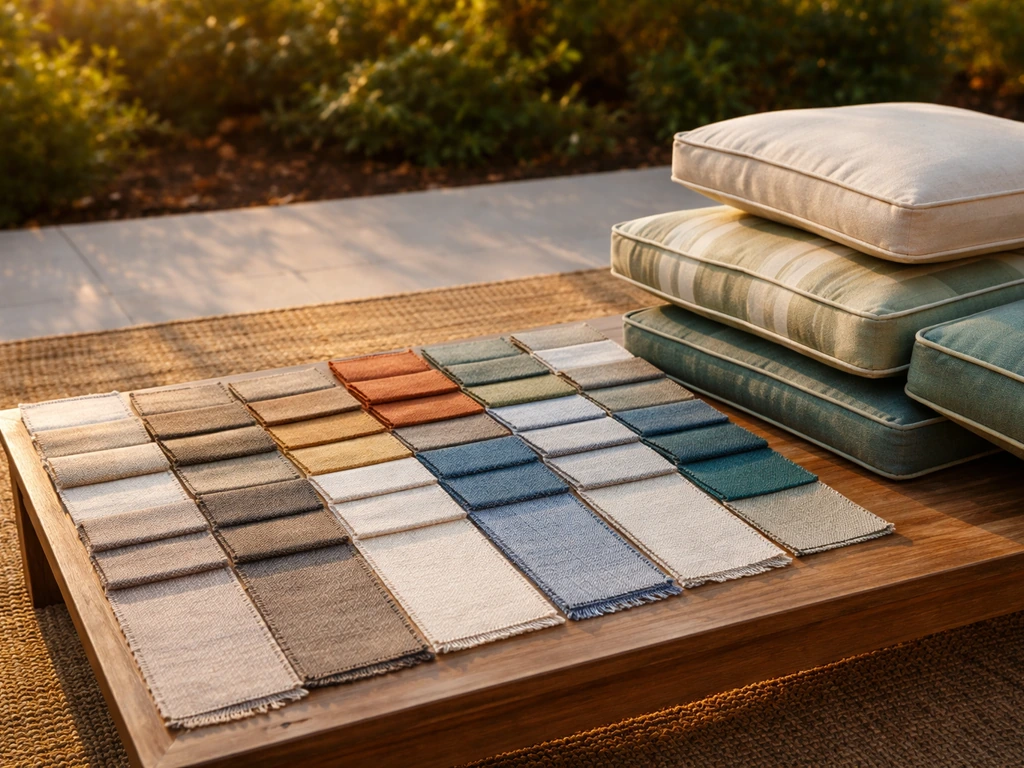
What "by the yard" patio furniture actually includes
When people search for "by the yard" patio furniture, they're usually talking about one of three things: outdoor upholstery fabric sold by the running yard (typically 54 inches wide), custom cushion covers fabricated to your measurements, or modular patio cushion sections ordered in increments to fit a sectional or chaise. Before buying any cushions, it also helps to read shein patio furniture reviews so you can compare real customer experience with the specs you’re planning to choose. You're not buying a complete chair or sofa off a shelf. Instead, you're buying the raw material or a made-to-measure component that gets fitted to a frame you already own or plan to buy separately.
Here's what's typically included when you order by the yard: the face fabric (the visible outer layer in your chosen color or pattern), sometimes a backing or lining, and in full-service custom shops, the sewn cover itself filled with foam. Foam inserts, zipper hardware, and welt cord piping are usually sold separately or bundled into a custom cushion quote. If you're just buying raw yardage to DIY your own covers, you'll handle all of that yourself. Know which route you're taking before you place an order, because the measuring process and the final cost look very different depending on whether you're buying fabric only or a finished cushion product.
Modular patio sets also use a version of this model. Some brands sell individual seat and back cushion sections that can be combined to build out a larger sectional configuration. That's different from buying raw yardage, but the measuring and fit principles overlap. The key thing to understand upfront: "by the yard" puts the sizing responsibility mostly on you. Unlike buying a boxed patio set where everything is pre-sized, you're customizing, and the supplier won't be held responsible if your measurements are off.
How to choose the right yardage: measuring, sizing, and fit
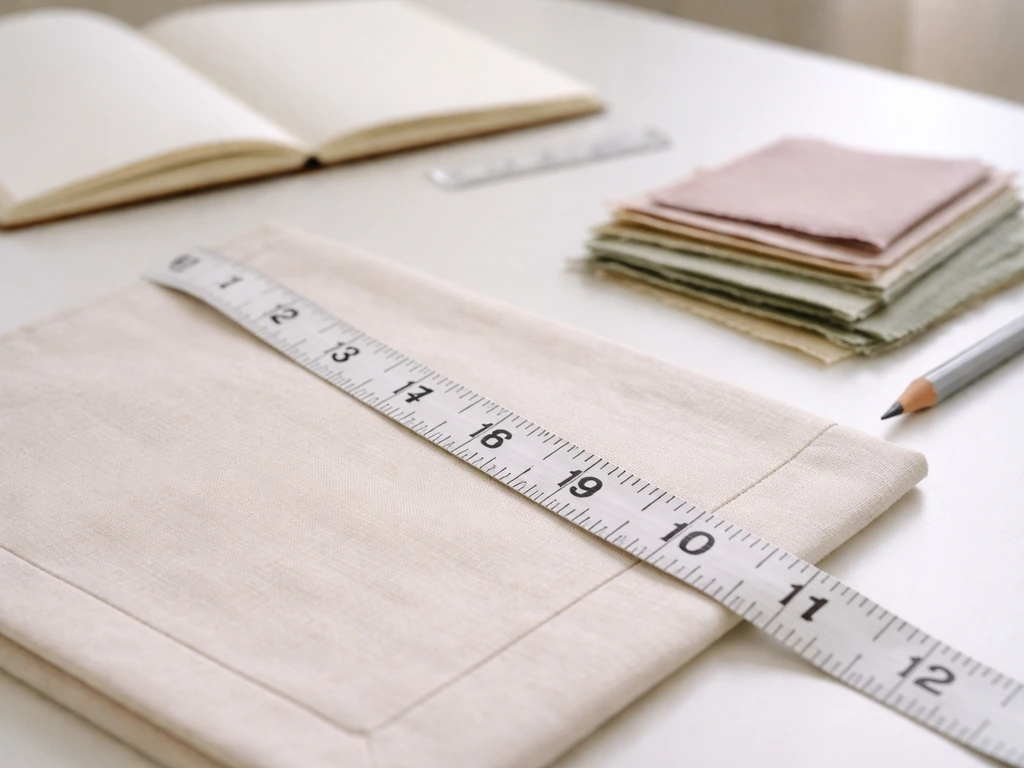
Measuring correctly is the single most important step in this entire process. Get it wrong and you'll either run out of fabric mid-project or end up with visible seams in awkward places. Start by measuring your existing cushions seam-to-seam (not edge-to-edge of the foam), because that's what the finished cover needs to match. If you're replacing covers on a frame without existing cushions, measure the interior frame dimension and subtract about half an inch per side so the cushion sits snugly without shifting.
For calculating actual yardage, you need to factor in the fabric repeat. A fabric repeat is the distance before the pattern starts over, both horizontally (selvage to selvage) and vertically (along the length of the roll). On a patterned fabric, you'll need extra yardage to align the repeat so it looks intentional on each cushion face. As a baseline, a standard 20"x20" throw pillow needs about 0.75 yards of 54-inch fabric. A chair seat cushion around 22"x22"x4" needs roughly 1.25 yards. A full chaise cushion (roughly 75"x26") can need 3 yards or more once you account for seams, boxing strips, and repeats.
One practical warning from Cushion Source's yardage guides: if your cushion is longer than about 50 inches and your fabric has a vertical-run pattern (meaning the design only runs one direction down the length of the roll), you may end up with a visible seam on the face of the cushion. There's no way around this with certain fabric orientations. If that bothers you, stick with solid colors or small all-over patterns that don't require directional alignment. Also, be aware that if you order additional yardage at a later date to add matching pieces, dye lots can shift slightly, and some suppliers like CustomCushions.com are upfront that they can't guarantee an exact color match between separate cuts.
- Measure cushions seam-to-seam in length, width, and thickness (not foam edge-to-edge)
- Identify the horizontal and vertical repeat measurements on your chosen fabric
- Calculate base yardage per cushion, then add one full repeat length per cushion for pattern matching
- Add 10% as a general buffer for cutting errors and seam allowance
- If ordering custom covers, provide a physical template for non-rectangular shapes to guarantee accurate fit
- Order all yardage at once to avoid dye lot discrepancies between cuts
Material and build quality reviews: weather, UV, fade, mildew resistance
The fabric choice is where performance really separates. For outdoor use, solution-dyed acrylic is the clear frontrunner. The color is locked into the fiber itself during manufacturing, not printed on the surface, which means fading happens much more slowly and evenly. It also means the fabric resists mold and mildew at a structural level rather than relying on a topical treatment that washes away over time.
| Material | UV/Fade Resistance | Mold/Mildew Resistance | Typical Warranty | Weight/Feel | Best For |
|---|---|---|---|---|---|
| Solution-dyed acrylic (e.g., Sunbrella, Outdura) | Excellent (10-year warranty on color) | Excellent (inherent, not topical) | 5–10 years depending on use category | Medium weight, soft hand | Full sun, humid/coastal climates, long-term investment |
| Solution-dyed polyester (e.g., Tempotest) | Very good (10-year warranty on awning/marine grades) | Very good | 10 years for awning/marine grades | Heavier, stiffer hand | High-traffic areas, awnings, areas needing dimensional stability |
| Coated/woven polyester (e.g., 600D fabrics) | Good (acrylic-coated versions perform better) | Good to moderate | Varies; often 1–3 years | Stiff, less breathable | Budget setups, light seasonal use, covered patios |
| Olefin/polypropylene | Moderate | Good | Usually 1–2 years | Lightweight, rough feel | Budget indoor/outdoor, low direct sun exposure |
Sunbrella's 10-year limited warranty covers the fabric becoming unserviceable due to loss of color or strength under normal outdoor exposure, which is a meaningful commitment. Their upholstery-grade fabrics (versus awning-grade) come with a 5-year warranty, and labor is covered for the first three years under expanded warranty terms. Outdura uses 100% solution-dyed acrylic and makes similar colorfastness claims backed by their residential warranty.
If you are comparing Zeus and Ruta patio furniture for purchase, these Sunbrella and Outdura-style material performance points are a good benchmark for what reviewers tend to reward in long-term cushion use. Tempotest's awning and marine grades carry a 10-year limited warranty specifically focused on excessive color degradation and performance loss, with provisions for fabric replacement and partial labor cost support within the period.
What does this look like in real life? In a coastal or humid environment, the difference between solution-dyed acrylic and a coated polyester becomes visible within two to three seasons. If you want a real-world comparison, these fifth-and-shore patio furniture reviews can help you narrow down which cushion and frame setups work best in coastal conditions fifth and shore patio furniture reviews.
The acrylic holds its color and the mildew that forms on the surface (from debris and moisture, not from within the fiber) wipes off with a mild soap solution. A coated polyester in the same conditions often shows surface mildew that's harder to remove and fading that starts looking patchy rather than even.
After about 10 years, even Sunbrella-grade fabric can see UV-related seam splitting and surface wear, which is when most owners look at re-covering, but that's a decade of heavy outdoor use.
Comfort and usability: cushion support, fabric feel, and everyday performance
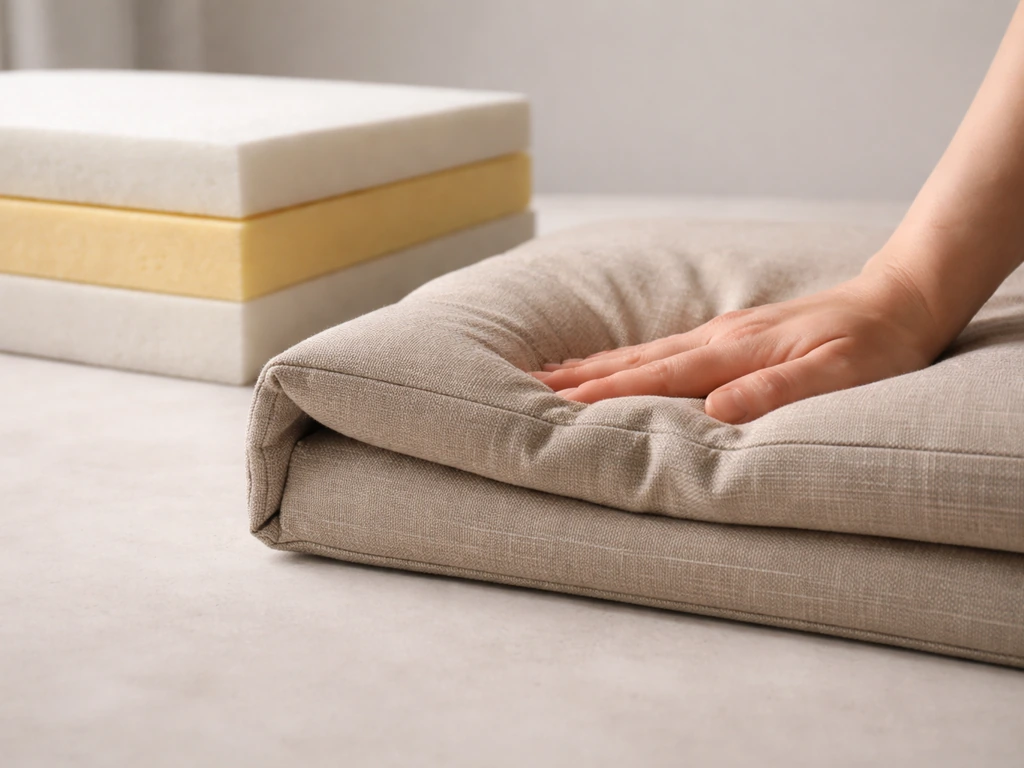
The fabric is only half the story when it comes to comfort. The foam inside your custom cushion matters just as much, and most first-time buyers don't ask about it until they're sitting on something that feels like a concrete slab two weeks after delivery. Two specs to know: foam density (measured in pounds per cubic foot) and ILD (Indentation Load Deflection, which measures firmness). Cushion Source uses a 4 lb. density gel foam in its premium multi-layer fill system. That's a solid density for outdoor cushions. A higher density means the foam holds its shape longer under regular use rather than bottoming out after a single season.
ILD tells you how firm the cushion feels when you sit on it. A low ILD (around 15–20) gives you a soft, sink-in feel that works well for lounging chairs. A higher ILD (28–36 range) is better for dining chairs or benches where you want firm support and easy standing. For most people setting up a standard outdoor seating area, something in the 25 ILD range is a comfortable middle ground. Ask your custom cushion supplier for both specs before ordering, especially if anyone in your household has back issues or if the furniture will see heavy daily use.
On the fabric feel side, solution-dyed acrylic has a noticeably softer hand than coated polyester, which can feel plasticky or scratchy against bare skin. Breathability is also better with woven acrylics, which matters in summer heat. The tradeoff is that acrylic fabrics tend to absorb some moisture before shedding it, meaning they take a bit longer to dry after rain than a tightly coated polyester. For a covered patio or a climate with frequent light showers, that's worth factoring in.
Value check: cost vs ready-made options, warranties, returns, and long-term upkeep
By-the-yard custom cushions are almost always more expensive upfront than a boxed patio set from a big-box retailer. A pair of custom chair cushions in Sunbrella fabric can run $150–$300 or more depending on size, foam spec, and the fabricator you use. A complete 4-piece patio set from a mid-range brand might cost $400–$800 all in with cushions. So why bother with custom? Because those boxed cushions are almost always made with lower-grade polyester fabric and low-density foam that starts looking worn within two or three seasons, especially in full sun. The custom cushions in quality fabric can genuinely last 8–10 years with basic care.
The warranty and return experience varies a lot by supplier. Outdoor Custom Cushions offers a 3-year workmanship guarantee covering defective seams and zippers on premium fabric orders (Sunbrella and Tempotest), which is one of the more generous policies in this space. If you want a quick, practical way to compare makers, skylar's home & patio furniture reviews can help you shortlist reputable brands and cushion shops based on real warranty and return experiences.
Cascadia Outdoor Cushions provides a 1-year warranty against manufacturing defects including zipper malfunctions. The critical fine print across almost every custom cushion company: they are not responsible for incorrect sizing if you provided the measurements. One supplier (ZIPCushions) has had Better Business Bureau complaints about exactly this kind of sizing dispute, so double-check your numbers and consider sending a physical template for any non-standard shapes.
Also be aware of shipping fees that can erode your value calculation. Cushion Source charges fees for address correction errors ($11) and delivery interruptions ($11), which are modest but reflect the reality that these are custom, made-to-order items with no easy return. Most custom cushion suppliers are clear that returns are not accepted on made-to-measure orders, full stop. Factor that into your decision before you click order, not after.
Long-term upkeep costs are where by-the-yard custom work wins convincingly. When a cushion cover wears out or gets stained beyond recovery, you can order a new cover for that specific cushion without replacing the entire foam insert, since quality outdoor foam typically outlasts the fabric. With a boxed patio set, you're often buying a whole new cushion (or a whole new set) because replacement covers aren't sold separately. That lifecycle cost difference adds up significantly over 10 years.
Top recommendations by patio type and budget
Here's how to match your situation to the right approach, based on real-world performance rather than marketing claims.
Small patio or apartment balcony (budget-conscious)
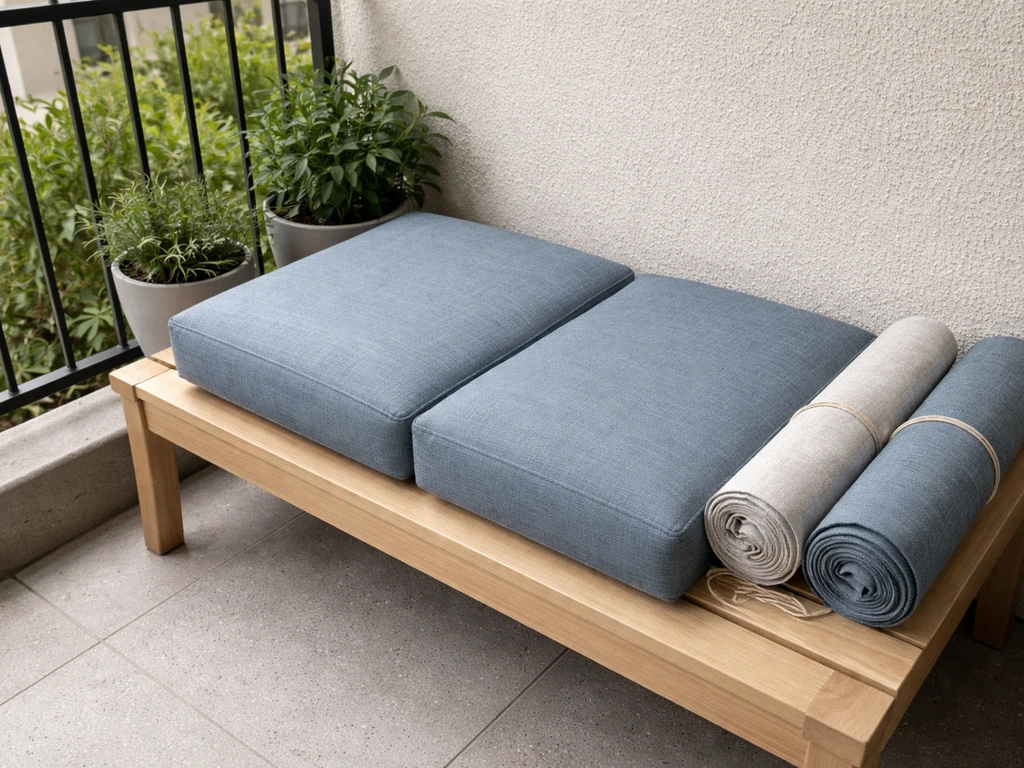
If you have a small space and limited sun exposure, a mid-grade solution-dyed polyester or a solid-color Sunbrella upholstery fabric in a single yard or two will cover you for seat cushions on a loveseat or two chairs. Stick with solid colors to avoid pattern repeat waste. Order from a supplier with a physical template option for non-standard shapes. Budget around $80–$150 total for two small custom chair cushions in mid-grade fabric.
Full outdoor living setup or large sectional
For a full sectional or a large L-shaped setup, invest in Sunbrella or Outdura awning-grade fabric for the face, order all yardage at once to avoid dye lot issues, and go with a 4 lb. density foam with an ILD around 25–28 for seat cushions. The upfront cost will be substantial (easily $600–$1,200+ for a full sectional), but you're getting a product that will outlast two or three boxed set replacements.
Coastal or high-humidity environments
Solution-dyed acrylic is non-negotiable here. The inherent mold resistance, not a surface treatment, is what matters when salt air and humidity are constant. Look for fabrics rated at 300gsm or higher, which hold up better to abrasion from windblown sand. Sunbrella Marine-grade or Outdura's performance line are both good choices. Avoid any fabric that relies on a topical acrylic coating over a polyester base; that coating breaks down faster in coastal conditions.
Pet households and heavy-use families
Go with a tighter weave (look for fabrics that mention high thread count or abrasion resistance ratings) and choose darker solid colors or small-scale patterns that hide hair and dirt between cleanings. A higher-ILD foam (30+) holds up better to animals jumping on cushions repeatedly. Order covers with zippers so you can remove and wash them, and make sure the zipper hardware is marine-grade, since cheap zippers corrode and fail faster than the fabric itself.
Heavy direct sun exposure
This is where you should not compromise on fabric quality. Sunbrella's 10-year limited warranty against color and strength loss is backed by a real track record in full-sun applications. Tempotest's awning and marine grades with their own 10-year warranty are also solid. Avoid olefin/polypropylene fabrics in this scenario; they're serviceable in partial shade but degrade noticeably faster under intense direct UV. Check that any foam you use has a UV-stable outer liner, since exposed foam breaks down quickly in direct sun even when covered.
Who should skip by-the-yard custom entirely
If you're renting, plan to move in the next year or two, or just want something functional without the measuring and lead time involved, custom by-the-yard isn't the right call for you right now. Lead times at custom cushion shops typically run 20–25 business days (about 4–5 weeks) from order to delivery, and that's before shipping. Brands like those reviewed elsewhere on this site (including options from Sophia and William, Fifth and Shore, or Skylar's Home) offer ready-made sets with included cushions that are a better fit for that kind of lower-commitment situation.
Care, maintenance, and troubleshooting common issues after purchase
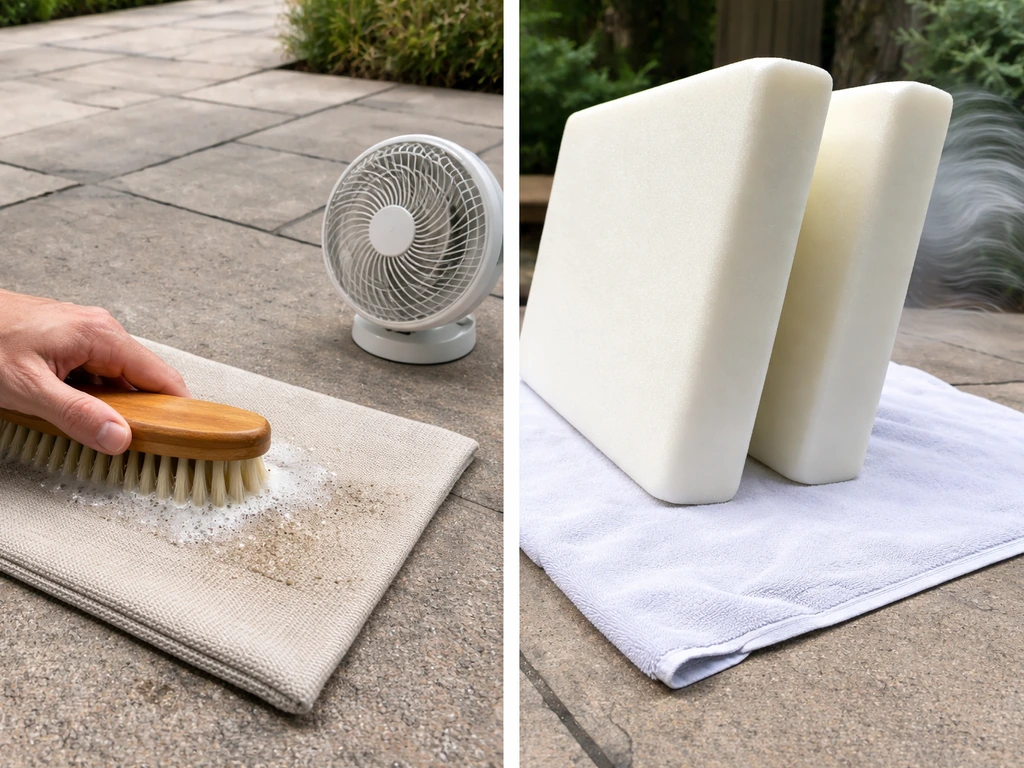
Solution-dyed acrylic fabrics like Sunbrella are genuinely low-maintenance, but "low" doesn't mean zero. Brush off loose debris regularly, because organic material sitting on the fabric surface is what feeds mildew growth, not the fabric itself. For routine cleaning, a mild dish soap solution and a soft brush handle most surface dirt and light mildew. For heavier mildew, a diluted bleach solution (no more than 1 cup of bleach per gallon of water) won't damage the solution-dyed acrylic fiber, though it can affect thread color and any non-colorfast trim, so rinse thoroughly and test an inconspicuous area first.
For foam inserts, stand cushions on their side after rain to let air circulate through the core and drain moisture out. Foam that stays saturated for long periods can develop odors and break down internally even when the cover looks fine. If you live somewhere with real winters, bring cushions inside or into a covered storage area. A few seasons of freeze-thaw cycles can degrade even good foam faster than years of summer use.
When inspecting a new delivery, check seam integrity immediately. Run your finger along every seam, including boxing strips and zipper tape, while the product is still new enough to return or have replaced under a workmanship claim. Seam splitting is the most common manufacturing defect, and it's much easier to address within the first week than after a season of use. Also check that the fabric is cut on grain, especially if you ordered a patterned fabric. A crooked cut will make a stripe or grid look off-center on the cushion face, and that won't self-correct.
If you notice fading after just one season, that's a quality control issue worth pursuing with the supplier. Genuine solution-dyed acrylic fabrics should hold their color for several years before any meaningful fading is visible. Keep your order confirmation and any warranty documentation, and photograph the fading against a color swatch from your original order if you need to file a claim. Fading from environmental exposure is often excluded from cover warranties (as noted explicitly in some suppliers' policies), but Sunbrella's core fabric warranty addresses exactly that scenario, which is part of what makes the fabric warranty worth paying for.
When it's time to re-cover cushions (usually when the fabric shows UV degradation, fraying seams, or unremovable staining), assess the foam before ordering new covers. Press down on the seat cushion foam firmly. If it doesn't spring back fully within a few seconds, or if it bottoms out easily, replace the foam at the same time. Ordering a new cover over collapsed foam is a waste of money. A quality foam insert in a protected cover can last 8–12 years, so in many cases you'll be reordering covers once or twice before the foam needs replacement.
Quick pre-order checklist
- Measure cushions seam-to-seam (length, width, thickness) and double-check all three numbers
- Confirm whether your fabric has a directional pattern and calculate repeat allowance
- Verify fabric weight (aim for 300gsm+ for high-sun or coastal use) and UV warranty coverage
- Ask the supplier for foam density (lbs per cubic foot) and ILD rating before ordering
- Confirm lead time, since most custom orders take 4–5 weeks
- Order all yardage at once to avoid dye lot mismatches
- For non-standard shapes, send a physical paper template rather than relying on dimensions alone
- Review the workmanship warranty and note the exact coverage period for seams, zippers, and fabric defects
- Photograph your existing cushions and frames before discarding them, in case you need to reference sizing later
FAQ
Is “by the yard” only for replacement cushion covers, or can it be used to build new cushions from scratch?
It can be used both ways. If you already own frames but have no cushions, you can buy yardage for the cover and pair it with your own foam inserts, but you must still confirm cover sizing rules (measure and plan for seam allowance and zipper placement). If the supplier also sells foam, it’s usually easier to order the foam and cover together so the foam thickness and cover panel pattern match.
Do I measure the fabric size I want, or the cushion size the cover needs to fit?
Measure the finished cushion size, then order fabric to match that finished cover. Many errors come from measuring foam dimensions but ignoring how the cover adds thickness (boxing strips, welt, zipper tape). A practical check is to confirm the “finished” measurement the cushion shop uses, then compare it to your seam-to-seam plan.
What should I do if my cushions have rounded corners or unusual shapes?
For non-standard shapes, avoid relying on basic rectangle formulas. Ask the cushion shop for a physical template option or make a template yourself using stiff cardboard over the cushion outline, including how the zipper will sit at the back or side. For very curved edges, you may need more yardage than you expect because grain alignment and extra panel shaping increase waste.
How do I prevent dye-lot mismatches if I might need extra yardage later?
Order all matching cushions and trim at the same time, and request that the shop pull fabric from the same dye lot for the entire project. If you truly must add later, ask whether the supplier can match the exact lot or provide a recommended “close match” approach (and confirm what is and is not covered if the match is visibly different).
Can I mix different fabric grades, for example Sunbrella for the seat and a cheaper fabric for the back or piping?
You can, but mixing usually backfires on appearance and wear. Even when fade resistance is similar, texture and sheen differences become noticeable after sun exposure. If you want cost control, use the same solution-dyed acrylic base across faces and choose only trim differences that you can replace easily, like piping or zipper tape, rather than mixing unrelated outer fabrics.
Do foam density and ILD matter more than fabric for long-term comfort?
Foam specs often matter more for comfort and daily wear, but fabric determines longevity. A good example is dining cushions, where ILD that is too soft leads to bottoming out, even if the fabric still looks great. Ask the supplier for both foam density (lb per cubic foot) and ILD, then target firmer ILD for high-traffic seats (often around the high 20s) and softer ILD for lounge use.
What ILD should I choose if I have back pain but also want support for standing up?
A common compromise is mid-to-firm ILD, around the mid-to-high 20s, paired with supportive seat foam density. If you go too low (very soft), you may get pressure sinking, making it harder to stand. Tell the fabricator your comfort goal and whether you want the cushion to feel more “supported” or more “plush,” and request their recommendation based on your seating height.
How can I tell whether a cushion zipper and hardware are truly outdoor-safe?
Check for marine-grade zipper components, not just the presence of a zipper. Outdoor-safe zippers should resist corrosion and should have smooth pulls that do not bind when the cushion is under tension. If your fabric has boxing seams or higher-profile padding, confirm the zipper length covers the full closure path without pulling stress on the zipper tape.
Will I get visible seams if I order patterned fabric by the yard?
It depends on pattern direction, panel layout, and cushion length. With directional prints, seams can end up at noticeable locations, and the seam position might not be “symmetrical” across cushions. Ask the shop how they will align the pattern (centered, matched, or continuous across panels), then choose solid colors or small-scale non-directional patterns if seams bother you.
If my fabric feels slightly scratchy or less soft than expected, is that normal?
With solution-dyed acrylic, a softer hand is common, but the texture varies by weave and finish. If it feels too rough against skin, look for higher-end woven acrylics or request samples before ordering. Also note that some trims or backings can feel different than the face fabric, especially if you chose a heavier backing for durability.
What cleaning method is safest for mildew on solution-dyed acrylic covers?
Use mild soap and water first, then escalate carefully. For heavier mildew, a diluted bleach solution can help, but it can alter trim color and may not be safe for non-colorfast piping. Always rinse thoroughly, test an inconspicuous spot, and avoid soaking foam through the cover if the cushion is not fully removable and dry.
Do I need to remove cushions after rain or can I leave them outside?
Leaving cushions outside is possible, but drying time matters. For best results, let them stand on edge after rain to circulate air and drain moisture from foam cores. If you live in freeze-thaw climates, bring cushions into storage during winter because repeated freezing can degrade foam faster than normal summer use.
How do I know whether to re-cover or replace the foam?
Do a simple “spring-back” test by pressing the foam and observing how quickly it returns. If it stays compressed, feels uneven, or the surface breaks down early, replace the foam rather than buying new covers. Also check for odors from saturated foam, since covers alone can hide a foam problem that will shorten the life of your new fabric.
What should I inspect immediately when my order arrives?
Inspect seams, zipper alignment, and fabric cut-on-grain right away. Run your fingers along every seam, including boxing and zipper tape, and photograph any defects while the order is still eligible for a workmanship claim. If a patterned fabric is misaligned, note it immediately because you may have limited recourse after use.
Do custom cushion orders accept returns if I change my mind?
Most made-to-measure cushion orders are not returnable for convenience, so confirm the return policy before ordering. If your project depends on timing or your measurements are uncertain, ask about a template-based approval process, and consider ordering samples of fabric first.